ON-BOARDING CONCEPTS
Start by protecting reserves
This is where the recovery journey starts.
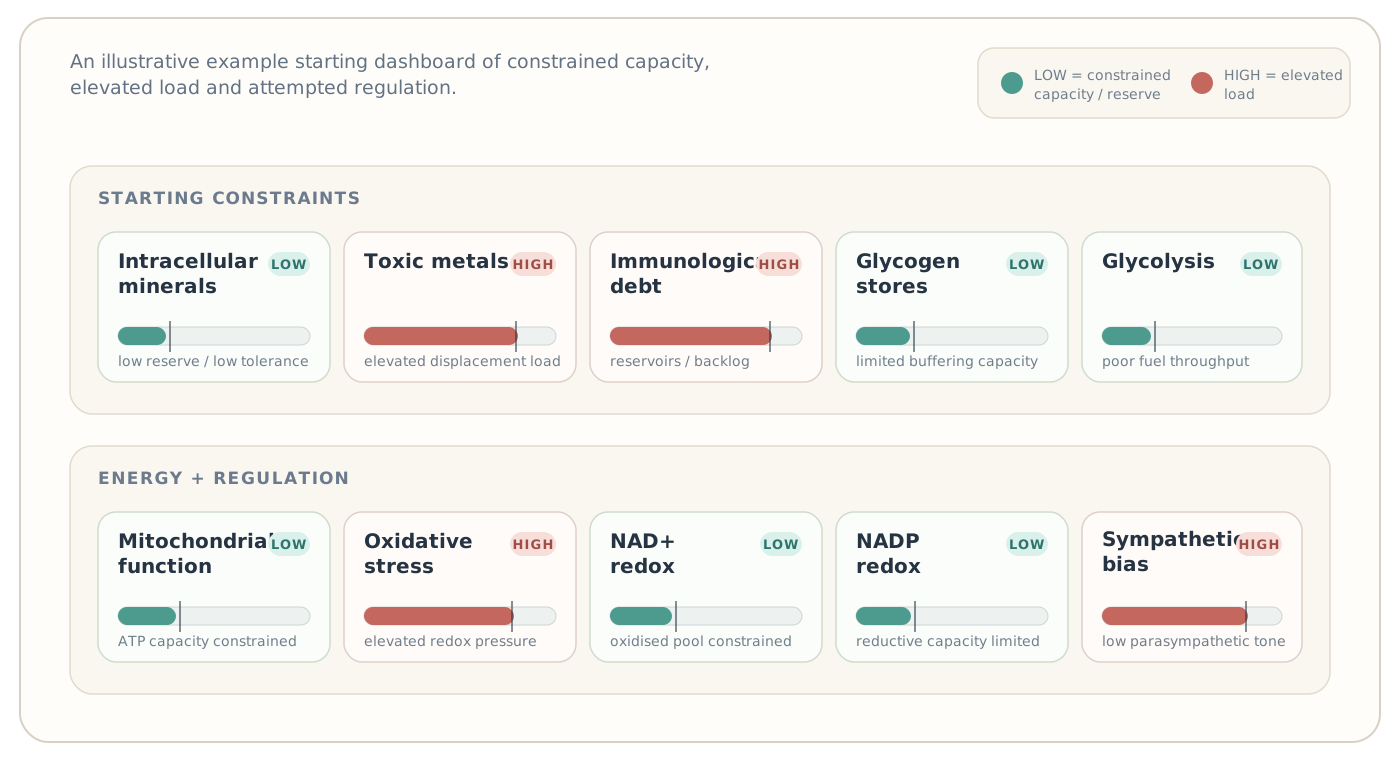
Here we focus on just the initial stabilising moves: conserve glycogen, correct minerals, metals and redox capacity, correct cardiovascular and inflammatory issues that affect the autonomic nervous system and avoid pushing metabolic processes faster than the body can buffer.
The onboarding process is a sequenced approach and the goal is to create enough stability that later stages are more appropriate and easier to interpret, while avoiding unnecessary symptoms created by moving bottlenecks around or failing to adapt diet to a changing landscape.
Sometimes symptoms can be created by a hyper-vigilant autonomic nervous system, which predicts threats based on previous, outdated information. This may be observed as a common set of symptoms to a wide variety of inputs, even at near-placebo doses, and usually settles within a few days. Slow titration helps.
Glucose, G6P and the pentose phosphate pathway
Cells convert glucose to glucose-6-phosphate (G6P). G6P supplies glycogen synthesis, glycolysis and the pentose phosphate pathway (PPP), which contributes to NADPH production and nucleotide synthesis.
Glucose phosphorylation uses ATP, with magnesium-dependent enzymes.
Glycolysis
A route into energy production.
Pentose phosphate pathway
G6PD is the entry enzyme of the oxidative branch.
derived from G6PUDP-glucose
Glycogen
A reserve for later use.
Pathway notes & sources
PPP and PRPP. The oxidative PPP produces NADPH and pentose phosphates. Its non-oxidative reactions can also supply ribose-5-phosphate from glycolytic intermediates without producing NADPH. PRPP synthesis uses ribose-5-phosphate and ATP. PPP pathway; PRPP synthesis.
Pyrimidines and glycogen. PRPP reacts with orotate during pyrimidine synthesis to form OMP, which is converted to UMP. Phosphorylation produces UDP and UTP. UTP and glucose-1-phosphate form UDP-glucose, the glucose donor used in glycogen synthesis. The diagram groups several reactions and omits nucleotide salvage and recycling. Pyrimidine biosynthesis; Glycogen synthesis.
Interpreting flux and redox results. NADP(H) refers to NADP+ and NADPH together. Pool size, redox balance, enzyme activity and pathway flux describe different aspects of metabolism. Interpret each result using the test's method, sample type and reference range. Check which findings are directly measured and which are calculated or inferred.
Clinical interpretation. Results can help assess whether the model applies to you. The choice of intervention also requires assessment of its evidence, risks and relevance to your circumstances. Known or suspected inherited G6PD deficiency requires separate clinical assessment.
Before You Start
Things you will need
Most on-boarding steps rely on the same practical scaffolding: baseline patient data, a printed run-sheet and completed product ordering links. Explore all of these before working through the implementation sequence.
Starter path
Overview
These are outlines of the concepts described in detail further down, in the protocol on-boarding sequence:
Pacing
Pacing protects glycogen and avoids the acidaemia-related spiral that can worsen electrolyte and mineral depletion.
Maintain lymph flow
Use gentle lymphatic support before restoring mitochondrial metabolism and immune activity.
Stabilise carb intake
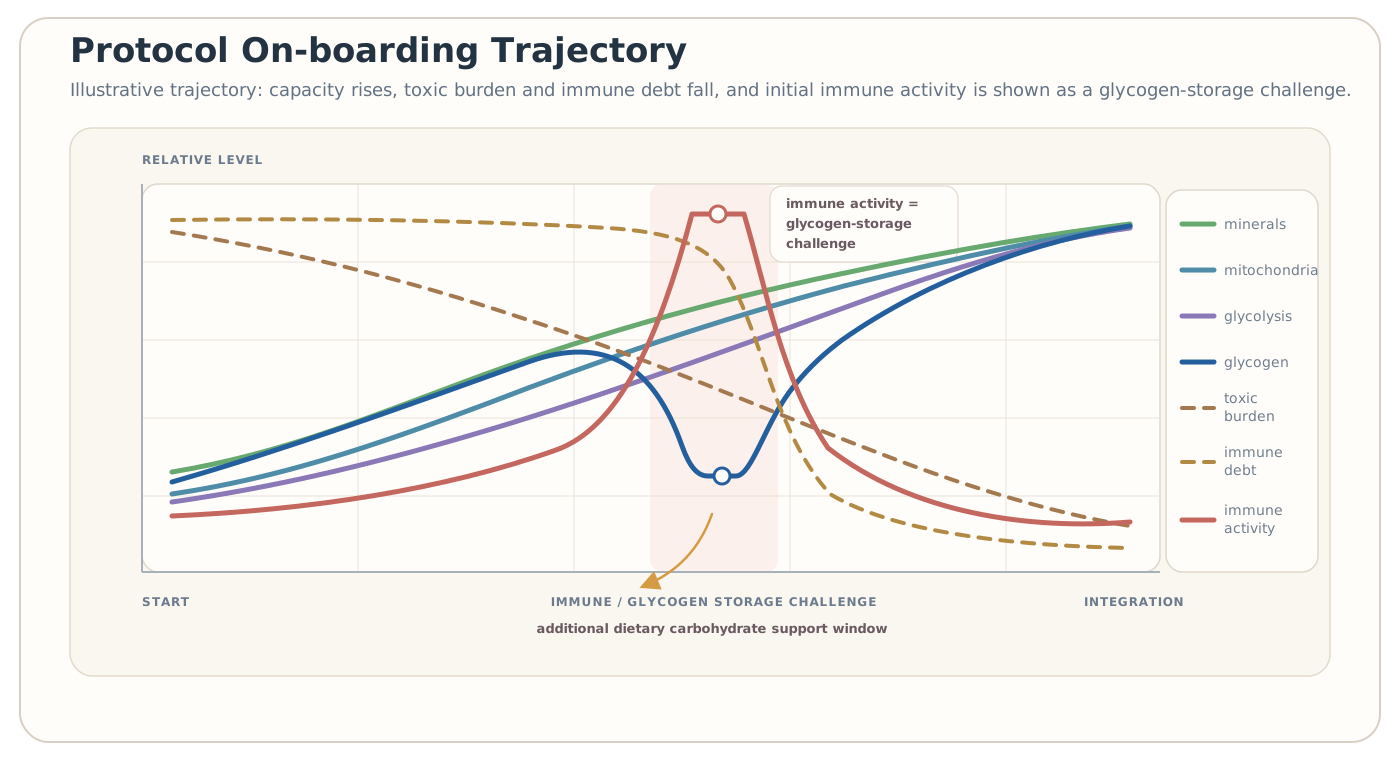
As glycolysis and immune activity increase, glycogen storage can become a practical load to manage.
Stabilise minerals and redox
Introduce electrolytes, antioxidants and cofactors slowly enough that the response remains interpretable.
Cardiovascular health is essential
A focus on structural, immune, inflammatory processes, oxidative stress, histamine and the nervous system.
Para-/sympathetic signalling cascade
Check nasal breathing patterns, sleep and inflammation.
Detailed sequence
Please follow these steps with care and accuracy
This section contains a structured, logical starting order which is designed to minimise the introduction of unnecessary symptoms. Notes for each area are provided to help navigate this process.
Orientation: a gentle approach
However, the protocol also spans over 250 printable pages - so it's also completely understandable if you find yourself feeling a bit overwhelmed by the volume of new information needing to be absorbed.. likely while still battling brain fog and energy envelope issues, chronic feelings of fight/flight and other challenges.
Removing some or all of these debilitating issues should help improve the absorption and retention of new information. The focus of this section is to order and integrate JUST the essential items needed to get started on stabilising the key metabolic pathways. You can integrate them using the order described below, also noted in the daily schedules / run-sheets provided at the end of this section, along with a product ordering spreadsheet.
Ideally after sending off your baseline tests, you may help stabilise critical parts of the metabolism and help avoid unwanted MCAS + other symptoms by;
1. Pacing appropriately
2. Working on lymph flow
Notes:
i) Failure to maintain lymphatic flow can result in compartment-specific pressure buildup, eg. intracranial pressure.
ii) For severe patients, this may need to be actioned by carers and/or professionals. Sensitivity to touch may initially prevent performing this necessary step, however it should be actioned as soon as possible.
3. Food, dysbiosis phases and glycogen support
Notes:
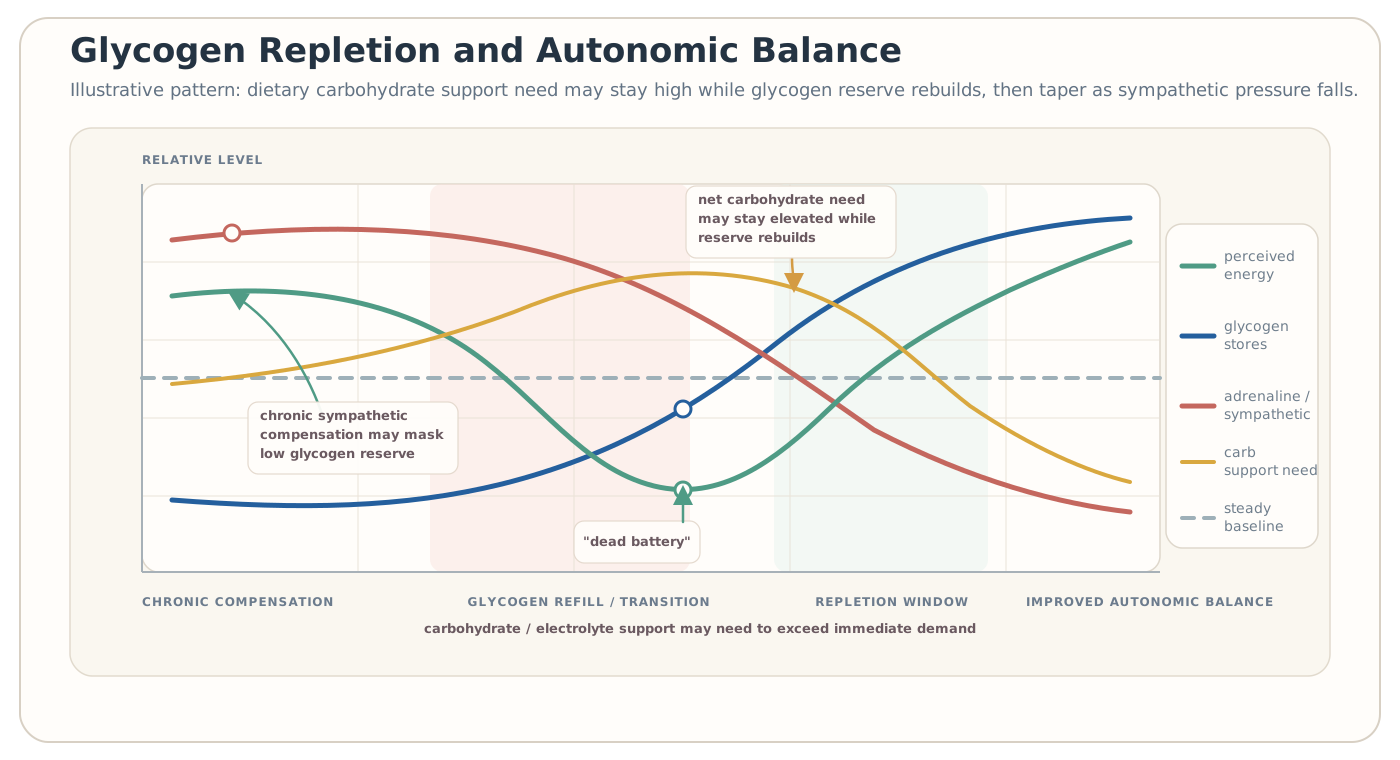
i) Eat strategically to ensure glycogen stores are being appropriately supported - in this model, restoring insulin sensitivity and glycogen synthesis may increase carbohydrate tolerance and need. Some people may rapidly require >200-250g of net carbohydrates / day, or (much) more, absorbed over >3-6 meals / snacks, as the metabolism improves, to avoid sympathetic reflex, after an eg. >400g 'glycogen refill' phase, just like recovering from a marathon or ketogenic diet. In a "crash", hourly "snacks" of 15g net carbs can be very helpful. In metabolic syndrome and type 2/3 diabetes contexts, treat this as staged metabolic repletion rather than generic high-carbohydrate advice; track glucose responses and use clinician guidance if insulin-dependent, using glucose-lowering medication, prone to hypoglycaemia, or managing eating-disorder risk. [134] [135] Carbohydrate needs reflect (immune) activity levels and other factors. A number of the supplements included below will help glycogen homeostasis.
ii) The initial goal is a low-inflammatory, low-histamine, low-oxalate diet - ideally, one that avoids triggering foods - however this doesn't need to be "perfect", just "good enough". This will later expand to include a wide array of plants, their helpful polyphenols, microbiome nourishing fibres / starches and numerous other useful compounds, whilst accompanying targeted, staged probiotics that focus on butyrate production and epithelial integrity, before repopulating lactobacillus, bifidobacterium, oxalobacter and other helpful species.
4a. Electrolytes, glucose metabolism, NADPH, PRPP
Electrolyte recipe
4. Stabilise the redox and mineral terrain. This includes VERY SLOWLY introducing:
a) electrolytes (see 4.1 Electrolytes), taken slowly over the day, by making a daily / weekly recipe of specific electrolytes and amino acids to put in a 500ml drink bottle and slowly sip / pour a "shot" into a glass, top up with water and drink between meals (see 4.3 DIY "sipper / shots"). You can start at eg. 1/8 daily doses and slowly increase.
Daily targets
The daily targets for each electrolyte compound used are also listed in the daily schedules at the end of this page.
These are daily protocol targets for staged repletion, not generic supplement advice. Adjust for dietary intake, kidney function, medications, blood pressure/volume status, and baseline/follow-up testing; as with the rest of the protocol, use clinician supervision where there is kidney, cardiac, endocrine, pregnancy, medication, or severe illness complexity.
These targets allow for minimal dietary intakes and can be further adjusted around consistent dietary intake patterns, using this calculator tool:
Magnesium Glycerophosphate - >4g total powder (>500mg elemental magnesium, 638mg phosphorous) / day. Ideally, a GI-tolerable upper limit should be established and used for dosing. Significant magnesium deficiencies can benefit from much higher intakes. GI tolerance may decrease as intracellular stores recover. Can also be taken sublingually for higher repletion efficacy.
Anecdotal magnesium observations. Reported magnesium intake needs vary widely and may differ substantially from standard daily reference values. In informal protocol observations, some people with an Oligoscan result interpreted as a magnesium shortfall of around 40% or more reported improvements in follow-up results or clinical presentation only after reaching approximately 1500-2000mg of elemental magnesium per day.
These observations do not establish a dose threshold. Oligoscan percentages should not be interpreted as a measured whole-body deficit or used alone to set a dose. Intakes in this range require clinician-directed assessment and monitoring, including kidney function and magnesium levels. GI tolerance alone does not establish safety. Magnesium assessment and safety.
Calcium Aspartate* - 5.5g total powder (750mg elemental calcium) / day.
Potassium Citrate - 13g total powder (4940mg elemental potassium) / day.
Sodium Bicarbonate - 5g total powder (1350mg elemental sodium & 3650mg bicarbonate) / day.
Sodium Chloride - 5-7g total powder (2730mg elemental sodium & 4270mg chloride) / day.
Resveratrol
Resveratrol can be very slowly added here (not in the "sipper/shots" recipe) 3x/day - initially starting at 50mg and increasing to 500mg per dose, to help protect against additional lactic acid being created by unblocking bottlenecks in glycolysis (correcting phosphate, magnesium, etc) while the TCA cycle is less efficient. This may improve insulin sensitivity and expose any hypothyroidism -> hepatic gluconeogenesis impairment, presenting as postprandial somnolence, brain fog, hunger, anxiety.
Iodine
(Where indicated) iodine supports thyroid hormone synthesis, including thyroxine (T4). The sodium/iodide symporter (NIS) transports iodide into thyroid cells, under regulation by thyroid-stimulating hormone (TSH).
For most non-pregnant adults, the recommended dietary iodine intake is 0.15mg (150 micrograms) per day. The linked review describes potassium iodide at 50-100mg daily in selected patients with Graves' hyperthyroidism under clinical supervision.
Retinoic acid, an active metabolite of vitamin A, can regulate NIS gene expression. Experimental effects vary by cell type, with increased expression in some thyroid cancer cells and suppression in non-transformed thyroid cells. These findings do not establish that supplemental retinoic acid is required for normal NIS function.
Excess iodine can cause underactive or overactive thyroid function. Review supplementation with your clinician, particularly with existing thyroid disease. Dietary sufficiency of vitamin A is recommended.
Ashwagandha
Ashwagandha can be very slowly added here (not in the "sipper/shots" recipe), starting with an evening dose of 25-50mg (1/10th capsule) and working up to a full evening dose before adding a morning dose, which shouldn't need much titration. Ashwagandha may affect stress, sleep, endocrine, immune, and thyroid-related pathways, but it is not appropriate for everyone. Avoid during pregnancy or breastfeeding, and like the rest of this protocol, use medical guidance with thyroid disease, autoimmune disease, liver disease, planned surgery, sedatives, anticonvulsants, immunosuppressants, diabetes or blood-pressure medicines, thyroid hormone, or hormone-sensitive prostate cancer risk.
Thyroid hormone option
An alternative option to Ashwagandha that your doctor may consider is thyroid hormone replacement. In the disease model, (levo)thyroxine (T4) may be more appropriate where iodine is low and selenium is normal, while triiodothyronine (T3) may be more relevant where selenium is low, regardless of iodine status.
Thyroid hormones are usually started and titrated gradually under medical supervision, guided by symptoms, thyroid blood tests and cardiovascular risk. Some people notice improved energy levels or functionality quite quickly, but as dosing increases and endogenous thyroid synthesis is suppressed, there can be a temporary step backwards or a need for prompt dose review and adjustment. Your doctor can advise how best to manage this process, including whether split dosing, such as early morning and early afternoon dosing, is appropriate.
Magnesium gel
Liberally applying the magnesium gel after showering, can be highly effective for magnesium absorption and is included in the schedule.
Silica
Silica is introduced here as a possible aid to aluminium excretion. The protocol amount is 10mg elemental silicon three times daily (30mg/day), from orthosilicic acid or another form with evidence of gastrointestinal absorption. Additional amounts throughout the day would be desirable. Bulk options are available. This is a protocol-specific amount, not an established minimum dose for aluminium removal. Review use with your clinician, particularly with impaired kidney function.
Astaxanthin
Astaxanthin is added at this time to help restore G6PD function while aluminium is elevated, targeting normal NADPH, PRPP levels. It has many other benefits, too. Normally well tolerated.
Biotin
Biotin is introduced here to support biotin-dependent steps in glucose metabolism. Pyruvate carboxylase supports gluconeogenesis by converting pyruvate to oxaloacetate, which also replenishes TCA-cycle intermediates. Propionyl-CoA carboxylase begins the conversion of propionyl-CoA towards succinyl-CoA for entry into the TCA cycle; the later methylmalonyl-CoA mutase step requires vitamin B12. These biochemical roles do not establish that high-dose supplementation improves glucose control when biotin supply is adequate.
Proposed protocol dosing: 5mg sublingually once daily with food, increasing over a short titration to a dose above 30mg.
No formal tolerable upper intake level has been set for biotin. Available human studies have not established direct toxicity at the doses studied. Biotin can interfere with blood tests, including some thyroid and troponin assays. Tell your clinician and laboratory before testing and follow their assay-specific advice. Do not delay urgent care for a washout period. See biotin and laboratory tests.
D-chiro-inositol
D-chiro-inositol is introduced here to target insulin sensitivity and glucose handling. D-chiro-inositol-containing signalling molecules participate in insulin action. Small clinical trials in polycystic ovary syndrome (PCOS) have reported lower insulin responses after an oral glucose load. Benefit in other conditions, including this protocol, remains uncertain. Review glucose monitoring and any insulin or other glucose-lowering medicines with your clinician.
The proposed protocol titration uses a 40:1 combination: 100mg myo-inositol plus 2.5mg D-chiro-inositol per dose, twice daily, increasing gradually if tolerated and clinically appropriate to 1000mg myo-inositol plus 25mg D-chiro-inositol per dose, twice daily. The upper daily total is 2000mg myo-inositol plus 50mg D-chiro-inositol.
Lecithin
Lecithin supplies phosphatidylcholine (PC), a major membrane phospholipid and a substrate for phosphatidylserine (PS) synthesis. It is included here to support membrane integrity and provide substrate for ongoing PS production. The protocol includes 15g/day of sunflower lecithin.
The proposed link to stress regulation remains indirect. A trial of a PS/phosphatidic acid formulation found lower ACTH and cortisol responses in a subgroup with high chronic stress. It did not test plain lecithin or directly measure corticotropin-releasing hormone (CRH) release. CRH can influence human mast-cell activity in laboratory studies. Whether lecithin stabilises PS synthesis or reduces CRH release in patients is unknown. Any benefit for sympathetic excess or mast cell activation syndrome (MCAS) remains a protocol hypothesis.
Notes and cautions
Notes:
i) Consuming too much at once may cause diarrhoea, headaches, nausea, water retention and/or rapid urination. With severe dysbiosis, some electrolyte forms can also act as biofilm breakers and trigger immune activity in the form of temporary nausea and diarrhoea, even at smaller doses. Within the protocol this may sometimes be interpreted as a transient response, but persistent, severe, dehydrating, bloody, febrile, or otherwise concerning symptoms should prompt dose reduction/cessation and clinical review. If symptoms persist, try to isolate the trigger and consider swapping out forms. eg. Potassium citrate can be swapped for potassium chloride.
ii) Calcium and, to a lesser extent, potassium may temporarily increase adrenergic / glutamatergic sensitivity and need to be increased more slowly than the other electrolytes. Calcium sensitivity needs to be tested and managed carefully. Where adrenergic, dopaminergic or related auto-antibody patterns are suspected, treat this as a clinical caution rather than a proven predictor, and replete slowly while tracking symptoms. (see 4.1 Electrolytes)
iii) Starting magnesium and/or phosphate may support glucose handling, ATP production and glycogen synthesis where deficiency or refeeding-like physiology is present. [84] [88] Experiencing symptoms that resemble hypoglycaemic events or diabetic "hangry" mood alterations may indicate more dietary carbohydrates are needed.
iv) This recipe can also be combined with eg. green or other tea, lemon juice, lime juice, acai, berry, etc for flavour. The glycine added in the next step sweetens the flavour considerably.
v) Shake before each use.
vi) Ashwagandha is known to trigger anhedonia symptoms in some people, which is expected to resolve as neurotransmitters re-balance from less sympathetic drive, over 2 weeks. There are also potential interactions with SSRIs and some general cautions for excessive serotonin. However, ashwagandha has also been studied for OCD in SSRI-using patients without adverse effects.
vii) Improved glucose handling and UDP-glucuronic acid production could, in principle, increase glucuronidation and clearance of benzodiazepines that rely heavily on this pathway, particularly lorazepam (Ativan), oxazepam and temazepam. Glucuronidation also clears active diazepam metabolites such as temazepam and oxazepam. This is a proposed mechanism, not a demonstrated effect of this protocol. In physically dependent users, increased clearance could shorten drug effect and contribute to interdose or withdrawal symptoms despite an unchanged dose. Any unexpected change in benzodiazepine effect should be treated cautiously and medication changes discussed with the prescribing clinician. Do not stop benzodiazepines abruptly or change the dose without prescriber guidance.
4b. Antioxidants and mitochondrial cofactors
b) antioxidants and mitochondrial cofactors (Vitamin C, Vitamin E, R-ALA, CoQ10, and Glutathione donors like NAC, Serine -> Glycine), taken 2-3x/day.
Notes:
i) These may need TINY doses, initially, eg. 50-100mg of Vitamin C, NAC, Serine, Glycine and CoQ10. Introduce these individually.
ii) Vitamin E and R-ALA are normally less sensitive. R-ALA and Glutathione donors may increase insulin sensitivity, exposing any hypothyroidism -> impaired hepatic gluconeogenesis. Serine can unblock a methylation bottleneck, creating a temporarily adrenergic shift in metabolism. For people with severe neuropsychiatric symptom susceptibility, this may need a slow titration.
4c. Carnitine, creatine, uridine, D-ribose, taurine and inosine
c) (usually less slowly) L-carnitine / acetyl L-carnitine, creatine (for fatty acid transport and ATP-PC pathway), Uridine monophosphate (sublingually - ramping up from 10, to typically 50-100mg, 2x/day) and similar slowly ramp up of D-ribose, starting at 500mg, to 10g, added to the daily DIY "sipper/shot" recipe. Slowly add in the other DIY "sipper/shot" recipe ingredients, eg. Taurine, Hyaluronic acid, N-acetylglucosamine. SLOWLY titrate a morning sublingual dose of Inosine from 10mg to 50-100mg range. The sources for these components support their roles in fatty-acid transport, creatine/phosphocreatine energy buffering, D-ribose/CFS pilot context, uridine/nucleotide physiology, and taurine safety/microbiome interactions; the low-dose ramping schedule is protocol titration and should be individualised. [100] [113] [114] [115] [116] [117]
Notes:
i) Expect insulin sensitivity and glycogen synthesis to increase with Uridine, D-Ribose and Inosine - be prepared to increase intakes of carbohydrates to facilitate glycogen synthesis and potentially sodium + other electrolytes, towards their daily targets. This may also expose any hypothyroidism -> hepatic gluconeogenesis impairment, presenting as postprandial somnolence, brain fog, hunger, anxiety.
ii) Inosine is also an immune stimulant, and may trigger some initial immune activity - keep the dose low, eg. 50-100mg. Hold at this dose until Stage
2 of the protocol, or otherwise metabolically ready for an increased immune
activity phase. If an "unmanageable" level of immune system response
presents. If symptoms become difficult to tolerate, reduce the dose to 25-50mg and reassess.
iii) Taurine may cause GI discomfort in some people, particularly where bile-acid handling or microbiome ecology is abnormal; lower-dose or sublingual use can be considered if tolerated. [118] [119] [120]
4d. Correcting mineral cofactor deficiencies and excess toxic metals
d) Adding mineral cofactors like Zinc, Copper, Iron, Manganese, Selenium, Lithium, Rubidium, Cobalt, Boron, Molybdenum, Chromium, and Vanadium, etc. This helps balance the neurotransmitter synthesis pathway (and precursors), lowers the burden on ALDH and MAO pathways and reduces oxidative stress, allowing safer processing of neurotransmitter metabolites. [82] [138] (see 2.3.2 Remineralisation).
MiADMSA can be started at 5mg (active) / 27mg total (about 1/20 of a 100mg (active) capsule / 550mg total) and titrated for severe / sensitive patients; otherwise, 100mg every 3 days may be used, or 200mg, every 2 days, where well-tolerated. Follow-up mineral / metal testing is suggested at 1g of dosing to assess progress and make any adjustments.
Maintain sufficient hydration and urinary excretion. Early data and protocol experience suggest that between 5-10 x 100mg doses may be sufficient for people with moderate levels of toxic metals to achieve a highly functional metabolic shift, with less urgent ongoing chelation thereafter. Very high levels of toxic metals may take proportionally more doses.
Oligoscan data is derived from skin measurements. As metals mobilise from internal organs, measured levels of metals in skin can initially elevate, before ultimately being excreted.
Chelation is an active intervention, so use clinician guidance where there is kidney, liver, pregnancy, medication, or severe illness complexity. MiADMSA is also known to mildly chelate zinc, copper, selenium, chromium and cobalt, which is why this protocol employs a staggered dosing approach, intentionally combined with mineral support, even where levels of these specific minerals are within range.
PectaSol (optional) can be started at 0.5g and titrated to 5g before meals. PectaSol may trigger reactions in some people.
Notes:
i) Many of the minerals require non-standard routes for absorption, eg. sublingual, liposomal, DMSO-carrier.
ii) Remineralisation will be severely limited if acidaemia / acidosis is still present.
iii) Immunological debt is likely to become a focus for the system as the mineral + toxic metal balance is improved. Immune activity, inflammation, pain, rashes, etc are expected and carbohydrate needs may increase to help maintain functionality during immune response and new baseline metabolism.
iv) Expect glucose metabolism to rapidly improve and net carbohydrate needs to rapidly increase to >250g / day, to avoid glycogen insufficiency, after an acute glycogen refill phase. The examples below show approximate 2200 kcal day structures for omnivore, vegetarian and vegan diets that spread carbohydrate intake across the day. Treat them as adaptable starting points rather than fixed prescriptions: adjust around current diet phase, histamine / oxalate tolerance, glucose response, kidney function, medication context and clinician guidance. During immune activity, carbohydrate and electrolyte needs may rise further.
4e. Active B1/B2 and compounded nutrients
e) Introducing Vitamins B1 and B2 in active or near-active forms - such as TPP / cocarboxylase and FMN / R5P. These support mitochondrial redox balance, glycolysis, and the pentose phosphate pathway; the active-form dose range below is protocol-specific titration rather than a guaranteed clinical correction. [136] [137] [127] Depending on the severity of dysbiosis / acetaldehyde burden, the total daily B1 dosing can range from 50-600mg of the active form, cocarboxylase / thiamine pyrophosphate (not to be confused with eg. thiamine or thiamine HCL which would require much higher doses), starting from a low dose.
Notes:
i) Compounded nutrients are available (see 4.2 Compounded nutrients) and replace a wide range of individual supplements. The compounded nutrients are potent, therefore starting at eg. 1/8th doses,
may be helpful to soften / slow the metabolic shift when restoring
severe deficiencies.
ii) B vitamin titration options for patients with severe
neuropsychiatric sensitivity are also discussed.
iii) Additional B1, in any form, can be added for further
acetaldehyde adduct-forming and detoxification support, later - noting the impact of rapid removal of acetaldehyde -> endogenous morphine. (see 2.3.4 Rapid withdrawal, hypo-/hypermetabolism)
iv) Adding B1 can increase B9 transporter activity and SAMe availability,
allowing some adrenergic signalling increase unless B2 and NAD+ are
restored in balance - start slowly.
4f. Other B vitamins, methylation and monoamine cautions
f) Slowly layer in Vitamins B5, B6 (as P5P), B9 and B12 (as methylcobalamin or
hydroxocobalamin) only after upstream redox stress is under better control.
Notes:
i) B1, B9 and B12 can increase methylation -> SAMe availability, unblocking epinephrine synthesis at PNMT and also COMT activity, leading to hyper-adrenergic signalling if TOO MUCH is introduced quickly, ie. without sufficient B2 for MAO and NAD+ (and redox) for ALDH.
ii) In
the context of unresolved aldehyde or monoamine overload, these can also be
disruptive (unless P5P is eg. dissolved in DMSO, bypassing impaired alkaline phosphatase (ALP) and pyridoxal kinase (PK) steps) and BH4 synthesis (dietary queuine - see "Vitamin Q deficiency").
NB. Acetaldehyde, NAD redox and rapid withdrawal
NB. Reducing acetaldehyde burden and/or restoring NAD+:NADH status may improve several downstream metabolic bottlenecks; within the disease model, effects on ALDH/dopamine/THP/endogenous-morphine pathways remain a proposed mechanism built from component evidence. [13] [30] [68] [82]
Stay keenly observant for rapid withdrawal symptoms and manage them proactively.
4g. NAD+ pool support and methylene blue
Then;
g) Introducing NAD+ pool support (apigenin - P38
inhibitor), NAD+:NADH redox support (0.05-0.3mg of methylene blue, once per day), and
Notes:
i) Start at 0.05mg (50mcg) of methylene blue per day and slowly increase every 2-3 days until ANY metabolic shift is observed. Hold at that dose and look to decrease towards 50mcg, when appropriate. Safety note: most formal warnings and case reports involve doses orders of magnitude higher than used here, and usually intravenous methylene blue. However, methylene blue is pharmacologically active and has recognised drug-interaction and contraindication issues, so check the detailed methylene blue section before starting, especially if using serotonergic medicines, opioids, dextromethorphan, or if G6PD status is unknown. [77] [78] Prepare and dose carefully.
iii) Expect and watch for alcohol / opioid withdrawal symptoms. Manage them proactively.
iv) The microdose range here is protocol-derived from nM-level mitochondrial/cell-culture methylene-blue work and oral pharmacokinetic scaling. It should be read as model-based dose reasoning, not as a clinically validated oral microdose range. [111] [112] [81]
4h. Sublingual NAD+
h) Adding active vitamin B3, as sublingual NAD+ (NOT precursors - niacin, nicotinamide / niacinamide, nicotinamide riboside / mononucleotide) at 5-10mg doses, 2x/day and increase to 20-40mg 2x/day.
Notes:
i) Expect and watch for alcohol / opioid withdrawal symptoms. Manage them proactively. (see 2.3.4 Rapid withdrawal, hypo- / hyper metabolism)
5. Blood-flow, hypoxia and structural contributors
6. Histamine and sympathetic overdrive influences
6. Start working on identifying and addressing any/all other influences affecting histamine and/or sympathetic overdrive (see 2.2.6 Cortisol, limbic system, glycogen and IFN-gamma).
Notes:
i) Unrestricted, deep nasal breathing without localised inflammation is a basic requirement for parasympathetic signalling (see also 2.2.3 Living without chronic dysbiosis - Nasopharynx).
(PRINTABLE) SPREADSHEET RESOURCES
Schedules and ordering links
Use these (optional) focused starter resources before moving into the full protocol schedule and full product-ordering pathway.
"Starter" daily schedule / run-sheets
Once you have sufficiently stabilised, the full Stage 1, 2 and 3 schedule options are available in 2.3 Daily supplement schedule. For onboarding, use the simpler starter run-sheet and DIY sipper daily recipe that matches how you intend to source nutrients.
I plan to start the protocol:
"Starter" product ordering links
If you are already committed to completing the whole protocol, the full primary-pathway product list is in 5 Ordering products. For now, the table below exports a smaller starter-items spreadsheet.
Download the spreadsheet below
1. Choose shipping region
Select the relevant region from the drop-down menu before exporting.
2. Export Excel or CSV
Use Excel for a working spreadsheet, or CSV for a plain data export.
| wdt_ID | wdt_created_by | wdt_created_at | wdt_last_edited_by | wdt_last_edited_at | purpose | category | product | weekly recipe amount | stage2diy | stage3diy | weekly recipe notes | in custom nutrients | isdiypowder | isdiydrink | isothersupplement | isstarteritem | issevereitem | getting started desc | forwdtid | sortorder | region | producttype | isantiseptic | istool | per 90 days | product link | rationale for inclusion | more information |
|---|---|---|---|---|---|---|---|---|---|---|---|---|---|---|---|---|---|---|---|---|---|---|---|---|---|---|---|---|
| 1 | 3dghs | 10/08/2024 09:44 AM | 3dghs2 | 30/09/2026 11:41 PM | [DIY SHAKE] | Vitamins | B8 Myo & D-Chiro Inositol | 28 caps | 28 caps | 28 caps | For AU source, 1.5g = 3 caps. DE source has 20% more per cap. | 1 | 1 | Start with a target dose around 2.5mg D-chiro inositol (approx 1/4 capsule) and increase. | 2 | US | Vitamins | 3 | https://iherb.com/pr/wholesome-story-myo-d-chiro-inositol-120-vegetarian-capsules/114887 | Myo-inositol + D-chiro inositol. Glucose uptake and glycogen synthesis. | https://bornfree.life/learn/4-3-diy-powder | |||||||
| 2 | 3dghs | 10/08/2024 09:44 AM | 3dghs | 25/09/2024 06:18 AM | [DIY SHAKE] | Vitamins | B5 Pantothenic Acid | 0.7-3.5g | 0.7-3.5g | 0.7-3.5g | 1 | 1 | Normally well-tolerated | 3 | US | Vitamins | 9g-45g | https://www.bulksupplements.com/products/vitamin-b5-calcium-pantothenate-pantothenic-acid-powder?variant=32133465342063 | Required for coenzyme A (CoA) and helps regulate lipolysis at VNN1. | https://bornfree.life/learn/4-3-diy-powder | ||||||||
| 4 | 3dghs | 10/08/2024 09:44 AM | 3dghs | 10/08/2024 09:44 AM | [DIY SHAKE] | Supplements | PQQ+CoQ10 | 7 - 21 caps | 7 - 21 caps | 7 - 21 caps | 1 | 1 | Normally well-tolerated. Amount needed depends on mineral deficiency data / dose response | 5 | US | Supplements | 3–9 | https://iherb.com/pr/lake-avenue-nutrition-coq10-with-pqq-100-mg-60-veggie-capsules/97389 | DBH promoter, Electron Transport Chain support. CoQ10 can promote fungal growth. | https://bornfree.life/learn/4-3-diy-powder | ||||||||
| 5 | 3dghs | 10/08/2024 09:44 AM | 3dghs | 10/08/2024 09:44 AM | [DIY SHAKE] | Supplements | Apigenin | 7 - 56 caps | 7 - 56 caps | 7 - 56 caps | 1 | 1 | Normally well tolerated. Amount required depends on mineral deficiency data and dose response | 6 | US | Supplements | 1–8 | https://iherb.com/pr/codeage-liposomal-apigenin-non-gmo-vegan-90-capsules/114120 | ALDH, p38 MAPK inhibitor, TGF-b1 modulator and NADase inhibitor. Start at ¼ dose and increase. Upper threshold for effective dose may be 400mg/day. | https://bornfree.life/learn/4-3-diy-powder | ||||||||
| 7 | 3dghs | 10/08/2024 09:44 AM | 3dghs2 | 23/11/2025 05:59 AM | [DIY SHAKE] | Minerals | Kelp | 7g | 7g | 7g | 1 | 1 | Target daily dose 1g. Start slowly and increase to daily values, as tolerated | 9 | US | Minerals | 90g | https://iherb.com/pr/now-foods-organic-kelp-pure-powder-8-oz-227-g/16668 | Bromine and iodine source. | https://bornfree.life/learn/4-3-diy-powder | ||||||||
| 10 | 3dghs | 10/08/2024 09:44 AM | 3dghs2 | 30/09/2026 11:19 PM | [DIY SHAKE] | Supplements | Lecithin | 77g | 77g | 77g | 1 | 1 | 13 | US | Supplements | 1350g | https://www.bulksupplements.com/products/sunflower-lecithin-1 | Phosphatidylcholine 2.3g – phospholipid membrane and methylation support, Phosphatidylethanolamine 2g, Phosphatidylinositol 1.4g | https://bornfree.life/learn/4-3-diy-powder | |||||||||
| 11 | 3dghs | 10/08/2024 09:44 AM | 3dghs2 | 16/04/2026 02:49 AM | [DIY SIPPER/SHOTS] | Electrolytes | Calcium Aspartate | 38.5g | 38.5g | 38.5g | 5.5g / day, start with small doses to test neuropsychiatric symptom susceptibility. | 1 | 1 | 1 | 5.5g / day. Correcting calcium deficiency can unblock adrenergic signallng bottlenecks and expose temporary receptor hypersensitivity. Very slow calcium titration may be necessary | 14 | US | Electrolytes | 500g | https://www.bulksupplements.com/products/calcium-aspartate-powder?variant=32133382439023 | Calcium - critical electrolyte. Oral dosing works but can feed biofilms. Aspartate assists with urea cycle and energy metabolism. | https://bornfree.life/learn/4-3-diy-powder/#4.3-DIY-sipper | ||||||
| 12 | 3dghs | 10/08/2024 09:44 AM | 3dghs2 | 27/05/2026 04:09 AM | [DIY SIPPER/SHOTS] | Electrolytes | Magnesium Glycerophosphate | 28g | 28g | 28g | 4g / day. May be more effective sublingually, as 3+ doses. | 1 | 1 | 1 | 4g / day. May be more effective sublingually, as 3+ doses. | 15 | US | Electrolytes | 360g | https://www.amazon.com/dp/B09SJ3G16T | Critical electrolytes for energy metabolism, etc. Low magnesium and /or phosphate can also cause arrhythmia, muscle spasms. | https://bornfree.life/learn/4-3-diy-powder/#4.3-DIY-sipper | ||||||
| 13 | 3dghs | 10/08/2024 09:44 AM | 3dghs2 | 30/09/2026 11:20 PM | [DIY SIPPER/SHOTS] | Electrolytes | Potassium Citrate | 91g | 91g | 91g | 13g / day | 1 | 1 | 1 | 13g / day. Correcting potassium deficiency can unblock adrenergic signallng bottlenecks and expose temporary receptor hypersensitivity. Start slowly | 16 | US | Electrolytes | 1170g | https://www.bulksupplements.com/products/potassium-citrate-powder | Critical electrolyte. Oral dosing is okay. Low potassium can cause high blood pressure, arrhythmia, muscle spasms, low glutamate and dopamine synthesis, impaired glycolysis. | https://bornfree.life/learn/4-3-diy-powder/#4.3-DIY-sipper | ||||||
| 14 | 3dghs | 10/08/2024 09:44 AM | 3dghs | 10/08/2024 09:44 AM | [DIY SIPPER/SHOTS] | Amino Acids | Taurine | 84g | 84g | 84g | 12g / day. Can be taken sublingually if sulphur reducing bacteria suspected. Start low / find tolerable dose and increase. | 1 | 1 | 1 | 12g / day. Can be used sublingually, if gut microbiome dysbiosis is severe. Start low / find tolerable dose and increase | 17 | US | Amino Acids | 1.08kg | https://www.bulksupplements.com/products/taurine | GLUT2, glycogen synthesis, promotes ALDH for aldehyde degradation, adrenaline inhibition. TUDCA synthesis. Note: can feed Bilophila wadsworthia, etc. | https://bornfree.life/learn/4-3-diy-powder/#4.3-DIY-sipper | ||||||
| 15 | 3dghs | 10/08/2024 09:44 AM | 3dghs2 | 18/03/2026 09:00 AM | [DIY SIPPER/SHOTS] | Amino Acids | Acetyl L-Carnitine | 28g | 28g | 28g | 4g / day. Can be used sublingually, if gut microbiome dysbiosis is severe. | 1 | 1 | 1 | 4g / day. Can be used sublingually, if gut microbiome dysbiosis is severe. | 18 | US | Amino Acids | 360g | https://www.bulksupplements.com/products/l-carnitine-base-powder?variant=32133418188911 | Fatty acid transport, dopamine synthesis promoter. | https://bornfree.life/learn/4-3-diy-powder/#4.3-DIY-sipper | ||||||
| 19 | 3dghs | 10/08/2024 09:44 AM | 3dghs2 | 14/04/2026 04:45 AM | [DIY SIPPER/SHOTS] | Amino Acids | L-Glycine | 56-105g | 56-105g | 56-105g | Start slowly, eg 150mg / day and increase to (personalise) 8-15g/day. Balances with serine. Can expose an under-performing thyroid pathway and hepatic gluconeogenesis. | 1 | 1 | 1 | Start slowly, eg 150mg / day and increase to (personalise) 8-15g/day. Balances with serine. Can expose an under-performing thyroid pathway and hepatic gluconeogenesis. | 22 | US | Amino Acids | 1350g | https://www.bulksupplements.com/products/glycine-pure-powder | Collagen synthesis. Glutathione metabolism - > oxPPP -> NAD+, glycogen, inosine synthesis. | https://bornfree.life/learn/4-3-diy-powder | ||||||
| 20 | 3dghs | 10/08/2024 09:44 AM | 3dghs2 | 14/04/2026 04:46 AM | [DIY SIPPER/SHOTS] | Amino Acids | L-Serine | 28g | 28g | 28g | Start slowly, eg. 250mg / day and increase to 4g / day. Can expose under-performing thryroid pathway and hepatic gluconeogenesis. | 1 | 1 | 1 | Start slowly, eg. 250mg / day and increase to 4g / day. Can expose under-performing thryroid pathway and hepatic gluconeogenesis. | 23 | US | Amino Acids | 360g | https://www.bulksupplements.com/products/l-serine | Neuropathy, neurotransmission, glycolysis activation. | https://bornfree.life/learn/4-3-diy-powder | ||||||
| 21 | 3dghs | 10/08/2024 09:44 AM | 3dghs | 10/08/2024 09:44 AM | [DIY SIPPER/SHOTS] | Amino Acids | Creatine | 35g | 35g | 35g | 5g / day | 1 | 1 | 1 | 5g / day | 24 | US | Amino Acids | 450g | https://www.bulksupplements.com/products/creatine-monohydrate | GLUT4, ATP, SAMe metabolism efficiency. | https://bornfree.life/learn/4-3-diy-powder/#4.3-DIY-sipper | ||||||
| 23 | 3dghs | 10/08/2024 09:44 AM | 3dghs2 | 02/07/2026 05:32 AM | [REPLETION] | Minerals | Silica | 1 | 1 | Start slowly and increase to protocol doses, as tolerated | 26 | US | Minerals | 4.5 | https://science-only.com/products/silica?variant=50490184597785 | Silicon deficiency – HIF-1a. Antiviral. Magnesium uptake. Collagen. Silica will also be heavily used to excrete acetaldehyde and toxic metals. | https://bornfree.life/learn/4-3-diy-powder | |||||||||||
| 25 | 3dghs | 10/08/2024 09:44 AM | 3dghs2 | 30/09/2026 11:40 PM | [DIY SHAKE] | Supplements | R-ALA | 4.2g | 4.2g | 4.2g | 1 | 1 | Start slowly - can break biofilm and trigger some herxheimer reactions. | 28 | US | Supplements | 54g | https://www.bulksupplements.com/products/r-alpha-lipoic-acid-r-ala-powder | ALDH2 promoter. AMPK promoter – insulin sensitivity. Biofilm breaker. Toxic metal chelator. TCA cycle support.. | https://bornfree.life/learn/4-3-diy-powder | ||||||||
| 26 | 3dghs | 10/08/2024 09:44 AM | 3dghs | 10/08/2024 09:44 AM | [DIY SIPPER/SHOTS] | Supplements | NAC | 3.5-7g | 3.5-7g | 21g | 0.5-1g / day. In Stage 3, cycle an increased dose of 3g / day for 3 weeks, then revert for 3 weeks, indefinitely. | 1 | 1 | 1 | 0.5-1g / day. Start slowly | 29 | US | Amino Acids | 97.5–132g | https://www.bulksupplements.com/products/n-acetyl-l-cysteine-nac | Thrombolytic, mucolytic, antioxidant, detoxifier, biofilm breaker and metal chelator. Can cause die-off in large doses. | https://bornfree.life/learn/4-3-diy-powder/#4.3-DIY-sipper | ||||||
| 33 | 3dghs | 10/08/2024 09:44 AM | 3dghs | 11/08/2024 11:30 AM | [DIY SIPPER/SHOTS] | Electrolytes | Sodium Chloride | 35-50g | 35-50g | 35-50g | 5-7.1g/day | 1 | 1 | 1 | 5-7g / day | 37 | US | Electrolytes | 450-900g | https://www.amazon.com/Amazon-Brand-Happy-Ground-Ounces/dp/B07QW1G8MW | Critical electrolyte. Oral dosing is okay. Low sodium can cause low blood pressure and low dopamine transport. | https://bornfree.life/learn/4-3-diy-powder/#4.3-DIY-sipper | ||||||
| 37 | 3dghs | 10/08/2024 09:44 AM | 3dghs2 | 12/03/2026 10:58 AM | [REPLETION] | Vitamins | B1 Thiamine | 1 | 1 | (Also found in the compounded minerals) Equivalent to 1-2 x 500mg Thiamine HCL or more, 2x/day | 44 | US | Vitamins | 3 | https://iherb.com/pr/source-naturals-high-potency-b-1-500-mg-100-tablets/980 | TPP / energy metabolism, affected by acetaldehyde. Increase from a tenth dose. | https://bornfree.life/learn/2-3-2-remineralisation/ | |||||||||||
| 38 | 3dghs | 10/08/2024 09:44 AM | 3dghs | 17/09/2024 02:08 AM | [REPLETION] | Vitamins | B9 5-MTHF | 1 | 1 | Start very slowly - may unblock methylation -> SAMe -> epinephrine synthesis and only parts of the degradation pathway, if taken in isolation. | 45 | US | Vitamins | 1 | https://iherb.com/pr/life-extension-optimized-folate-1-700-mcg-dfe-100-vegetarian-tablets/63828 | Methylation cycle, BH4. | https://bornfree.life/learn/2-3-2-remineralisation/ | |||||||||||
| 41 | 3dghs | 10/08/2024 09:44 AM | 3dghs | 29/09/2024 04:42 AM | [DIY SHAKE] | Vitamins | C Ascorbate | 14g | 14g | 14g | 1 | 1 | Start slowly and increase. Can be a bumpy start | 48 | US | Vitamins | 1 | https://iherb.com/pr/california-gold-nutrition-gold-c-usp-grade-vitamin-c-1-000-mg-240-veggie-capsules/61865 | Antioxidant. HIF-1a, DBH, collagen synthesis. Use away from copper dosing. | https://bornfree.life/learn/4-3-diy-powder | ||||||||
| 49 | 3dghs | 10/08/2024 09:44 AM | 3dghs | 11/08/2024 11:35 AM | [OTHER SUPPLEMENTS] | Electrolytes | Magnesium Spray | 1 | 1 | Apply after showering | 56 | US | Electrolytes | 4 | https://iherb.com/pr/life-flo-magnesium-oil-sport-spray-8-fl-oz-237-ml/49247 | Critical electrolyte for energy metabolism, etc. Low magnesium can also cause arrhythmia, muscle spasms. Transdermal absorption provides a slow release profile. | https://bornfree.life/learn/4-1-electrolytes/ | |||||||||||
| 50 | 3dghs | 10/08/2024 09:44 AM | 3dghs | 12/09/2024 02:12 AM | [REPLETION] | Minerals | Vanadium | 1 | 1 | (Sublingual, also found in the compounded minerals). Start slowly and increase to 1mg (elemental), as tolerated | 57 | US | Minerals | 1 | https://iherb.com/pr/source-naturals-vanadyl-sulfate-10-mg-100-tablets/1477 | (Sublingual) Required for glucose transport and insulin sensitivity. | https://bornfree.life/learn/2-3-2-remineralisation/ | |||||||||||
| 51 | 3dghs | 10/08/2024 09:44 AM | 3dghs | 10/08/2024 09:44 AM | [REPLETION] | Minerals | Lithium | 1 | 1 | Start slowly and increase to 5mg (elemental), as tolerated | 58 | US | Minerals | 1 | https://iherb.com/pr/kal-lithium-orotate-5-mg-120-vegcaps/85528 | Adrenergic metabolism / inhibition. Glycogen‑Synthase‑Kinase‑3β inhibition.. Magnesium reabsorption. Immunity. | https://bornfree.life/learn/2-3-2-remineralisation/ | |||||||||||
| 52 | 3dghs | 10/08/2024 09:44 AM | 3dghs | 10/08/2024 09:44 AM | [REPLETION] | Minerals | Molybdenum | 1 | 1 | (Sublingual, also found in the compounded minerals). Start slowly and increase to 0.5mg (elemental), as tolerated | 59 | US | Minerals | 1 | https://iherb.com/pr/source-naturals-reduced-glutathione-complex-orange-50-mg-100-lozenges/1407 | (Sublingual) RIboflavin metabolism. B6 degradation. Taurine metabolism. ALDH. XO. | https://bornfree.life/learn/2-3-2-remineralisation/ | |||||||||||
| 53 | 3dghs | 10/08/2024 09:44 AM | 3dghs | 10/08/2024 09:44 AM | [REPLETION] | Minerals | Selenium | 1 | 1 | (Sublingual, also found in the compounded minerals). Start slowly and increase to 1mg (elemental), as tolerated | 60 | US | Minerals | 1 | https://iherb.com/pr/california-gold-nutrition-selenium-yeast-free-200-mcg-180-veggie-capsules/90416 | (Sublingual) Thyroid and glutathione metabolism. | https://bornfree.life/learn/2-3-2-remineralisation/ | |||||||||||
| 54 | 3dghs | 10/08/2024 09:44 AM | 3dghs2 | 12/03/2026 11:30 PM | [REPLETION] | Minerals | Chromium | 1 | 1 | (Sublingual, also found in the compounded minerals). Start slowly and increase to 1.5mg (elemental), as tolerated | 61 | US | Minerals | 1 | https://iherb.com/pr/solaray-chromium-picolinate-lozenges-natural-lemon-raspberry-1-000-mcg-100-lozenges/124399 | (Sublingual) Required for glucose transport and insulin sensitivity. | https://bornfree.life/learn/2-3-2-remineralisation/ | |||||||||||
| 55 | 3dghs | 10/08/2024 09:44 AM | 3dghs | 10/08/2024 09:44 AM | [REPLETION] | Minerals | Sulphur | 1 | 1 | Start slowly and increase to >1g (elemental), as tolerated | 62 | US | Minerals | 3 | https://iherb.com/pr/doctor-s-best-msm-with-optimsm-1-500-mg-120-tablets/3 | Iron-sulphur clusters. Oxalate transport. Transsulfuration pathway | https://bornfree.life/learn/2-3-2-remineralisation/ | |||||||||||
| 56 | 3dghs | 10/08/2024 09:44 AM | 3dghs | 10/08/2024 09:44 AM | [REPLETION] | Minerals | Zinc | 1 | 1 | (Sublingual, also found in the compounded minerals). Start slowly and increase to ~30mg (elemental) 2x/day, as tolerated | 63 | US | Minerals | 3 | https://iherb.com/pr/source-naturals-wellness-zinc-lozenges-peach-raspberry-23-mg-120-lozenges/1476 | (Sublingual) Catabolic pathways. Glycolysis. HIF-1a. Methylation + folate transport. BH4. ALDH. LDH. NOS. RK. P5P. | https://bornfree.life/learn/2-3-2-remineralisation/ | |||||||||||
| 57 | 3dghs | 10/08/2024 09:44 AM | 3dghs | 10/08/2024 09:44 AM | [REPLETION] | Minerals | Copper | 1 | 1 | (Sublingual, also found in the compounded minerals). Start slowly and increase to 5mg (elemental), as tolerated | 64 | US | Minerals | 2 | https://iherb.com/pr/solaray-copper-2-mg-100-vegcaps/70102 | (Sublingual) Dopamine precursors. Dopamine beta hydroxylase. CuZnSOD. Glycolysis. | https://bornfree.life/learn/2-3-2-remineralisation/ | |||||||||||
| 58 | 3dghs | 10/08/2024 09:44 AM | 3dghs2 | 30/09/2026 02:48 AM | [REPLETION] | Vitamins | B7 Biotin | 1 | 1 | (Sublingual, also found in the compounded minerals) Start slowly with sufficient carbohydrates and increase to >30mg. Taken in addition to 2mg in compounded nutrients.. | 65 | US | Vitamins | 0.15 | https://www.bulksupplements.com/products/pure-biotin-vitamin-b7-pure-powder?variant=32133448433775 | (Sublingual) Critical for normal energy metabolism, however can feed some fungal infections. SMVT transporter inhibited by acetaldehyde and LPS. | https://bornfree.life/learn/2-3-2-remineralisation/ | |||||||||||
| 59 | 3dghs | 10/08/2024 09:44 AM | 3dghs | 19/08/2024 05:02 AM | [REPLETION] | Vitamins | B6 P5P | 1 | 1 | (Sublingual, also found in the compounded minerals). Generally well tolerated at 10-20mg, compared to other forms. | 66 | US | Vitamins | 1 | https://iherb.com/pr/swanson-p-5-p-pyridoxal-5-phosphate-20-mg-60-capsules/117697 | Problematic when ALDH and PK deficiency exists, but a critical coenzyme for metabolism. | https://bornfree.life/learn/2-3-2-remineralisation/ | |||||||||||
| 65 | 3dghs | 10/08/2024 09:44 AM | 3dghs2 | 12/03/2026 10:55 AM | [REPLETION] | Minerals | Manganese | 1 | 1 | (Sublingual, also found in the compounded minerals). Start slowly and increase to >1mg (elemental), as tolerated | 74 | US | Minerals | 1 | https://iherb.com/pr/bodybio-liquid-mineral-manganese-2-fl-oz-59-ml/150520 | (Sublingual) 2 drops. Supports MnSOD. Folate metabolism. Glycocalyx. GDH. Gluconeogenesis (PCB. ME1. PLD). | https://bornfree.life/learn/2-3-2-remineralisation/ | |||||||||||
| 66 | 3dghs | 10/08/2024 09:44 AM | 3dghs2 | 04/03/2026 01:18 AM | [REPLETION] | Vitamins | B2 FMN Riboflavin | 1 | 1 | (Sublingual, also found in the compounded minerals) 25mg, 3x/day | 75 | US | Vitamins | 7g | https://prescribedforlife.com/products/riboflavin-5-phosphate-riboflavin-5-phosphate-sodium-powder-html | (Sublingual) Absorbable FMN and FAD support. Has antimicrobial functions. | https://bornfree.life/learn/2-3-2-remineralisation/ | |||||||||||
| 67 | 3dghs | 10/08/2024 09:44 AM | 3dghs2 | 29/11/2025 04:11 AM | [REPLETION] | Vitamins | B3 NAD+/H | 1 | 1 | (Sublingual) 5-40mg, 2x/day | 76 | US | Vitamins | 7.2g | https://www.bulksupplements.com/products/nad-supplement | (Sublingual) NAD+:NADH pool support for wide array of metabolic pathways. IFN-γ activity. | https://bornfree.life/learn/2-3-2-remineralisation/ | |||||||||||
| 68 | 3dghs | 10/08/2024 09:44 AM | 3dghs | 19/08/2024 05:14 AM | [REPLETION] | Vitamins | B12 Cobalamin | Sublingual | 1 | 1 | (Sublingual, also found in the compounded minerals) Start slowly and increase to 1-2mg, as tolerated | 77 | US | Vitamins | 1 | https://vimergy.com/products/organic-b12 | (Sublingual) Methylation. Antioxidant. Catabolic pathways -> TCA cycle. | https://bornfree.life/learn/2-3-2-remineralisation/ | ||||||||||
| 75 | 3dghs | 10/08/2024 09:44 AM | 3dghs2 | 30/09/2026 06:32 AM | [REPLETION] | Minerals | Cobalt | 1 | 1 | (Sublingual, also found in the compounded minerals) Start slowly and increase to 0.5-1mg elemental (US 38%, EU 20%, AU 21%), as tolerated. | 84 | US | Minerals | 1 | https://www.amazon.com/dp/B0FSF1LT5H/ | (Sublingual) EPO regulation. Iron homeostasis. B12 synthesis (microbial). FAD synthesis, P5P synthesis | ||||||||||||
| 76 | 3dghs | 10/08/2024 09:44 AM | 3dghs | 10/08/2024 09:44 AM | [REPLETION] | Minerals | Germanium GE-132 | 1 | 1 | Start slowly and increase to 0.2mg (elemental), as tolerated. | 85 | US | Minerals | 2 | https://www.nutricology.com/organo-germanium-50-vegetarian-capsules | Antioxidant and other functions. | https://bornfree.life/learn/2-3-2-remineralisation/ | |||||||||||
| 90 | 3dghs | 10/08/2024 09:44 AM | 3dghs | 11/08/2024 11:28 AM | [TOOLS] | Tools | Empty Bottles | 1 | 99 | US | Antiseptic | 1 | 1 | https://www.amazon.com/PrettyCare-Measured-Pipettes-Tincture-Essential/dp/B07RK5SFYH | Required for temporary storage and dosing of various recipes. | https://bornfree.life/learn/2-2-3-living-without-chronic-dysbiosis/#DIY-antiseptic | ||||||||||||
| 92 | 3dghs | 10/08/2024 09:44 AM | 3dghs | 11/08/2024 11:30 AM | [TOOLS] | Tools | Milligram Scales | 1 | 102 | US | Tools | 1 | https://www.amazon.com/dp/B07TBJBFRK | For measuring small quantities of supplements. | ||||||||||||||
| 93 | 3dghs | 10/08/2024 09:44 AM | 3dghs2 | 12/03/2026 12:08 PM | [TOOLS] | Tools | Measuring Spoons | 1 | 103 | US | Tools | 1 | https://www.amazon.com/dp/B0D5LH3K1H | For quickly measuring small quantities supplements. | ||||||||||||||
| 97 | 3dghs | 10/08/2024 09:44 AM | 3dghs2 | 30/09/2026 11:19 PM | [DIY SHAKE] | Supplements | Lecithin | 77g | 77g | 77g | 1 | 1 | 13 | ALT | Supplements | 1350g | https://iherb.com/pr/now-foods-sunflower-lecithin-pure-powder-1-lb-454-g/59514 | Phosphatidylcholine 2.3g – phospholipid membrane and methylation support, Phosphatidylethanolamine 2g, Phosphatidylinositol 1.4g | https://bornfree.life/learn/4-3-diy-powder | |||||||||
| 99 | 3dghs | 10/08/2024 09:44 AM | 3dghs | 10/08/2024 09:44 AM | [REPLETION] | Minerals | Bamboo (Silica) | 1 | 1 | Start slowly and increase to protocol doses, as tolerated | 26 | ALT | Minerals | 9 | https://iherb.com/pr/solaray-bamboo-vital-extract-600-mg-60-vegcaps/24423 | Silicon deficiency – HIF-1a. Antiviral. Magnesium uptake. Collagen. Silica will also be heavily used to excrete acetaldehyde and toxic metals. | https://bornfree.life/learn/4-3-diy-powder | |||||||||||
| 101 | 3dghs | 10/08/2024 09:44 AM | 3dghs | 13/09/2024 06:45 AM | [DIY SHAKE] | Supplements | R-ALA | 4.2g | 4.2g | 4.2g | 1 | 1 | Start slowly - can break biofilm and trigger some herxheimer reactions. | 28 | ALT | Supplements | 3 | https://iherb.com/pr/allmax-r-ala-60-capsules/67927 | ALDH2 promoter. AMPK promoter – insulin sensitivity. Biofilm breaker. Toxic metal chelator. TCA cycle support.. | https://bornfree.life/learn/4-3-diy-powder | ||||||||
| 107 | 3dghs | 10/08/2024 09:44 AM | 3dghs2 | 12/03/2026 10:57 AM | [REPLETION] | Vitamins | B1 Thiamine | 1 | 1 | (Also found in the compounded minerals) Equivalent to 1-2 x 500mg Thiamine HCL or more, 2x/day | 44 | ALT | Vitamins | 3 | https://iherb.com/pr/source-naturals-coenzymated-b-1-60-lozenges/1077 | TPP / energy metabolism, affected by acetaldehyde. Increase from a tenth dose. | https://bornfree.life/learn/2-3-2-remineralisation/ | |||||||||||
| 108 | 3dghs | 10/08/2024 09:44 AM | 3dghs | 11/08/2024 11:35 AM | [OTHER SUPPLEMENTS] | Electrolytes | Magnesium Spray | 1 | 1 | Apply after showering | 56 | ALT | Electrolytes | 4 | https://goodstate.com/collections/ionic-magnesium/products/good-state-ionic-magnesium-oil-professional-grade-8-oz | Critical electrolyte for energy metabolism, etc. Low magnesium can also cause arrhythmia, muscle spasms. Transdermal absorption provides a slow release profile. | https://bornfree.life/learn/4-1-electrolytes/ | |||||||||||
| 138 | 3dghs | 10/08/2024 09:44 AM | 3dghs2 | 30/09/2026 11:41 PM | [DIY SHAKE] | Vitamins | B8 Myo & D-Chiro Inositol | 28 caps | 28 caps | 28 caps | For AU source, 1.5g = 3 caps. DE source has 20% more per cap. | 1 | 1 | Start with a target dose around 2.5mg D-chiro inositol (approx 1/4 capsule) and increase. | 2 | EU | Vitamins | 3 | https://www.amazon.de/dp/B09SBSWCQ6/ | Myo-inositol + D-chiro inositol. Glucose uptake and glycogen synthesis. | https://bornfree.life/learn/4-3-diy-powder | |||||||
| 139 | 3dghs | 10/08/2024 09:44 AM | 3dghs | 25/09/2024 06:19 AM | [DIY SHAKE] | Vitamins | B5 Pantothenic Acid | 0.7-3.5g | 0.7-3.5g | 0.7-3.5g | 1 | 1 | Normally well-tolerated | 3 | EU | Vitamins | 9g-45g | https://www.bulksupplements.com/products/vitamin-b5-calcium-pantothenate-pantothenic-acid-powder?variant=32133465342063 | Required for coenzyme A (CoA) and helps regulate lipolysis at VNN1. | https://bornfree.life/learn/4-3-diy-powder | ||||||||
| 141 | 3dghs | 10/08/2024 09:44 AM | 3dghs | 10/08/2024 09:44 AM | [DIY SHAKE] | Supplements | PQQ+CoQ10 | 7 - 21 caps | 7 - 21 caps | 7 - 21 caps | 1 | 1 | Normally well-tolerated. Amount needed depends on mineral deficiency data / dose response | 5 | EU | Supplements | 3–9 | https://www.sunday.de/en/polyphenol-21-komplex.html | DBH promoter, Electron Transport Chain support. CoQ10 can promote fungal growth. | https://bornfree.life/learn/4-3-diy-powder | ||||||||
| 142 | 3dghs | 10/08/2024 09:44 AM | 3dghs | 10/08/2024 09:44 AM | [DIY SHAKE] | Supplements | Apigenin | 7 - 56 caps | 7 - 56 caps | 7 - 56 caps | 1 | 1 | Normally well tolerated. Amount required depends on mineral deficiency data and dose response | 6 | EU | Supplements | 1–8 | https://iherb.com/pr/codeage-liposomal-apigenin-non-gmo-vegan-90-capsules/114120 | ALDH, p38 MAPK inhibitor, TGF-b1 modulator and NADase inhibitor. Start at ¼ dose and increase. Upper threshold for effective dose may be 400mg/day. | https://bornfree.life/learn/4-3-diy-powder | ||||||||
| 144 | 3dghs | 10/08/2024 09:44 AM | 3dghs | 11/09/2024 06:37 AM | [DIY SHAKE] | Minerals | Kelp | 7g | 7g | 7g | 1 | 1 | Target daily dose 1g. Start slowly and increase to daily values, as tolerated | 9 | EU | Minerals | 90g | https://www.amazon.de/dp/B07JGZDRBQ/ | Bromine and iodine source. | https://bornfree.life/learn/4-3-diy-powder | ||||||||
| 147 | 3dghs | 10/08/2024 09:44 AM | 3dghs2 | 30/09/2026 11:19 PM | [DIY SHAKE] | Supplements | Lecithin | 77g | 77g | 77g | 1 | 1 | 13 | EU | Supplements | 1350g | https://www.bulksupplements.com/products/sunflower-lecithin-1 | Phosphatidylcholine 2.3g – phospholipid membrane and methylation support, Phosphatidylethanolamine 2g, Phosphatidylinositol 1.4g | https://bornfree.life/learn/4-3-diy-powder | |||||||||
| 148 | 3dghs | 10/08/2024 09:44 AM | 3dghs2 | 16/04/2026 02:50 AM | [DIY SIPPER/SHOTS] | Electrolytes | Calcium Aspartate | 38.5g | 38.5g | 38.5g | 5.5g / day, start with small doses to test neuropsychiatric symptom susceptibility. | 1 | 1 | 1 | 5.5g / day. Correcting calcium deficiency can unblock adrenergic signallng bottlenecks and expose temporary receptor hypersensitivity. Very slow calcium titration may be necessary | 14 | EU | Electrolytes | 500g | https://www.bulksupplements.com/products/calcium-aspartate-powder?variant=32133382439023 | Calcium - critical electrolyte. Oral dosing works but can feed biofilms. Aspartate assists with urea cycle and energy metabolism. | https://bornfree.life/learn/4-3-diy-powder/#4.3-DIY-sipper | ||||||
| 149 | 3dghs | 10/08/2024 09:44 AM | 3dghs2 | 28/07/2026 11:39 AM | [DIY SIPPER/SHOTS] | Electrolytes | Magnesium Glycerophosphate | 28g | 28g | 28g | 4g / day. May be more effective sublingually, as 3+ doses. | 1 | 1 | 1 | 4g / day. May be more effective sublingually, as 3+ doses. | 15 | EU | Electrolytes | 360g | https://shop.bahnhof-apotheke.de/product/magnesiumglycerophosphat.1296258.html | Critical electrolytes for energy metabolism, etc. Low magnesium and /or phosphate can also cause arrhythmia, muscle spasms. | https://bornfree.life/learn/4-3-diy-powder/#4.3-DIY-sipper | ||||||
| 150 | 3dghs | 10/08/2024 09:44 AM | 3dghs2 | 30/09/2026 11:20 PM | [DIY SIPPER/SHOTS] | Electrolytes | Potassium Citrate | 91g | 91g | 91g | 13g / day | 1 | 1 | 1 | 13g / day. Correcting potassium deficiency can unblock adrenergic signallng bottlenecks and expose temporary receptor hypersensitivity. Start slowly | 16 | EU | Electrolytes | 1170g | https://www.bulksupplements.com/products/potassium-citrate-powder | Critical electrolyte. Oral dosing is okay. Low potassium can cause high blood pressure, arrhythmia, muscle spasms, low glutamate and dopamine synthesis, impaired glycolysis. | https://bornfree.life/learn/4-3-diy-powder/#4.3-DIY-sipper | ||||||
| 151 | 3dghs | 10/08/2024 09:44 AM | 3dghs | 10/08/2024 09:44 AM | [DIY SIPPER/SHOTS] | Amino Acids | Taurine | 84g | 84g | 84g | 12g / day. Can be taken sublingually if sulphur reducing bacteria suspected. Start low / find tolerable dose and increase. | 1 | 1 | 1 | 12g / day. Can be used sublingually, if gut microbiome dysbiosis is severe. Start low / find tolerable dose and increase | 17 | EU | Amino Acids | 1.08kg | https://www.bulksupplements.com/products/taurine | GLUT2, glycogen synthesis, promotes ALDH for aldehyde degradation, adrenaline inhibition. TUDCA synthesis. Note: can feed Bilophila wadsworthia, etc. | https://bornfree.life/learn/4-3-diy-powder/#4.3-DIY-sipper | ||||||
| 152 | 3dghs | 10/08/2024 09:44 AM | 3dghs2 | 18/03/2026 09:00 AM | [DIY SIPPER/SHOTS] | Amino Acids | Acetyl L-Carnitine | 28g | 28g | 28g | 4g / day. Can be used sublingually, if gut microbiome dysbiosis is severe. | 1 | 1 | 1 | 4g / day. Can be used sublingually, if gut microbiome dysbiosis is severe. | 18 | EU | Amino Acids | 360g | https://www.bulksupplements.com/products/l-carnitine-base-powder?variant=32133418188911 | Fatty acid transport, dopamine synthesis promoter. | https://bornfree.life/learn/4-3-diy-powder/#4.3-DIY-sipper | ||||||
| 156 | 3dghs | 10/08/2024 09:44 AM | 3dghs2 | 14/04/2026 04:45 AM | [DIY SIPPER/SHOTS] | Amino Acids | L-Glycine | 56-105g | 56-105g | 56-105g | Start slowly, eg 150mg / day and increase to (personalise) 8-15g/day. Balances with serine. Can expose an under-performing thyroid pathway and hepatic gluconeogenesis. | 1 | 1 | 1 | Start slowly, eg 150mg / day and increase to (personalise) 8-15g/day. Balances with serine. Can expose an under-performing thyroid pathway and hepatic gluconeogenesis. | 22 | EU | Amino Acids | 1350g | https://www.bulksupplements.com/products/glycine-pure-powder | Collagen synthesis. Glutathione metabolism - > oxPPP -> NAD+, glycogen, inosine synthesis. | https://bornfree.life/learn/4-3-diy-powder | ||||||
| 157 | 3dghs | 10/08/2024 09:44 AM | 3dghs2 | 14/04/2026 04:46 AM | [DIY SIPPER/SHOTS] | Amino Acids | L-Serine | 28g | 28g | 28g | Start slowly, eg. 250mg / day and increase to 4g / day. Can expose under-performing thryroid pathway and hepatic gluconeogenesis. | 1 | 1 | 1 | Start slowly, eg. 250mg / day and increase to 4g / day. Can expose under-performing thryroid pathway and hepatic gluconeogenesis. | 23 | EU | Amino Acids | 360g | https://www.bulksupplements.com/products/l-serine | Neuropathy, neurotransmission, glycolysis activation. | https://bornfree.life/learn/4-3-diy-powder | ||||||
| 158 | 3dghs | 10/08/2024 09:44 AM | 3dghs | 10/08/2024 09:44 AM | [DIY SIPPER/SHOTS] | Amino Acids | Creatine | 35g | 35g | 35g | 5g / day | 1 | 1 | 1 | 5g / day | 24 | EU | Amino Acids | 450g | https://www.bulksupplements.com/products/creatine-monohydrate | GLUT4, ATP, SAMe metabolism efficiency. | https://bornfree.life/learn/4-3-diy-powder/#4.3-DIY-sipper | ||||||
| 160 | 3dghs | 10/08/2024 09:44 AM | 3dghs2 | 02/07/2026 05:33 AM | [REPLETION] | Minerals | Silica | 1 | 1 | Start slowly and increase to protocol doses, as tolerated | 26 | EU | Minerals | 4.5 | https://science-only.com/products/silica?variant=50490184597785 | Silicon deficiency – HIF-1a. Antiviral. Magnesium uptake. Collagen. Silica will also be heavily used to excrete acetaldehyde and toxic metals. | https://bornfree.life/learn/4-3-diy-powder | |||||||||||
| 162 | 3dghs | 10/08/2024 09:44 AM | 3dghs2 | 30/09/2026 11:41 PM | [DIY SHAKE] | Supplements | R-ALA | 4.2g | 4.2g | 4.2g | 1 | 1 | Start slowly - can break biofilm and trigger some herxheimer reactions. | 28 | EU | Supplements | 54g | https://www.bulksupplements.com/products/r-alpha-lipoic-acid-r-ala-powder | ALDH2 promoter. AMPK promoter – insulin sensitivity. Biofilm breaker. Toxic metal chelator. TCA cycle support.. | https://bornfree.life/learn/4-3-diy-powder | ||||||||
| 163 | 3dghs | 10/08/2024 09:44 AM | 3dghs | 10/08/2024 09:44 AM | [DIY SIPPER/SHOTS] | Supplements | NAC | 3.5-7g | 3.5-7g | 21g | 0.5-1g / day. In Stage 3, cycle an increased dose of 3g / day for 3 weeks, then revert for 3 weeks, indefinitely. | 1 | 1 | 1 | 0.5-1g / day. Start slowly | 29 | EU | Amino Acids | 97.5–132g | https://www.amazon.de/N-Acetyl-L-Cysteine-Powder-Sulphur-Containing-Fermentation-Additives/dp/B07D3722WS | Thrombolytic, mucolytic, antioxidant, detoxifier, biofilm breaker and metal chelator. Can cause die-off in large doses. | https://bornfree.life/learn/4-3-diy-powder/#4.3-DIY-sipper | ||||||
| 170 | 3dghs | 10/08/2024 09:44 AM | 3dghs2 | 20/04/2026 03:48 AM | [DIY SIPPER/SHOTS] | Electrolytes | Sodium Chloride | 35-50g | 35-50g | 35-50g | 5-7.1g/day | 1 | 1 | 1 | 5-7g / day | 37 | EU | Electrolytes | 450-900g | https://www.amazon.de/dp/B00BP85HM2 | Critical electrolyte. Oral dosing is okay. Low sodium can cause low blood pressure and low dopamine transport. | https://bornfree.life/learn/4-3-diy-powder/#4.3-DIY-sipper | ||||||
| 174 | 3dghs | 10/08/2024 09:44 AM | 3dghs2 | 12/03/2026 10:58 AM | [REPLETION] | Vitamins | B1 Thiamine | 1 | 1 | (Also found in the compounded minerals) Equivalent to 1-2 x 500mg Thiamine HCL or more, 2x/day | 44 | EU | Vitamins | 3 | https://iherb.com/pr/source-naturals-high-potency-b-1-500-mg-100-tablets/980 | TPP / energy metabolism, affected by acetaldehyde. Increase from a tenth dose. | https://bornfree.life/learn/2-3-2-remineralisation/ | |||||||||||
| 175 | 3dghs | 10/08/2024 09:44 AM | 3dghs | 17/09/2024 02:08 AM | [REPLETION] | Vitamins | B9 5-MTHF | 1 | 1 | Start very slowly - may unblock methylation -> SAMe -> epinephrine synthesis and only parts of the degradation pathway, if taken in isolation. | 45 | EU | Vitamins | 1 | https://iherb.com/pr/life-extension-optimized-folate-1-700-mcg-dfe-100-vegetarian-tablets/63828 | Methylation cycle, BH4. | https://bornfree.life/learn/2-3-2-remineralisation/ | |||||||||||
| 178 | 3dghs | 10/08/2024 09:44 AM | 3dghs | 29/09/2024 04:42 AM | [DIY SHAKE] | Vitamins | C Ascorbate | 14g | 14g | 14g | 1 | 1 | Start slowly and increase. Can be a bumpy start | 48 | EU | Vitamins | 1 | https://iherb.com/pr/california-gold-nutrition-gold-c-usp-grade-vitamin-c-1-000-mg-240-veggie-capsules/61865 | Antioxidant. HIF-1a, DBH, collagen synthesis. Use away from copper dosing. | https://bornfree.life/learn/4-3-diy-powder | ||||||||
| 186 | 3dghs | 10/08/2024 09:44 AM | 3dghs | 11/08/2024 11:35 AM | [OTHER SUPPLEMENTS] | Electrolytes | Magnesium Spray | 1 | 1 | Apply after showering | 56 | EU | Electrolytes | 4 | https://iherb.com/pr/life-flo-magnesium-oil-sport-spray-8-fl-oz-237-ml/49247 | Critical electrolyte for energy metabolism, etc. Low magnesium can also cause arrhythmia, muscle spasms. Transdermal absorption provides a slow release profile. | https://bornfree.life/learn/4-1-electrolytes/ | |||||||||||
| 187 | 3dghs | 10/08/2024 09:44 AM | 3dghs | 12/09/2024 02:12 AM | [REPLETION] | Minerals | Vanadium | 1 | 1 | (Sublingual, also found in the compounded minerals). Start slowly and increase to 1mg (elemental), as tolerated | 57 | EU | Minerals | 1 | https://iherb.com/pr/source-naturals-vanadyl-sulfate-10-mg-100-tablets/1477 | (Sublingual) Required for glucose transport and insulin sensitivity. | https://bornfree.life/learn/2-3-2-remineralisation/ | |||||||||||
| 188 | 3dghs | 10/08/2024 09:44 AM | 3dghs | 10/08/2024 09:44 AM | [REPLETION] | Minerals | Lithium | 1 | 1 | Start slowly and increase to 5mg (elemental), as tolerated | 58 | EU | Minerals | 1 | https://iherb.com/pr/kal-lithium-orotate-5-mg-120-vegcaps/85528 | Adrenergic metabolism / inhibition. Glycogen‑Synthase‑Kinase‑3β inhibition.. Magnesium reabsorption. Immunity. | https://bornfree.life/learn/2-3-2-remineralisation/ | |||||||||||
| 189 | 3dghs | 10/08/2024 09:44 AM | 3dghs | 10/08/2024 09:44 AM | [REPLETION] | Minerals | Molybdenum | 1 | 1 | (Sublingual, also found in the compounded minerals). Start slowly and increase to 0.5mg (elemental), as tolerated | 59 | EU | Minerals | 1 | https://iherb.com/pr/source-naturals-reduced-glutathione-complex-orange-50-mg-100-lozenges/1407 | (Sublingual) RIboflavin metabolism. B6 degradation. Taurine metabolism. ALDH. XO. | https://bornfree.life/learn/2-3-2-remineralisation/ | |||||||||||
| 190 | 3dghs | 10/08/2024 09:44 AM | 3dghs | 10/08/2024 09:44 AM | [REPLETION] | Minerals | Selenium | 1 | 1 | (Sublingual, also found in the compounded minerals). Start slowly and increase to 1mg (elemental), as tolerated | 60 | EU | Minerals | 1 | https://iherb.com/pr/california-gold-nutrition-selenium-yeast-free-200-mcg-180-veggie-capsules/90416 | (Sublingual) Thyroid and glutathione metabolism. | https://bornfree.life/learn/2-3-2-remineralisation/ | |||||||||||
| 191 | 3dghs | 10/08/2024 09:44 AM | 3dghs2 | 12/03/2026 11:30 PM | [REPLETION] | Minerals | Chromium | 1 | 1 | (Sublingual, also found in the compounded minerals). Start slowly and increase to 1.5mg (elemental), as tolerated | 61 | EU | Minerals | 1 | https://iherb.com/pr/solaray-chromium-picolinate-lozenges-natural-lemon-raspberry-1-000-mcg-100-lozenges/124399 | (Sublingual) Required for glucose transport and insulin sensitivity. | https://bornfree.life/learn/2-3-2-remineralisation/ | |||||||||||
| 192 | 3dghs | 10/08/2024 09:44 AM | 3dghs | 10/08/2024 09:44 AM | [REPLETION] | Minerals | Sulphur | 1 | 1 | Start slowly and increase to >1g (elemental), as tolerated | 62 | EU | Minerals | 3 | https://iherb.com/pr/doctor-s-best-msm-with-optimsm-1-500-mg-120-tablets/3 | Iron-sulphur clusters. Oxalate transport. Transsulfuration pathway | https://bornfree.life/learn/2-3-2-remineralisation/ | |||||||||||
| 193 | 3dghs | 10/08/2024 09:44 AM | 3dghs | 10/08/2024 09:44 AM | [REPLETION] | Minerals | Zinc | 1 | 1 | (Sublingual, also found in the compounded minerals). Start slowly and increase to ~30mg (elemental) 2x/day, as tolerated | 63 | EU | Minerals | 3 | https://iherb.com/pr/source-naturals-wellness-zinc-lozenges-peach-raspberry-23-mg-120-lozenges/1476 | (Sublingual) Catabolic pathways. Glycolysis. HIF-1a. Methylation + folate transport. BH4. ALDH. LDH. NOS. RK. P5P. | https://bornfree.life/learn/2-3-2-remineralisation/ | |||||||||||
| 194 | 3dghs | 10/08/2024 09:44 AM | 3dghs | 10/08/2024 09:44 AM | [REPLETION] | Minerals | Copper | 1 | 1 | (Sublingual, also found in the compounded minerals). Start slowly and increase to 5mg (elemental), as tolerated | 64 | EU | Minerals | 2 | https://iherb.com/pr/solaray-copper-2-mg-100-vegcaps/70102 | (Sublingual) Dopamine precursors. Dopamine beta hydroxylase. CuZnSOD. Glycolysis. | https://bornfree.life/learn/2-3-2-remineralisation/ | |||||||||||
| 195 | 3dghs | 10/08/2024 09:44 AM | 3dghs2 | 30/09/2026 02:48 AM | [REPLETION] | Vitamins | B7 Biotin | 1 | 1 | (Sublingual, also found in the compounded minerals) Start slowly with sufficient carbohydrates and increase to >30mg. Taken in addition to 2mg in compounded nutrients.. | 65 | EU | Vitamins | 0.15 | https://www.bulksupplements.com/products/pure-biotin-vitamin-b7-pure-powder?variant=32133448433775 | (Sublingual) Critical for normal energy metabolism, however can feed some fungal infections. SMVT transporter inhibited by acetaldehyde and LPS. | https://bornfree.life/learn/2-3-2-remineralisation/ | |||||||||||
| 196 | 3dghs | 10/08/2024 09:44 AM | 3dghs | 19/08/2024 05:03 AM | [REPLETION] | Vitamins | B6 P5P | 1 | 1 | (Sublingual, also found in the compounded minerals). Generally well tolerated at 10-20mg, compared to other forms. | 66 | EU | Vitamins | 1 | https://iherb.com/pr/swanson-p-5-p-pyridoxal-5-phosphate-20-mg-60-capsules/117697 | Problematic when ALDH and PK deficiency exists, but a critical coenzyme for metabolism. | https://bornfree.life/learn/2-3-2-remineralisation/ | |||||||||||
| 202 | 3dghs | 10/08/2024 09:44 AM | 3dghs2 | 12/03/2026 10:53 AM | [REPLETION] | Minerals | Manganese | 1 | 1 | (Sublingual, also found in the compounded minerals). Start slowly and increase to >1mg (elemental), as tolerated | 74 | EU | Minerals | 1 | https://iherb.com/pr/bodybio-liquid-mineral-manganese-2-fl-oz-59-ml/150520 | (Sublingual) 2 drops. Supports MnSOD. Folate metabolism. Glycocalyx. GDH. Gluconeogenesis (PCB. ME1. PLD). | https://bornfree.life/learn/2-3-2-remineralisation/ | |||||||||||
| 203 | 3dghs | 10/08/2024 09:44 AM | 3dghs2 | 04/03/2026 01:18 AM | [REPLETION] | Vitamins | B2 FMN Riboflavin | 1 | 1 | (Sublingual, also found in the compounded minerals) 25mg, 3x/day | 75 | EU | Vitamins | 7g | https://prescribedforlife.com/products/riboflavin-5-phosphate-riboflavin-5-phosphate-sodium-powder-html | (Sublingual) Absorbable FMN and FAD support. Has antimicrobial functions. | https://bornfree.life/learn/2-3-2-remineralisation/ | |||||||||||
| 204 | 3dghs | 10/08/2024 09:44 AM | 3dghs2 | 29/11/2025 04:11 AM | [REPLETION] | Vitamins | B3 NAD+/H | 1 | 1 | (Sublingual) 5-40mg, 2x/day | 76 | EU | Vitamins | 7.2g | https://www.bulksupplements.com/products/nad-supplement | (Sublingual) NAD+:NADH pool support for wide array of metabolic pathways. IFN-γ activity. | https://bornfree.life/learn/2-3-2-remineralisation/ | |||||||||||
| 205 | 3dghs | 10/08/2024 09:44 AM | 3dghs | 19/08/2024 05:14 AM | [REPLETION] | Vitamins | B12 Cobalamin | Sublingual | 1 | 1 | (Sublingual, also found in the compounded minerals) Start slowly and increase to 1-2mg, as tolerated | 77 | EU | Vitamins | 1 | https://vimergy.com/products/organic-b12 | (Sublingual) Methylation. Antioxidant. Catabolic pathways -> TCA cycle. | https://bornfree.life/learn/2-3-2-remineralisation/ | ||||||||||
| 212 | 3dghs | 10/08/2024 09:44 AM | 3dghs2 | 27/05/2026 04:32 AM | [REPLETION] | Minerals | Cobalt | 1 | 1 | (Sublingual, also found in the compounded minerals) Start slowly and increase to 0.5-1mg elemental (US 38%, EU 20%, AU 21%), as tolerated. | 84 | EU | Minerals | 1 | https://www.biolaboratorium.com/products/kobalt-acetat-4hydrat-czda-5g | (Sublingual) EPO regulation. Iron homeostasis. B12 synthesis (microbial). FAD synthesis, P5P synthesis | ||||||||||||
| 213 | 3dghs | 10/08/2024 09:44 AM | 3dghs | 10/08/2024 09:44 AM | [REPLETION] | Minerals | Germanium GE-132 | 1 | 1 | Start slowly and increase to 0.2mg (elemental), as tolerated. | 85 | EU | Minerals | 2 | https://www.nutricology.com/organo-germanium-50-vegetarian-capsules | Antioxidant and other functions. | https://bornfree.life/learn/2-3-2-remineralisation/ | |||||||||||
| 227 | 3dghs | 10/08/2024 09:44 AM | 3dghs | 11/08/2024 11:28 AM | [TOOLS] | Tools | Empty Bottles | 1 | 99 | EU | Antiseptic | 1 | 1 | https://www.amazon.de/HandsUnity-Pipette-Bottle-Small-Glass/dp/B094DFK7F5 | Required for temporary storage and dosing of various recipes. | https://bornfree.life/learn/2-2-3-living-without-chronic-dysbiosis/#DIY-antiseptic | ||||||||||||
| 229 | 3dghs | 10/08/2024 09:44 AM | 3dghs2 | 12/03/2026 12:06 PM | [TOOLS] | Tools | Milligram Scales | 1 | 102 | EU | Tools | 1 | https://www.amazon.de/dp/B0F9YHJD8F | For measuring small quantities of supplements. | ||||||||||||||
| 230 | 3dghs | 10/08/2024 09:44 AM | 3dghs2 | 12/03/2026 12:07 PM | [TOOLS] | Tools | Measuring Spoons | 1 | 103 | EU | Tools | 1 | https://www.amazon.de/dp/B0876LFM9Y | For quickly measuring small quantities supplements. | ||||||||||||||
| 233 | 3dghs | 10/08/2024 09:44 AM | 3dghs2 | 30/09/2026 11:41 PM | [DIY SHAKE] | Vitamins | B8 Myo & D-Chiro Inositol | 28 caps | 28 caps | 28 caps | For AU source, 1.5g = 3 caps. DE source has 20% more per cap. | 1 | 1 | Start with a target dose around 2.5mg D-chiro inositol (approx 1/4 capsule) and increase. | 2 | AU | Vitamins | 3 | https://www.woolworths.com.au/shop/productdetails/1122169455/switch-nutrition-myo-d-chiro-inositol-150g | Myo-inositol + D-chiro inositol. Glucose uptake and glycogen synthesis. | https://bornfree.life/learn/4-3-diy-powder | |||||||
| 234 | 3dghs | 10/08/2024 09:44 AM | 3dghs | 25/09/2024 06:19 AM | [DIY SHAKE] | Vitamins | B5 Pantothenic Acid | 0.7-3.5g | 0.7-3.5g | 0.7-3.5g | 1 | 1 | Normally well-tolerated | 3 | AU | Vitamins | 9g-45g | https://www.bulksupplements.com/products/vitamin-b5-calcium-pantothenate-pantothenic-acid-powder?variant=32133465342063 | Required for coenzyme A (CoA) and helps regulate lipolysis at VNN1. | https://bornfree.life/learn/4-3-diy-powder | ||||||||
| 236 | 3dghs | 10/08/2024 09:44 AM | 3dghs | 15/10/2024 12:13 PM | [DIY SHAKE] | Supplements | PQQ+CoQ10 | 7 - 21 caps | 7 - 21 caps | 7 - 21 caps | 1 | 1 | Normally well-tolerated. Amount needed depends on mineral deficiency data / dose response | 5 | AU | Supplements | 3–9 | https://iherb.com/pr/lake-avenue-nutrition-coq10-with-pqq-100-mg-60-veggie-capsules/97389 | DBH promoter, Electron Transport Chain support. CoQ10 can promote fungal growth. | https://bornfree.life/learn/4-3-diy-powder | ||||||||
| 237 | 3dghs | 10/08/2024 09:44 AM | 3dghs | 10/08/2024 09:44 AM | [DIY SHAKE] | Supplements | Apigenin | 7 - 56 caps | 7 - 56 caps | 7 - 56 caps | 1 | 1 | Normally well tolerated. Amount required depends on mineral deficiency data and dose response | 6 | AU | Supplements | 1–8 | https://iherb.com/pr/codeage-liposomal-apigenin-non-gmo-vegan-90-capsules/114120 | ALDH, p38 MAPK inhibitor, TGF-b1 modulator and NADase inhibitor. Start at ¼ dose and increase. Upper threshold for effective dose may be 400mg/day. | https://bornfree.life/learn/4-3-diy-powder | ||||||||
| 239 | 3dghs | 10/08/2024 09:44 AM | 3dghs2 | 23/11/2025 05:59 AM | [DIY SHAKE] | Minerals | Kelp | 7g | 7g | 7g | 1 | 1 | Target daily dose 1g. Start slowly and increase to daily values, as tolerated | 9 | AU | Minerals | 90g | https://iherb.com/pr/now-foods-organic-kelp-pure-powder-8-oz-227-g/16668 | Bromine and iodine source. | https://bornfree.life/learn/4-3-diy-powder | ||||||||
| 242 | 3dghs | 10/08/2024 09:44 AM | 3dghs2 | 30/09/2026 11:19 PM | [DIY SHAKE] | Supplements | Lecithin | 77g | 77g | 77g | 1 | 1 | 13 | AU | Supplements | 1350g | https://www.bulksupplements.com/products/sunflower-lecithin-1 | Phosphatidylcholine 2.3g – phospholipid membrane and methylation support, Phosphatidylethanolamine 2g, Phosphatidylinositol 1.4g | https://bornfree.life/learn/4-3-diy-powder | |||||||||
| 243 | 3dghs | 10/08/2024 09:44 AM | 3dghs2 | 16/04/2026 02:50 AM | [DIY SIPPER/SHOTS] | Electrolytes | Calcium Aspartate | 38.5g | 38.5g | 38.5g | 5.5g / day, start with small doses to test neuropsychiatric symptom susceptibility. | 1 | 1 | 1 | 5.5g / day. Correcting calcium deficiency can unblock adrenergic signallng bottlenecks and expose temporary receptor hypersensitivity. Very slow calcium titration may be necessary | 14 | AU | Electrolytes | 500g | https://www.bulksupplements.com/products/calcium-aspartate-powder?variant=32133382439023 | Calcium - critical electrolyte. Oral dosing works but can feed biofilms. Aspartate assists with urea cycle and energy metabolism. | https://bornfree.life/learn/4-3-diy-powder/#4.3-DIY-sipper | ||||||
| 244 | 3dghs | 10/08/2024 09:44 AM | 3dghs2 | 28/07/2026 11:30 AM | [DIY SIPPER/SHOTS] | Electrolytes | Magnesium Glycerophosphate | 28g | 28g | 28g | 4g / day. May be more effective sublingually, as 3+ doses. | 1 | 1 | 1 | 4g / day. May be more effective sublingually, as 3+ doses. | 15 | AU | Electrolytes | 4 | https://costpricesupplements.com.au/products/tasteless-magnesium-by-feel-good-protein-30-sachets?variant=52972856967532 | Critical electrolytes for energy metabolism, etc. Low magnesium and /or phosphate can also cause arrhythmia, muscle spasms. | https://bornfree.life/learn/4-3-diy-powder/#4.3-DIY-sipper | ||||||
| 245 | 3dghs | 10/08/2024 09:44 AM | 3dghs2 | 30/09/2026 11:20 PM | [DIY SIPPER/SHOTS] | Electrolytes | Potassium Citrate | 91g | 91g | 91g | 13g / day | 1 | 1 | 1 | 13g / day. Correcting potassium deficiency can unblock adrenergic signallng bottlenecks and expose temporary receptor hypersensitivity. Start slowly | 16 | AU | Electrolytes | 1170g | https://www.bulksupplements.com/products/potassium-citrate-powder | Critical electrolyte. Oral dosing is okay. Low potassium can cause high blood pressure, arrhythmia, muscle spasms, low glutamate and dopamine synthesis, impaired glycolysis. | https://bornfree.life/learn/4-3-diy-powder/#4.3-DIY-sipper | ||||||
| 246 | 3dghs | 10/08/2024 09:44 AM | 3dghs | 10/08/2024 09:44 AM | [DIY SIPPER/SHOTS] | Amino Acids | Taurine | 84g | 84g | 84g | 12g / day. Can be taken sublingually if sulphur reducing bacteria suspected. Start low / find tolerable dose and increase. | 1 | 1 | 1 | 12g / day. Can be used sublingually, if gut microbiome dysbiosis is severe. Start low / find tolerable dose and increase | 17 | AU | Amino Acids | 1.08kg | https://www.bulknutrients.com.au/products/taurine | GLUT2, glycogen synthesis, promotes ALDH for aldehyde degradation, adrenaline inhibition. TUDCA synthesis. Note: can feed Bilophila wadsworthia, etc. | https://bornfree.life/learn/4-3-diy-powder/#4.3-DIY-sipper | ||||||
| 247 | 3dghs | 10/08/2024 09:44 AM | 3dghs2 | 18/03/2026 09:00 AM | [DIY SIPPER/SHOTS] | Amino Acids | Acetyl L-Carnitine | 28g | 28g | 28g | 4g / day. Can be used sublingually, if gut microbiome dysbiosis is severe. | 1 | 1 | 1 | 4g / day. Can be used sublingually, if gut microbiome dysbiosis is severe. | 18 | AU | Amino Acids | 360g | https://www.bulksupplements.com/products/l-carnitine-base-powder?variant=32133418188911 | Fatty acid transport, dopamine synthesis promoter. | https://bornfree.life/learn/4-3-diy-powder/#4.3-DIY-sipper | ||||||
| 251 | 3dghs | 10/08/2024 09:44 AM | 3dghs2 | 14/04/2026 04:45 AM | [DIY SIPPER/SHOTS] | Amino Acids | L-Glycine | 56-105g | 56-105g | 56-105g | Start slowly, eg 150mg / day and increase to (personalise) 8-15g/day. Balances with serine. Can expose an under-performing thyroid pathway and hepatic gluconeogenesis. | 1 | 1 | 1 | Start slowly, eg 150mg / day and increase to (personalise) 8-15g/day. Balances with serine. Can expose an under-performing thyroid pathway and hepatic gluconeogenesis. | 22 | AU | Amino Acids | 1350g | https://www.bulknutrients.com.au/products/glycine | Collagen synthesis. Glutathione metabolism - > oxPPP -> NAD+, glycogen, inosine synthesis. | https://bornfree.life/learn/4-3-diy-powder | ||||||
| 252 | 3dghs | 10/08/2024 09:44 AM | 3dghs2 | 14/04/2026 04:46 AM | [DIY SIPPER/SHOTS] | Amino Acids | L-Serine | 28g | 28g | 28g | Start slowly, eg. 250mg / day and increase to 4g / day. Can expose under-performing thryroid pathway and hepatic gluconeogenesis. | 1 | 1 | 1 | Start slowly, eg. 250mg / day and increase to 4g / day. Can expose under-performing thryroid pathway and hepatic gluconeogenesis. | 23 | AU | Amino Acids | 360g | https://www.bulksupplements.com/products/l-serine | Neuropathy, neurotransmission, glycolysis activation. | https://bornfree.life/learn/4-3-diy-powder | ||||||
| 253 | 3dghs | 10/08/2024 09:44 AM | 3dghs | 10/08/2024 09:44 AM | [DIY SIPPER/SHOTS] | Amino Acids | Creatine | 35g | 35g | 35g | 5g / day | 1 | 1 | 1 | 5g / day | 24 | AU | Amino Acids | 450g | https://www.bulknutrients.com.au/products/creatine-monohydrate | GLUT4, ATP, SAMe metabolism efficiency. | https://bornfree.life/learn/4-3-diy-powder/#4.3-DIY-sipper | ||||||
| 255 | 3dghs | 10/08/2024 09:44 AM | 3dghs2 | 02/07/2026 05:32 AM | [REPLETION] | Minerals | Silica | 1 | 1 | Start slowly and increase to protocol doses, as tolerated | 26 | AU | Minerals | 4.5 | https://science-only.com/products/silica?variant=50490184597785 | Silicon deficiency – HIF-1a. Antiviral. Magnesium uptake. Collagen. Silica will also be heavily used to excrete acetaldehyde and toxic metals. | https://bornfree.life/learn/4-3-diy-powder | |||||||||||
| 257 | 3dghs | 10/08/2024 09:44 AM | 3dghs2 | 30/09/2026 11:41 PM | [DIY SHAKE] | Supplements | R-ALA | 4.2g | 4.2g | 4.2g | 1 | 1 | Start slowly - can break biofilm and trigger some herxheimer reactions. | 28 | AU | Supplements | 54g | https://www.bulksupplements.com/products/r-alpha-lipoic-acid-r-ala-powder | ALDH2 promoter. AMPK promoter – insulin sensitivity. Biofilm breaker. Toxic metal chelator. TCA cycle support.. | https://bornfree.life/learn/4-3-diy-powder | ||||||||
| 258 | 3dghs | 10/08/2024 09:44 AM | 3dghs | 10/08/2024 09:44 AM | [DIY SIPPER/SHOTS] | Supplements | NAC | 3.5-7g | 3.5-7g | 21g | 0.5-1g / day. In Stage 3, cycle an increased dose of 3g / day for 3 weeks, then revert for 3 weeks, indefinitely. | 1 | 1 | 1 | 0.5-1g / day. Start slowly | 29 | AU | Amino Acids | 97.5–132g | https://www.ebay.com.au/itm/204114762944 | Thrombolytic, mucolytic, antioxidant, detoxifier, biofilm breaker and metal chelator. Can cause die-off in large doses. | https://bornfree.life/learn/4-3-diy-powder/#4.3-DIY-sipper | ||||||
| 265 | 3dghs | 10/08/2024 09:44 AM | 3dghs | 11/08/2024 11:30 AM | [DIY SIPPER/SHOTS] | Electrolytes | Sodium Chloride | 35-50g | 35-50g | 35-50g | 5-7.1g/day | 1 | 1 | 1 | 5-7g / day | 37 | AU | Electrolytes | 450-900g | https://www.woolworths.com.au/shop/productdetails/320992/mckenzie-s-natural-salt-sea | Critical electrolyte. Oral dosing is okay. Low sodium can cause low blood pressure and low dopamine transport. | https://bornfree.life/learn/4-3-diy-powder/#4.3-DIY-sipper | ||||||
| 269 | 3dghs | 10/08/2024 09:44 AM | 3dghs2 | 12/03/2026 10:58 AM | [REPLETION] | Vitamins | B1 Thiamine | 1 | 1 | (Also found in the compounded minerals) Equivalent to 1-2 x 500mg Thiamine HCL or more, 2x/day | 44 | AU | Vitamins | 3 | https://iherb.com/pr/source-naturals-high-potency-b-1-500-mg-100-tablets/980 | TPP / energy metabolism, affected by acetaldehyde. Increase from a tenth dose. | https://bornfree.life/learn/2-3-2-remineralisation/ | |||||||||||
| 270 | 3dghs | 10/08/2024 09:44 AM | 3dghs | 17/09/2024 02:08 AM | [REPLETION] | Vitamins | B9 5-MTHF | 1 | 1 | Start very slowly - may unblock methylation -> SAMe -> epinephrine synthesis and only parts of the degradation pathway, if taken in isolation. | 45 | AU | Vitamins | 1 | https://iherb.com/pr/life-extension-optimized-folate-1-700-mcg-dfe-100-vegetarian-tablets/63828 | Methylation cycle, BH4. | https://bornfree.life/learn/2-3-2-remineralisation/ | |||||||||||
| 273 | 3dghs | 10/08/2024 09:44 AM | 3dghs | 29/09/2024 04:43 AM | [DIY SHAKE] | Vitamins | C Ascorbate | 14g | 14g | 14g | 1 | 1 | Start slowly and increase. Can be a bumpy start | 48 | AU | Vitamins | 1 | https://iherb.com/pr/california-gold-nutrition-gold-c-usp-grade-vitamin-c-1-000-mg-240-veggie-capsules/61865 | Antioxidant. HIF-1a, DBH, collagen synthesis. Use away from copper dosing. | https://bornfree.life/learn/4-3-diy-powder | ||||||||
| 281 | 3dghs | 10/08/2024 09:44 AM | 3dghs | 11/08/2024 11:35 AM | [OTHER SUPPLEMENTS] | Electrolytes | Magnesium Spray | 1 | 1 | Apply after showering | 56 | AU | Electrolytes | 4 | https://www.mrvitamins.com.au/products/nts-magsorb-mg-oil | Critical electrolyte for energy metabolism, etc. Low magnesium can also cause arrhythmia, muscle spasms. Transdermal absorption provides a slow release profile. | https://bornfree.life/learn/4-1-electrolytes/ | |||||||||||
| 282 | 3dghs | 10/08/2024 09:44 AM | 3dghs | 12/09/2024 02:12 AM | [REPLETION] | Minerals | Vanadium | 1 | 1 | (Sublingual, also found in the compounded minerals). Start slowly and increase to 1mg (elemental), as tolerated | 57 | AU | Minerals | 1 | https://iherb.com/pr/source-naturals-vanadyl-sulfate-10-mg-100-tablets/1477 | (Sublingual) Required for glucose transport and insulin sensitivity. | https://bornfree.life/learn/2-3-2-remineralisation/ | |||||||||||
| 283 | 3dghs | 10/08/2024 09:44 AM | 3dghs | 10/08/2024 09:44 AM | [REPLETION] | Minerals | Lithium | 1 | 1 | Start slowly and increase to 5mg (elemental), as tolerated | 58 | AU | Minerals | 1 | https://iherb.com/pr/kal-lithium-orotate-5-mg-120-vegcaps/85528 | Adrenergic metabolism / inhibition. Glycogen‑Synthase‑Kinase‑3β inhibition.. Magnesium reabsorption. Immunity. | https://bornfree.life/learn/2-3-2-remineralisation/ | |||||||||||
| 284 | 3dghs | 10/08/2024 09:44 AM | 3dghs | 10/08/2024 09:44 AM | [REPLETION] | Minerals | Molybdenum | 1 | 1 | (Sublingual, also found in the compounded minerals). Start slowly and increase to 0.5mg (elemental), as tolerated | 59 | AU | Minerals | 1 | https://iherb.com/pr/source-naturals-reduced-glutathione-complex-orange-50-mg-100-lozenges/1407 | (Sublingual) RIboflavin metabolism. B6 degradation. Taurine metabolism. ALDH. XO. | https://bornfree.life/learn/2-3-2-remineralisation/ | |||||||||||
| 285 | 3dghs | 10/08/2024 09:44 AM | 3dghs | 10/08/2024 09:44 AM | [REPLETION] | Minerals | Selenium | 1 | 1 | (Sublingual, also found in the compounded minerals). Start slowly and increase to 1mg (elemental), as tolerated | 60 | AU | Minerals | 1 | https://iherb.com/pr/california-gold-nutrition-selenium-yeast-free-200-mcg-180-veggie-capsules/90416 | (Sublingual) Thyroid and glutathione metabolism. | https://bornfree.life/learn/2-3-2-remineralisation/ | |||||||||||
| 286 | 3dghs | 10/08/2024 09:44 AM | 3dghs2 | 12/03/2026 11:31 PM | [REPLETION] | Minerals | Chromium | 1 | 1 | (Sublingual, also found in the compounded minerals). Start slowly and increase to 1.5mg (elemental), as tolerated | 61 | AU | Minerals | 1 | https://iherb.com/pr/solaray-chromium-picolinate-lozenges-natural-lemon-raspberry-1-000-mcg-100-lozenges/124399 | (Sublingual) Required for glucose transport and insulin sensitivity. | https://bornfree.life/learn/2-3-2-remineralisation/ | |||||||||||
| 287 | 3dghs | 10/08/2024 09:44 AM | 3dghs | 10/08/2024 09:44 AM | [REPLETION] | Minerals | Sulphur | 1 | 1 | Start slowly and increase to >1g (elemental), as tolerated | 62 | AU | Minerals | 3 | https://iherb.com/pr/doctor-s-best-msm-with-optimsm-1-500-mg-120-tablets/3 | Iron-sulphur clusters. Oxalate transport. Transsulfuration pathway | https://bornfree.life/learn/2-3-2-remineralisation/ | |||||||||||
| 288 | 3dghs | 10/08/2024 09:44 AM | 3dghs | 10/08/2024 09:44 AM | [REPLETION] | Minerals | Zinc | 1 | 1 | (Sublingual, also found in the compounded minerals). Start slowly and increase to ~30mg (elemental) 2x/day, as tolerated | 63 | AU | Minerals | 3 | https://iherb.com/pr/source-naturals-wellness-zinc-lozenges-peach-raspberry-23-mg-120-lozenges/1476 | (Sublingual) Catabolic pathways. Glycolysis. HIF-1a. Methylation + folate transport. BH4. ALDH. LDH. NOS. RK. P5P. | https://bornfree.life/learn/2-3-2-remineralisation/ | |||||||||||
| 289 | 3dghs | 10/08/2024 09:44 AM | 3dghs | 10/08/2024 09:44 AM | [REPLETION] | Minerals | Copper | 1 | 1 | (Sublingual, also found in the compounded minerals). Start slowly and increase to 5mg (elemental), as tolerated | 64 | AU | Minerals | 2 | https://iherb.com/pr/solaray-copper-2-mg-100-vegcaps/70102 | (Sublingual) Dopamine precursors. Dopamine beta hydroxylase. CuZnSOD. Glycolysis. | https://bornfree.life/learn/2-3-2-remineralisation/ | |||||||||||
| 290 | 3dghs | 10/08/2024 09:44 AM | 3dghs2 | 30/09/2026 02:48 AM | [REPLETION] | Vitamins | B7 Biotin | 1 | 1 | (Sublingual, also found in the compounded minerals) Start slowly with sufficient carbohydrates and increase to >30mg. Taken in addition to 2mg in compounded nutrients.. | 65 | AU | Vitamins | 0.15 | https://www.bulksupplements.com/products/pure-biotin-vitamin-b7-pure-powder?variant=32133448433775 | (Sublingual) Critical for normal energy metabolism, however can feed some fungal infections. SMVT transporter inhibited by acetaldehyde and LPS. | https://bornfree.life/learn/2-3-2-remineralisation/ | |||||||||||
| 291 | 3dghs | 10/08/2024 09:44 AM | 3dghs | 19/08/2024 05:04 AM | [REPLETION] | Vitamins | B6 P5P | 1 | 1 | (Sublingual, also found in the compounded minerals). Generally well tolerated at 10-20mg, compared to other forms. | 66 | AU | Vitamins | 1 | https://iherb.com/pr/swanson-p-5-p-pyridoxal-5-phosphate-20-mg-60-capsules/117697 | Problematic when ALDH and PK deficiency exists, but a critical coenzyme for metabolism. | https://bornfree.life/learn/2-3-2-remineralisation/ | |||||||||||
| 297 | 3dghs | 10/08/2024 09:44 AM | 3dghs2 | 12/03/2026 10:53 AM | [REPLETION] | Minerals | Manganese | 1 | 1 | (Sublingual, also found in the compounded minerals). Start slowly and increase to >1mg (elemental), as tolerated | 74 | AU | Minerals | 1 | https://iherb.com/pr/bodybio-liquid-mineral-manganese-2-fl-oz-59-ml/150520 | (Sublingual) 2 drops. Supports MnSOD. Folate metabolism. Glycocalyx. GDH. Gluconeogenesis (PCB. ME1. PLD). | https://bornfree.life/learn/2-3-2-remineralisation/ | |||||||||||
| 298 | 3dghs | 10/08/2024 09:44 AM | 3dghs2 | 04/03/2026 01:18 AM | [REPLETION] | Vitamins | B2 FMN Riboflavin | 1 | 1 | (Sublingual, also found in the compounded minerals) 25mg, 3x/day | 75 | AU | Vitamins | 7g | https://prescribedforlife.com/products/riboflavin-5-phosphate-riboflavin-5-phosphate-sodium-powder-html | (Sublingual) Absorbable FMN and FAD support. Has antimicrobial functions. | https://bornfree.life/learn/2-3-2-remineralisation/ | |||||||||||
| 299 | 3dghs | 10/08/2024 09:44 AM | 3dghs2 | 29/11/2025 04:11 AM | [REPLETION] | Vitamins | B3 NAD+/H | 1 | 1 | (Sublingual) 5-40mg, 2x/day | 76 | AU | Vitamins | 7.2g | https://www.bulksupplements.com/products/nad-supplement | (Sublingual) NAD+:NADH pool support for wide array of metabolic pathways. IFN-γ activity. | https://bornfree.life/learn/2-3-2-remineralisation/ | |||||||||||
| 300 | 3dghs | 10/08/2024 09:44 AM | 3dghs | 19/08/2024 05:15 AM | [REPLETION] | Vitamins | B12 Cobalamin | Sublingual | 1 | 1 | (Sublingual, also found in the compounded minerals) Start slowly and increase to 1-2mg, as tolerated | 77 | AU | Vitamins | 1 | https://vimergy.com/products/organic-b12 | (Sublingual) Methylation. Antioxidant. Catabolic pathways -> TCA cycle. | https://bornfree.life/learn/2-3-2-remineralisation/ | ||||||||||
| 307 | 3dghs | 10/08/2024 09:44 AM | 3dghs2 | 12/03/2026 11:44 PM | [REPLETION] | Minerals | Cobalt | 1 | 1 | (Sublingual, also found in the compounded minerals) Start slowly and increase to 0.5-1mg elemental (US 38%, EU 20%, AU 21%), as tolerated. | 84 | AU | Minerals | 1 | https://www.ebay.com.au/itm/175475038064 | (Sublingual) EPO regulation. Iron homeostasis. B12 synthesis (microbial). FAD synthesis, P5P synthesis | ||||||||||||
| 308 | 3dghs | 10/08/2024 09:44 AM | 3dghs | 10/08/2024 09:44 AM | [REPLETION] | Minerals | Germanium GE-132 | 1 | 1 | Start slowly and increase to 0.2mg (elemental), as tolerated. | 85 | AU | Minerals | 2 | https://www.nutricology.com/organo-germanium-50-vegetarian-capsules | Antioxidant and other functions. | https://bornfree.life/learn/2-3-2-remineralisation/ | |||||||||||
| 322 | 3dghs | 10/08/2024 09:44 AM | 3dghs | 11/08/2024 11:28 AM | [TOOLS] | Tools | Empty Bottles | 1 | 99 | AU | Antiseptic | 1 | 1 | https://www.amazon.com.au/Magic-Season-Boston-Bottles-Dropper/dp/B09919MRFD | Required for temporary storage and dosing of various recipes. | https://bornfree.life/learn/2-2-3-living-without-chronic-dysbiosis/#DIY-antiseptic | ||||||||||||
| 324 | 3dghs | 10/08/2024 09:44 AM | 3dghs | 11/08/2024 11:30 AM | [TOOLS] | Tools | Milligram Scales | 1 | 102 | AU | Tools | 1 | https://www.ebay.com.au/itm/294932194562 | For measuring small quantities of supplements. | ||||||||||||||
| 325 | 3dghs | 10/08/2024 09:44 AM | 3dghs2 | 12/03/2026 12:09 PM | [TOOLS] | Tools | Measuring Spoons | 1 | 103 | AU | Tools | 1 | https://www.amazon.com.au/dp/B0DFM1DMKD | For quickly measuring small quantities supplements. | ||||||||||||||
| 332 | 3dghs | 18/08/2024 09:09 AM | 3dghs | 18/08/2024 09:09 AM | [DIY SIPPER/SHOTS] | Electrolytes | Sodium Bicarbonate | 35g | 35g | 35g | 5g / day. Must be taken away from meals. | 1 | 1 | 1 | 5g / day | 107 | AU | Electrolytes | 1 | https://www.woolworths.com.au/shop/productdetails/251189/essentials-bicarbonate-soda | Electrolyte. Helpful for buffering lactic acid metabolism and balancing pH. | https://bornfree.life/learn/4-3-diy-powder/#4.3-DIY-sipper | ||||||
| 333 | 3dghs | 18/08/2024 09:15 AM | 3dghs | 18/08/2024 09:15 AM | [DIY SIPPER/SHOTS] | Electrolytes | Sodium Bicarbonate | 35g | 35g | 35g | 5g / day. Must be taken away from meals. | 1 | 1 | 1 | 5g / day | 107 | EU | Electrolytes | 1 | https://www.amazon.de/dp/B0C14Y71QY/ | Electrolyte. Helpful for buffering lactic acid metabolism and balancing pH. | https://bornfree.life/learn/4-3-diy-powder/#4.3-DIY-sipper | ||||||
| 334 | 3dghs | 18/08/2024 09:21 AM | 3dghs2 | 02/07/2026 05:27 AM | [DIY SIPPER/SHOTS] | Electrolytes | Sodium Bicarbonate | 35g | 35g | 35g | 5g / day. Must be taken away from meals. | 1 | 1 | 1 | 5g / day | 107 | US | Electrolytes | 1 | https://www.amazon.com/dp/B01MQCEJ14/ | Electrolyte. Helpful for buffering lactic acid metabolism and balancing pH. | https://bornfree.life/learn/4-3-diy-powder/#4.3-DIY-sipper | ||||||
| 344 | 3dghs | 27/08/2024 05:30 AM | 3dghs | 27/08/2024 05:30 AM | [OTHER SUPPLEMENTS] | Vitamins | Gamma E Complex | 1 | 1 | Normally well-tolerated @ 1-2 servings per day | 111 | US | Vitamins | 2 | https://iherb.com/pr/now-foods-gamma-e-complex-advanced-120-softgels/299 | Provides mixed tocopherols and tocotrienols, where diet is lacking or CMA indicates deficiency. | ||||||||||||
| 345 | 3dghs | 27/08/2024 05:30 AM | 3dghs | 27/08/2024 05:30 AM | [OTHER SUPPLEMENTS] | Vitamins | Gamma E Complex | 1 | 1 | Normally well-tolerated @ 1-2 servings per day | 111 | AU | Vitamins | 2 | https://iherb.com/pr/now-foods-gamma-e-complex-advanced-120-softgels/299 | Provides mixed tocopherols and tocotrienols, where diet is lacking or CMA indicates deficiency. | ||||||||||||
| 346 | 3dghs | 27/08/2024 05:30 AM | 3dghs | 27/08/2024 05:31 AM | [OTHER SUPPLEMENTS] | Vitamins | Gamma E Complex | 1 | 1 | Normally well-tolerated @ 1-2 servings per day | 111 | EU | Vitamins | 2 | https://iherb.com/pr/now-foods-gamma-e-complex-advanced-120-softgels/299 | Provides mixed tocopherols and tocotrienols, where diet is lacking or CMA indicates deficiency. | ||||||||||||
| 350 | 3dghs | 11/08/2024 10:43 AM | 3dghs2 | 08/03/2026 08:05 AM | [TOOLS] | Tools | Kitchen Scales | 1 | 113 | AU | Tools | 1 | https://www.ebay.com.au/itm/336101572619 | Assists with measuring food item and supplement weights | https://bornfree.life/learn/4-3-diy-powder/ | |||||||||||||
| 351 | 3dghs | 11/08/2024 10:43 AM | 3dghs | 17/09/2024 12:38 AM | [TOOLS] | Tools | Kitchen Scales | 1 | 113 | US | Tools | 1 | https://www.amazon.com/dp/B0811RX62R/ | Assists with measuring food item and supplement weights | https://bornfree.life/learn/4-3-diy-powder/ | |||||||||||||
| 352 | 3dghs | 11/08/2024 10:43 AM | 3dghs | 17/09/2024 12:40 AM | [TOOLS] | Tools | Kitchen Scales | 1 | 113 | EU | Tools | 1 | https://www.amazon.de//dp/B0817LMPDX/ | Assists with measuring food item and supplement weights | https://bornfree.life/learn/4-3-diy-powder/ | |||||||||||||
| 353 | 3dghs | 11/08/2024 10:43 AM | 3dghs | 17/09/2024 12:42 AM | [TOOLS] | Tools | Empty Buckets | 1 | 114 | AU | Tools | 1 | https://www.ebay.com.au/itm/334715304879 | For DIY shake and sipper preparation | https://bornfree.life/learn/4-3-diy-powder/#4.3-DIY-sipper | |||||||||||||
| 354 | 3dghs | 11/08/2024 10:43 AM | 3dghs2 | 12/03/2026 11:49 AM | [TOOLS] | Tools | Empty Buckets | 1 | 114 | US | Tools | 1 | https://www.amazon.com/dp/B0D9PV3S4B | For DIY shake and sipper preparation | https://bornfree.life/learn/4-3-diy-powder/#4.3-DIY-sipper | |||||||||||||
| 355 | 3dghs | 11/08/2024 10:43 AM | 3dghs | 17/09/2024 12:51 AM | [TOOLS] | Tools | Empty Buckets | 1 | 114 | EU | Tools | 1 | https://www.amazon.de/dp/B08DRKF4QX/ | For DIY shake and sipper preparation | https://bornfree.life/learn/4-3-diy-powder/#4.3-DIY-sipper | |||||||||||||
| 359 | 3dghs | 10/08/2024 09:44 AM | 3dghs | 25/09/2024 06:17 AM | [DIY SHAKE] | Vitamins | B5 Pantothenic Acid | 0.7-3.5g | 0.7-3.5g | 0.7-3.5g | 1 | 1 | Normally well-tolerated | 3 | ALT | Vitamins | 1 | https://iherb.com/pr/source-naturals-pantothenic-acid-100-mg-250-tablets/1357 | Required for coenzyme A (CoA) and helps regulate lipolysis at VNN1. | https://bornfree.life/learn/4-3-diy-powder | ||||||||
| 360 | 3dghs | 03/04/2025 02:12 AM | 3dghs | 03/04/2025 02:12 AM | [DIY SIPPER/SHOTS] | Supplements | N-AcetylGlucosamine | 21g | 21g | 21g | 2.5-3g / day. Well-tolerated, although supports growth of some microorganisms. Can be started / consumed sublingually. Vegan / non-shellfish selected. Alternate available. | 1 | 1 | 1 | 2.5-3g / day. Well-tolerated, although supports growth of some microorganisms - start sublingually, if in doubt | 116 | US | Supplements | 3 | https://iherb.com/pr/jarrow-formulas-n-a-g-700-mg-120-veggie-capsules/131 | Support glycocalyx assembly, inflammation and leaky junctions, where glycolysis and glutamine are impaired. Promotes microbials species - see list in 2.2.3 -- Glycocalyx. | https://bornfree.life/learn/4-3-diy-powder/#4.3-DIY-sipper | ||||||
| 361 | 3dghs | 03/04/2025 02:12 AM | 3dghs | 03/04/2025 02:14 AM | [DIY SIPPER/SHOTS] | Supplements | N-AcetylGlucosamine | 21g | 21g | 21g | 2.5-3g / day. Well-tolerated, although supports growth of some microorganisms. Can be started / consumed sublingually. Vegan / non-shellfish selected. Alternate available. | 1 | 1 | 1 | 2.5-3g / day. Well-tolerated, although supports growth of some microorganisms - start sublingually, if in doubt | 116 | EU | Supplements | 4.5 | https://www.sunday.de/en/n-acetylglucosamine-capsules.html | Support glycocalyx assembly, inflammation and leaky junctions, where glycolysis and glutamine are impaired. Promotes microbials species - see list in 2.2.3 -- Glycocalyx. | https://bornfree.life/learn/4-3-diy-powder/#4.3-DIY-sipper | ||||||
| 362 | 3dghs | 03/04/2025 02:12 AM | 3dghs | 03/04/2025 02:15 AM | [DIY SIPPER/SHOTS] | Supplements | N-AcetylGlucosamine | 21g | 21g | 21g | 2.5-3g / day. Well-tolerated, although supports growth of some microorganisms. Can be started / consumed sublingually. Vegan / non-shellfish selected. Alternate available. | 1 | 1 | 1 | 2.5-3g / day. Well-tolerated, although supports growth of some microorganisms - start sublingually, if in doubt | 116 | AU | Supplements | 3 | https://iherb.com/pr/jarrow-formulas-n-a-g-700-mg-120-veggie-capsules/131 | Support glycocalyx assembly, inflammation and leaky junctions, where glycolysis and glutamine are impaired. Promotes microbials species - see list in 2.2.3 -- Glycocalyx. | https://bornfree.life/learn/4-3-diy-powder/#4.3-DIY-sipper | ||||||
| 363 | 3dghs | 03/04/2025 02:12 AM | 3dghs | 03/04/2025 02:21 AM | [DIY SIPPER/SHOTS] | Supplements | N-AcetylGlucosamine (shellfish) | 21g | 21g | 21g | 2.5-3g / day. Well-tolerated, although supports growth of some microorganisms. Can be started / consumed sublingually. Vegan / non-shellfish selected. Alternate available. | 1 | 1 | 1 | 2.5-3g / day. Well-tolerated, although supports growth of some microorganisms - start sublingually, if in doubt | 116 | ALT | Supplements | 270g | https://www.bulksupplements.com/products/n-acetyl-d-glucosamine-nag-powder/ | Support glycocalyx assembly, inflammation and leaky junctions, where glycolysis and glutamine are impaired. Promotes microbials species - see list in 2.2.3 -- Glycocalyx. | https://bornfree.life/learn/4-3-diy-powder/#4.3-DIY-sipper | ||||||
| 364 | 3dghs | 03/04/2025 02:19 AM | 3dghs | 03/04/2025 02:19 AM | [DIY SIPPER/SHOTS] | Supplements | Hyaluronic Acid | 3.5g | 3.5g | 3.5g | 500mg / day. Well-tolerated. | 1 | 1 | 1 | 500mg / day. Well-tolerated | 117 | US | Supplements | 90g | https://www.bulksupplements.com/products/hyaluronic-acid-sodium-hyaluronate-powder | Support glycocalyx assembly, inflammation and leaky junctions, where glycolysis and glutamine are impaired. | https://bornfree.life/learn/4-3-diy-powder/#4.3-DIY-sipper | ||||||
| 365 | 3dghs | 03/04/2025 02:19 AM | 3dghs | 03/04/2025 02:20 AM | [DIY SIPPER/SHOTS] | Supplements | Hyaluronic Acid | 3.5g | 3.5g | 3.5g | 500mg / day. Well-tolerated. | 1 | 1 | 1 | 500mg / day. Well-tolerated | 117 | EU | Supplements | 90g | https://www.bulksupplements.com/products/hyaluronic-acid-sodium-hyaluronate-powder | Support glycocalyx assembly, inflammation and leaky junctions, where glycolysis and glutamine are impaired. | https://bornfree.life/learn/4-3-diy-powder/#4.3-DIY-sipper | ||||||
| 366 | 3dghs | 03/04/2025 02:19 AM | 3dghs | 03/04/2025 02:20 AM | [DIY SIPPER/SHOTS] | Supplements | Hyaluronic Acid | 3.5g | 3.5g | 3.5g | 500mg / day. Well-tolerated. | 1 | 1 | 1 | 500mg / day. Well-tolerated | 117 | AU | Supplements | 90g | https://purewellness.com.au/product/hyaluronic-acid-powder/ | Support glycocalyx assembly, inflammation and leaky junctions, where glycolysis and glutamine are impaired. | https://bornfree.life/learn/4-3-diy-powder/#4.3-DIY-sipper | ||||||
| 367 | 3dghs | 03/04/2025 02:19 AM | 3dghs | 03/04/2025 02:21 AM | [DIY SIPPER/SHOTS] | Supplements | Hyaluronic Acid | 3.5g | 3.5g | 3.5g | 500mg / day. Well-tolerated. | 1 | 1 | 1 | 500mg / day. Well-tolerated | 117 | ALT | Supplements | 2 | https://iherb.com/pr/nutricost-hyaluronic-acid-unflavored-1-8-oz-50-g/147244 | Support glycocalyx assembly, inflammation and leaky junctions, where glycolysis and glutamine are impaired. | https://bornfree.life/learn/4-3-diy-powder/#4.3-DIY-sipper | ||||||
| 368 | 3dghs | 10/08/2024 09:44 AM | 3dghs2 | 29/11/2025 04:13 AM | [REPLETION] | Vitamins | B3 NADH | 1 | 1 | (Sublingual) 5-40mg, 2x/day | 76 | ALT | Vitamins | 7.2g (1.5) | https://nootropicsdepot.com/nadh-powder/ | (Sublingual) NAD+:NADH pool support for wide array of metabolic pathways. IFN-γ activity. | https://bornfree.life/learn/2-3-2-remineralisation/ | |||||||||||
| 369 | 3dghs | 10/08/2024 09:44 AM | 3dghs2 | 18/11/2025 02:52 AM | [REPLETION] | Supplements | Uridine Monophosphate | 1 | 1 | 50-100mg, sublingually, 2x/day | 118 | US | Supplements | 18g | https://nootropicsdepot.com/uridine-monophosphate-disodium-salt-powder/ | (Sublingual) Supports glycogen synthesis, phosphatidylcholine, neural lipid membrane repair, dopamine homeostasis. | https://bornfree.life/learn/2-3-2-remineralisation/ | |||||||||||
| 370 | 3dghs | 10/08/2024 09:44 AM | 3dghs2 | 18/11/2025 02:52 AM | [REPLETION] | Supplements | Uridine Monophosphate | 1 | 1 | 50-100mg, sublingually, 2x/day | 118 | EU | Supplements | 18g | https://nootropicsdepot.com/uridine-monophosphate-disodium-salt-powder/ | (Sublingual) Supports glycogen synthesis, phosphatidylcholine, neural lipid membrane repair, dopamine homeostasis. | https://bornfree.life/learn/2-3-2-remineralisation/ | |||||||||||
| 371 | 3dghs | 10/08/2024 09:44 AM | 3dghs2 | 18/11/2025 02:52 AM | [REPLETION] | Supplements | Uridine Monophosphate | 1 | 1 | 50-100mg, sublingually, 2x/day | 118 | AU | Supplements | 18g | https://nootropicsdepot.com/uridine-monophosphate-disodium-salt-powder/ | (Sublingual) Supports glycogen synthesis, phosphatidylcholine, neural lipid membrane repair, dopamine homeostasis. | https://bornfree.life/learn/2-3-2-remineralisation/ | |||||||||||
| 372 | 3dghs | 10/08/2024 09:44 AM | 3dghs2 | 12/03/2026 10:17 AM | [DIY SIPPER/SHOTS] | Supplements | D-Ribose | 70g | 70g | 70g | Start slowly and increase to potentially 10g total, over the day. Can increase glucose uptake -> glycogen synthesis, exposing dietary carbohydrate insufficency. | 1 | 1 | 1 | Start slowly and increase to potentially 10g total, over the day. Can increase glucose uptake -> glycogen synthesis, exposing dietary carbohydrate insufficency | 119 | US | Supplements | 900g | https://www.bulksupplements.com/products/d-ribose-powder?variant=32133394595951 | PRPP / R1P / R5P synthesis, required for NAD+, purine and pyrimidine homeostasis. | https://bornfree.life/learn/4-3-diy-powder/#4.3-DIY-sipper | ||||||
| 373 | 3dghs | 10/08/2024 09:44 AM | 3dghs2 | 12/03/2026 10:17 AM | [DIY SIPPER/SHOTS] | Supplements | D-Ribose | 70g | 70g | 70g | Start slowly and increase to potentially 10g total, over the day. Can increase glucose uptake -> glycogen synthesis, exposing dietary carbohydrate insufficency. | 1 | 1 | 1 | Start slowly and increase to potentially 10g total, over the day. Can increase glucose uptake -> glycogen synthesis, exposing dietary carbohydrate insufficency | 119 | EU | Supplements | 900g | https://www.bulksupplements.com/products/d-ribose-powder?variant=32133394595951 | PRPP / R1P / R5P synthesis, required for NAD+, purine and pyrimidine homeostasis. | https://bornfree.life/learn/4-3-diy-powder/#4.3-DIY-sipper | ||||||
| 374 | 3dghs | 10/08/2024 09:44 AM | 3dghs2 | 12/03/2026 10:17 AM | [DIY SIPPER/SHOTS] | Supplements | D-Ribose | 70g | 70g | 70g | Start slowly and increase to potentially 10g total, over the day. Can increase glucose uptake -> glycogen synthesis, exposing dietary carbohydrate insufficency. | 1 | 1 | 1 | Start slowly and increase to potentially 10g total, over the day. Can increase glucose uptake -> glycogen synthesis, exposing dietary carbohydrate insufficency | 119 | AU | Supplements | 900g | https://www.bulksupplements.com/products/d-ribose-powder?variant=32133394595951 | PRPP / R1P / R5P synthesis, required for NAD+, purine and pyrimidine homeostasis. | https://bornfree.life/learn/4-3-diy-powder/#4.3-DIY-sipper | ||||||
| 375 | 3dghs | 10/08/2024 09:44 AM | 3dghs2 | 19/11/2025 05:38 AM | [REPLETION] | Minerals | Rubidium | 1 | 1 | (Sublingual, also found in the compounded minerals). Start slowly and increase to 5-10mg (elemental), as tolerated | 120 | US | Minerals | 0.45g | https://pglchem.com/product/rubidium-chloride/ | Catecholamine homeostasis, copper metabolism. Typical daily intake is 5mg. | ||||||||||||
| 376 | 3dghs | 10/08/2024 09:44 AM | 3dghs2 | 19/11/2025 05:38 AM | [REPLETION] | Minerals | Rubidium | 1 | 1 | (Sublingual, also found in the compounded minerals). Start slowly and increase to 5-10mg (elemental), as tolerated | 120 | EU | Minerals | 0.45g | https://pglchem.com/product/rubidium-chloride/ | Catecholamine homeostasis, copper metabolism. Typical daily intake is 5mg. | ||||||||||||
| 377 | 3dghs | 10/08/2024 09:44 AM | 3dghs2 | 19/11/2025 05:38 AM | [REPLETION] | Minerals | Rubidium | 1 | 1 | (Sublingual, also found in the compounded minerals). Start slowly and increase to 5-10mg (elemental), as tolerated | 120 | AU | Minerals | 0.45g | https://pglchem.com/product/rubidium-chloride/ | Catecholamine homeostasis, copper metabolism. Typical daily intake is 5mg. | ||||||||||||
| 378 | 3dghs | 10/08/2024 09:44 AM | 3dghs2 | 13/03/2026 12:18 PM | [REPLETION] | Minerals | Compounded Nutrients | 1 | 1 | Used INSTEAD of separate B1,2,6,9,12 and zinc + many other minerals (currently excludes cobalt, lithium). Contains wide range of potent optimised B vitamins and minerals that bypass standard oral route. Slowly titrate. | 121 | US | Minerals | 3 months | https://healthdispensary.au/product/customised-dmso-multivitamin-transdermal-born-free-protocol-certified/ | Bypasses oral absorption issues during chronic inflammation. Convenience. | <a>https://bornfree.life/learn/2-3-2-remineralisation/</a> | |||||||||||
| 379 | 3dghs | 10/08/2024 09:44 AM | 3dghs2 | 13/03/2026 12:19 PM | [REPLETION] | Minerals | Compounded Nutrients | 1 | 1 | Used INSTEAD of separate B1,2,6,9,12 and zinc + many other minerals (currently excludes cobalt, lithium). Contains wide range of potent optimised B vitamins and minerals that bypass standard oral route. Slowly titrate. | 121 | EU | Minerals | 3 months | https://healthdispensary.au/product/customised-dmso-multivitamin-transdermal-born-free-protocol-certified/ | Bypasses oral absorption issues during chronic inflammation. Convenience. | <a>https://bornfree.life/learn/2-3-2-remineralisation/</a> | |||||||||||
| 380 | 3dghs | 10/08/2024 09:44 AM | 3dghs2 | 13/03/2026 12:19 PM | [REPLETION] | Minerals | Compounded Nutrients | 1 | 1 | Used INSTEAD of separate B1,2,6,9,12 and zinc + many other minerals (currently excludes cobalt, lithium). Contains wide range of potent optimised B vitamins and minerals that bypass standard oral route. Slowly titrate. | 121 | AU | Minerals | 3 months | https://healthdispensary.au/product/customised-dmso-multivitamin-transdermal-born-free-protocol-certified/ | Bypasses oral absorption issues during chronic inflammation. Convenience. | <a>https://bornfree.life/learn/2-3-2-remineralisation/</a> | |||||||||||
| 381 | 3dghs | 10/08/2024 09:44 AM | 3dghs2 | 19/11/2025 05:33 AM | [OTHER SUPPLEMENTS] | Supplements | Methylene Blue | 1 | 1 | 50(-300mcg) in water, 1x/day | 122 | US | Supplements | 0.1 | https://www.amazon.com/Methylene-Blue-Solution-3-4-Heiltropfen%C2%AE/dp/B0DJZB5VP7/ | Microdosing provides support for Mitochondrial Complex I -> Cytc | https://bornfree.life/learn/2-3-1-herxheimer-die-off-acetaldehyde-support/#mb-nad-pool | |||||||||||
| 382 | 3dghs | 10/08/2024 09:44 AM | 3dghs2 | 16/04/2026 01:54 AM | [OTHER SUPPLEMENTS] | Supplements | Methylene Blue | 1 | 1 | 50(-300mcg) in water, 1x/day | 122 | EU | Supplements | 0.1 | https://www.amazon.de/dp/B0DCSY3R9W | Microdosing provides support for Mitochondrial Complex I -> Cytc | https://bornfree.life/learn/2-3-1-herxheimer-die-off-acetaldehyde-support/#mb-nad-pool | |||||||||||
| 383 | 3dghs | 10/08/2024 09:44 AM | 3dghs2 | 19/11/2025 05:34 AM | [OTHER SUPPLEMENTS] | Supplements | Methylene Blue | 1 | 1 | 50(-300mcg) in water, 1x/day | 122 | AU | Supplements | 0.1 | https://www.amazon.com/dp/B0DXDH5SGH/ | Microdosing provides support for Mitochondrial Complex I -> Cytc | https://bornfree.life/learn/2-3-1-herxheimer-die-off-acetaldehyde-support/#mb-nad-pool | |||||||||||
| 384 | 3dghs | 10/08/2024 09:44 AM | 3dghs2 | 04/07/2026 01:57 AM | [SEVERE ONLY] | Onboarding (Severe) | (Titrating) B1 / TPP | 1 | 1 | 1 | (Sublingual) Start at 1 drop in the morning and increase or pause, as tolerable. | 123 | US | Onboarding (Severe) | 1 | https://www.metabolics.com/products/vitamin-b1-thiamine-pyrophosphate | (Sublingual) For onboarding Vitamin B1 with severe / neuropsychiatric symptoms susceptibility. | https://bornfree.life/learn/2-the-protocol/#severe | ||||||||||
| 385 | 3dghs | 10/08/2024 09:44 AM | 3dghs2 | 23/11/2025 05:26 AM | [SEVERE ONLY] | Onboarding (Severe) | (Titrating) B1 / TPP | 1 | 1 | 1 | (Sublingual) Start at 1 drop in the morning and increase or pause, as tolerable. | 123 | EU | Onboarding (Severe) | 1 | https://www.metabolics.com/products/vitamin-b1-thiamine-pyrophosphate | (Sublingual) For onboarding Vitamin B1 with severe / neuropsychiatric symptoms susceptibility. | https://bornfree.life/learn/2-the-protocol/#severe | ||||||||||
| 386 | 3dghs | 10/08/2024 09:44 AM | 3dghs2 | 23/11/2025 05:26 AM | [SEVERE ONLY] | Onboarding (Severe) | (Titrating) B1 / TPP | 1 | 1 | 1 | (Sublingual) Start at 1 drop in the morning and increase or pause, as tolerable. | 123 | AU | Onboarding (Severe) | 1 | https://www.metabolics.com/products/vitamin-b1-thiamine-pyrophosphate | (Sublingual) For onboarding Vitamin B1 with severe / neuropsychiatric symptoms susceptibility. | https://bornfree.life/learn/2-the-protocol/#severe | ||||||||||
| 387 | 3dghs | 10/08/2024 09:44 AM | 3dghs2 | 04/07/2026 01:58 AM | [SEVERE ONLY] | Onboarding (Severe) | (Titrating) B2 / FMN | 1 | 1 | 1 | (Sublingual) Start at 1 drop in the morning and increase or pause, as tolerable.Start at 1 drop in the morning and increase or pause, as tolerable. | 124 | US | Onboarding (Severe) | 1 | https://www.metabolics.com/products/riboflavin-5-phosphate | (Sublingual) For onboarding Vitamin B2 with severe / neuropsychiatric symptoms susceptibility. | https://bornfree.life/learn/2-the-protocol/#severe | ||||||||||
| 388 | 3dghs | 10/08/2024 09:44 AM | 3dghs2 | 23/11/2025 05:26 AM | [SEVERE ONLY] | Onboarding (Severe) | (Titrating) B2 / FMN | 1 | 1 | 1 | (Sublingual) Start at 1 drop in the morning and increase or pause, as tolerable.Start at 1 drop in the morning and increase or pause, as tolerable. | 124 | EU | Onboarding (Severe) | 1 | https://www.metabolics.com/products/riboflavin-5-phosphate | (Sublingual) For onboarding Vitamin B2 with severe / neuropsychiatric symptoms susceptibility. | https://bornfree.life/learn/2-the-protocol/#severe | ||||||||||
| 389 | 3dghs | 10/08/2024 09:44 AM | 3dghs2 | 23/11/2025 05:26 AM | [SEVERE ONLY] | Onboarding (Severe) | (Titrating) B2 / FMN | 1 | 1 | 1 | (Sublingual) Start at 1 drop in the morning and increase or pause, as tolerable.Start at 1 drop in the morning and increase or pause, as tolerable. | 124 | AU | Onboarding (Severe) | 1 | https://www.metabolics.com/products/riboflavin-5-phosphate | (Sublingual) For onboarding Vitamin B2 with severe / neuropsychiatric symptoms susceptibility. | https://bornfree.life/learn/2-the-protocol/#severe | ||||||||||
| 390 | 3dghs | 10/08/2024 09:44 AM | 3dghs2 | 04/07/2026 01:58 AM | [SEVERE ONLY] | Onboarding (Severe) | (Titrating) B6 / P5P | 1 | 1 | 1 | (Sublingual) Start at 1 drop in the morning and increase or pause, as tolerable.Start at 1 drop in the morning and increase or pause, as tolerable. | 125 | US | Onboarding (Severe) | 1 | https://www.metabolics.com/products/vitamin-b6-pyridoxal-5-phosphate | (Sulingual) For onboarding Vitamin B6 with severe / neuropsychiatric symptoms susceptibility. | https://bornfree.life/learn/2-the-protocol/#severe | ||||||||||
| 391 | 3dghs | 10/08/2024 09:44 AM | 3dghs2 | 23/11/2025 05:25 AM | [SEVERE ONLY] | Onboarding (Severe) | (Titrating) B6 / P5P | 1 | 1 | 1 | (Sublingual) Start at 1 drop in the morning and increase or pause, as tolerable.Start at 1 drop in the morning and increase or pause, as tolerable. | 125 | EU | Onboarding (Severe) | 1 | https://www.metabolics.com/products/vitamin-b6-pyridoxal-5-phosphate | (Sulingual) For onboarding Vitamin B6 with severe / neuropsychiatric symptoms susceptibility. | https://bornfree.life/learn/2-the-protocol/#severe | ||||||||||
| 392 | 3dghs | 10/08/2024 09:44 AM | 3dghs2 | 23/11/2025 05:25 AM | [SEVERE ONLY] | Onboarding (Severe) | (Titrating) B6 / P5P | 1 | 1 | 1 | (Sublingual) Start at 1 drop in the morning and increase or pause, as tolerable.Start at 1 drop in the morning and increase or pause, as tolerable. | 125 | AU | Onboarding (Severe) | 1 | https://www.metabolics.com/products/vitamin-b6-pyridoxal-5-phosphate | (Sulingual) For onboarding Vitamin B6 with severe / neuropsychiatric symptoms susceptibility. | https://bornfree.life/learn/2-the-protocol/#severe | ||||||||||
| 393 | 3dghs | 10/08/2024 09:44 AM | 3dghs2 | 23/11/2025 05:25 AM | [SEVERE ONLY] | Onboarding (Severe) | (Titrating) B9 / Folinic Acid | 1 | 1 | 1 | Start at 1/10th of 1 drop (dissolve 1 drop in eg. 100ml water and use 1/10th of 100ml/day) in the morning and increase or pause, as tolerable. | 126 | US | Onboarding (Severe) | 1 | https://www.amazon.com/dp/B08FM5Y7JK/ | For onboarding Vitamin B9 with severe / neuropsychiatric symptoms susceptibility. | https://bornfree.life/learn/2-the-protocol/#severe | ||||||||||
| 394 | 3dghs | 10/08/2024 09:44 AM | 3dghs2 | 23/11/2025 05:25 AM | [SEVERE ONLY] | Onboarding (Severe) | (Titrating) B9 / Folinic Acid | 1 | 1 | 1 | Start at 1/10th of 1 drop (dissolve 1 drop in eg. 100ml water and use 1/10th of 100ml/day) in the morning and increase or pause, as tolerable. | 126 | EU | Onboarding (Severe) | 1 | https://mandimart.eu/en-nl/products/folinic-acid-30mls-alcohol-free-by-california-gold-nutrition | For onboarding Vitamin B9 with severe / neuropsychiatric symptoms susceptibility. | https://bornfree.life/learn/2-the-protocol/#severe | ||||||||||
| 395 | 3dghs | 10/08/2024 09:44 AM | 3dghs2 | 23/11/2025 05:25 AM | [SEVERE ONLY] | Onboarding (Severe) | (Titrating) B9 / Folinic Acid | 1 | 1 | 1 | Start at 1/10th of 1 drop (dissolve 1 drop in eg. 100ml water and use 1/10th of 100ml/day) in the morning and increase or pause, as tolerable. | 126 | AU | Onboarding (Severe) | 1 | https://alchepharma.com/products/folic-acid-667-mcg-folinate-yielding-400-mcg-of-folinic-acid-800-servings | For onboarding Vitamin B9 with severe / neuropsychiatric symptoms susceptibility. | https://bornfree.life/learn/2-the-protocol/#severe | ||||||||||
| 396 | 3dghs | 10/08/2024 09:44 AM | 3dghs2 | 04/07/2026 01:58 AM | [SEVERE ONLY] | Onboarding (Severe) | (Titrating) B12 / Hydroxycobalamin | 1 | 1 | 1 | Start at 1 drop in the morning and increase or pause, as tolerable. | 127 | US | Onboarding (Severe) | 1 | https://www.metabolics.com/products/vitamin-b12-hydroxocobalamin | For onboarding Vitamin B12 with severe / neuropsychiatric symptoms susceptibility. | https://bornfree.life/learn/2-the-protocol/#severe | ||||||||||
| 397 | 3dghs | 10/08/2024 09:44 AM | 3dghs2 | 23/11/2025 05:25 AM | [SEVERE ONLY] | Onboarding (Severe) | (Titrating) B12 / Hydroxycobalamin | 1 | 1 | 1 | Start at 1 drop in the morning and increase or pause, as tolerable. | 127 | EU | Onboarding (Severe) | 1 | https://www.metabolics.com/products/vitamin-b12-hydroxocobalamin | For onboarding Vitamin B12 with severe / neuropsychiatric symptoms susceptibility. | https://bornfree.life/learn/2-the-protocol/#severe | ||||||||||
| 398 | 3dghs | 10/08/2024 09:44 AM | 3dghs2 | 05/03/2026 03:18 AM | [OTHER SUPPLEMENTS] | Supplements | Inosine | 1 | 1 | 500mg, 1x/day AM (start slowly, eg. 50-100mg, sublingually) | 128 | US | Supplements | 45g | https://purebulk.com/products/inosine?variant=41954108080325 | (Sublingual) Calms extracellular ATP "alarm signal" P2X7 purinergic relay / Cell Danger Response. Rescues TRPV1 in peripheral neuropathy | https://bornfree.life/learn/2-2-6-cortisol-limbic-system-glycogen/#phobic-loop | |||||||||||
| 399 | 3dghs | 10/08/2024 09:44 AM | 3dghs2 | 05/03/2026 03:18 AM | [OTHER SUPPLEMENTS] | Supplements | Inosine | 1 | 1 | 500mg, 1x/day AM (start slowly, eg. 50-100mg, sublingually) | 128 | EU | Supplements | 45g | https://purebulk.com/products/inosine?variant=41954108080325 | (Sublingual) Calms extracellular ATP "alarm signal" P2X7 purinergic relay / Cell Danger Response. Rescues TRPV1 in peripheral neuropathy | https://bornfree.life/learn/2-2-6-cortisol-limbic-system-glycogen/#phobic-loop | |||||||||||
| 400 | 3dghs | 10/08/2024 09:44 AM | 3dghs2 | 05/03/2026 03:18 AM | [OTHER SUPPLEMENTS] | Supplements | Inosine | 1 | 1 | 500mg, 1x/day AM (start slowly, eg. 50-100mg, sublingually) | 128 | AU | Supplements | 45g | https://purebulk.com/products/inosine?variant=41954108080325 | (Sublingual) Calms extracellular ATP "alarm signal" P2X7 purinergic relay / Cell Danger Response. Rescues TRPV1 in peripheral neuropathy | https://bornfree.life/learn/2-2-6-cortisol-limbic-system-glycogen/#phobic-loop | |||||||||||
| 401 | 3dghs | 10/08/2024 09:44 AM | 3dghs2 | 06/03/2026 10:07 PM | [DIY SHAKE] | Supplements | Resveratrol | 1.5-10.5g | 10.5g | 10.5g | If substituting - note differences between trans-resveratrol and resveratrol (use trans-resveratrol at 50% dose). | 1 | 1 | Start slowly, eg. 50mg, x3/day and increase to 500mg per dose. PDH kinase inhibition to help protect against lactic acid excess with improved glycolysis flux vs TCA cycle. | 129 | US | Supplements | 135g | https://www.bulksupplements.com/products/resveratrol-pure?variant=32133451186287 | Start slowly. PDH kinase inhibition to help protect against lactic acid excess with improved glycolysis flux vs TCA cycle.. Additional benefits for ALDH, dopamine and microbiome. | https://bornfree.life/learn/4-3-diy-powder | |||||||
| 402 | 3dghs | 10/08/2024 09:44 AM | 3dghs2 | 06/03/2026 10:07 PM | [DIY SHAKE] | Supplements | Resveratrol | 1.5-10.5g | 10.5g | 10.5g | If substituting - note differences between trans-resveratrol and resveratrol (use trans-resveratrol at 50% dose). | 1 | 1 | Start slowly, eg. 50mg, x3/day and increase to 500mg per dose. PDH kinase inhibition to help protect against lactic acid excess with improved glycolysis flux vs TCA cycle. | 129 | EU | Supplements | 135g | https://www.bulksupplements.com/products/resveratrol-pure?variant=32133451186287 | Start slowly. PDH kinase inhibition to help protect against lactic acid excess with improved glycolysis flux vs TCA cycle.. Additional benefits for ALDH, dopamine and microbiome. | https://bornfree.life/learn/4-3-diy-powder | |||||||
| 403 | 3dghs | 10/08/2024 09:44 AM | 3dghs2 | 06/03/2026 10:07 PM | [DIY SHAKE] | Supplements | Resveratrol | 1.5-10.5g | 10.5g | 10.5g | If substituting - note differences between trans-resveratrol and resveratrol (use trans-resveratrol at 50% dose). | 1 | 1 | Start slowly, eg. 50mg, x3/day and increase to 500mg per dose. PDH kinase inhibition to help protect against lactic acid excess with improved glycolysis flux vs TCA cycle. | 129 | AU | Supplements | 135g | https://www.bulksupplements.com/products/resveratrol-pure?variant=32133451186287 | Start slowly. PDH kinase inhibition to help protect against lactic acid excess with improved glycolysis flux vs TCA cycle.. Additional benefits for ALDH, dopamine and microbiome. | https://bornfree.life/learn/4-3-diy-powder | |||||||
| 404 | 3dghs | 10/08/2024 09:44 AM | 3dghs2 | 19/01/2026 03:27 AM | [REPLETION] | Minerals | Strontium | 1 | 1 | May be stimulating. Test a small dose, by opening the capsule and using a fraction.. | 130 | US | Minerals | 1 | https://iherb.com/pr/life-extension-strontium-caps-90-vegetarian-capsules-250-mg-per-capsule/29332 | (Optional) Bone health. Often missing in restricted diets. | https://bornfree.life/learn/2-3-2-remineralisation/ | |||||||||||
| 405 | 3dghs | 10/08/2024 09:44 AM | 3dghs2 | 19/01/2026 03:27 AM | [REPLETION] | Minerals | Strontium | 1 | 1 | May be stimulating. Test a small dose, by opening the capsule and using a fraction.. | 130 | EU | Minerals | 1 | https://iherb.com/pr/life-extension-strontium-caps-90-vegetarian-capsules-250-mg-per-capsule/29332 | (Optional) Bone health. Often missing in restricted diets. | https://bornfree.life/learn/2-3-2-remineralisation/ | |||||||||||
| 406 | 3dghs | 10/08/2024 09:44 AM | 3dghs2 | 19/01/2026 03:27 AM | [REPLETION] | Minerals | Strontium | 1 | 1 | May be stimulating. Test a small dose, by opening the capsule and using a fraction.. | 130 | AU | Minerals | 1 | https://iherb.com/pr/life-extension-strontium-caps-90-vegetarian-capsules-250-mg-per-capsule/29332 | (Optional) Bone health. Often missing in restricted diets. | https://bornfree.life/learn/2-3-2-remineralisation/ | |||||||||||
| 407 | 3dghs | 10/08/2024 09:44 AM | 3dghs2 | 19/01/2026 03:35 AM | [REPLETION] | Minerals | Boron | 1 | 1 | (Sublingual) 6mg (elemental) per day. Ideally non-oral route required. Fillers will not absorb sublingually.. | 131 | US | Minerals | 1 | https://iherb.com/pr/now-foods-boron-3-mg-250-veg-capsules/428 | (Sublingual) Calcium and magnesium retention, hormone synthesis, broad other benefits. Oral route converts into boric acid (see antiseptic) and glycine in the gut. | https://bornfree.life/learn/2-3-2-remineralisation/ | |||||||||||
| 408 | 3dghs | 10/08/2024 09:44 AM | 3dghs2 | 19/01/2026 03:35 AM | [REPLETION] | Minerals | Boron | 1 | 1 | (Sublingual) 6mg (elemental) per day. Ideally non-oral route required. Fillers will not absorb sublingually.. | 131 | EU | Minerals | 1 | https://iherb.com/pr/now-foods-boron-3-mg-250-veg-capsules/428 | (Sublingual) Calcium and magnesium retention, hormone synthesis, broad other benefits. Oral route converts into boric acid (see antiseptic) and glycine in the gut. | https://bornfree.life/learn/2-3-2-remineralisation/ | |||||||||||
| 409 | 3dghs | 10/08/2024 09:44 AM | 3dghs2 | 19/01/2026 03:35 AM | [REPLETION] | Minerals | Boron | 1 | 1 | (Sublingual) 6mg (elemental) per day. Ideally non-oral route required. Fillers will not absorb sublingually.. | 131 | AU | Minerals | 1 | https://iherb.com/pr/now-foods-boron-3-mg-250-veg-capsules/428 | (Sublingual) Calcium and magnesium retention, hormone synthesis, broad other benefits. Oral route converts into boric acid (see antiseptic) and glycine in the gut. | https://bornfree.life/learn/2-3-2-remineralisation/ | |||||||||||
| 410 | 3dghs | 10/08/2024 09:44 AM | 3dghs2 | 15/04/2026 09:03 AM | [DIY SHAKE] | Supplements | Ashwagandha | 14 caps | 14 caps | 14 caps | Start with a small, standalone evening dose - eg. 25mg and increase as tolerable. Add morning dose. | 1 | 1 | Start with a small, standalone evening dose - eg. 25mg and increase as tolerable. Add morning dose. | 132 | US | Supplements | 0.6 | https://iherb.com/pr/now-foods-standardized-extract-ashwagandha-450-mg-180-veg-capsules/78203 | Start very slowly. Thyroid pathway support. | https://bornfree.life/learn/4-3-diy-powder | |||||||
| 411 | 3dghs | 10/08/2024 09:44 AM | 3dghs2 | 15/04/2026 09:03 AM | [DIY SHAKE] | Supplements | Ashwagandha | 14 caps | 14 caps | 14 caps | Start with a small, standalone evening dose - eg. 25mg and increase as tolerable. Add morning dose. | 1 | 1 | Start with a small, standalone evening dose - eg. 25mg and increase as tolerable. Add morning dose. | 132 | EU | Supplements | 0.6 | https://iherb.com/pr/now-foods-standardized-extract-ashwagandha-450-mg-180-veg-capsules/78203 | Start very slowly. Thyroid pathway support. | https://bornfree.life/learn/4-3-diy-powder | |||||||
| 412 | 3dghs | 10/08/2024 09:44 AM | 3dghs2 | 15/04/2026 09:03 AM | [DIY SHAKE] | Supplements | Ashwagandha | 14 caps | 14 caps | 14 caps | Start with a small, standalone evening dose - eg. 25mg and increase as tolerable. Add morning dose. | 1 | 1 | Start with a small, standalone evening dose - eg. 25mg and increase as tolerable. Add morning dose. | 132 | AU | Supplements | 0.6 | https://iherb.com/pr/now-foods-standardized-extract-ashwagandha-450-mg-180-veg-capsules/78203 | Start very slowly. Thyroid pathway support. | https://bornfree.life/learn/4-3-diy-powder | |||||||
| 413 | 3dghs | 10/08/2024 09:44 AM | 3dghs2 | 16/04/2026 02:06 AM | [SEVERE ONLY] | Onboarding (Severe) | (Titrating) B12 / Hydroxycobalamin | 1 | 1 | 1 | Start at 1 drop in the morning and increase or pause, as tolerable. | 127 | AU | Onboarding (Severe) | 1 | https://www.metabolics.com/products/vitamin-b12-hydroxocobalamin | For onboarding Vitamin B12 with severe / neuropsychiatric symptoms susceptibility. | https://bornfree.life/learn/2-the-protocol/#severe | ||||||||||
| 414 | 3dghs | 10/08/2024 09:44 AM | 3dghs2 | 16/04/2026 04:54 AM | [DIY SIPPER/SHOTS] | Electrolytes | Magnesium Glycerophosphate | 28g | 28g | 28g | 4g / day. May be more effective sublingually, as 3+ doses. | 1 | 1 | 1 | 4g / day. May be more effective sublingually, as 3+ doses. | 15 | ALT | Electrolytes | 360g | https://pescience.com/products/mag-gp | Critical electrolytes for energy metabolism, etc. Low magnesium and /or phosphate can also cause arrhythmia, muscle spasms. | https://bornfree.life/learn/4-3-diy-powder/#4.3-DIY-sipper | ||||||
| 415 | 3dghs | 10/08/2024 09:44 AM | 3dghs2 | 19/05/2026 01:43 AM | [HEAVY METALS] | Chelation | MiaDMSA | 1 | 1 | Ensure thyroid support (iodine, selenium + ashwagandha / T3 / T4) and copper are in place before starting. For severe - start at 1/20th of a capsule and titrate, otherwise - 1 capsule. Dose every 3 days, first thing in the morning. | 133 | US | Heavy Metals | 1 | https://remedylink.com/product/dasimet/ | Highly selective lipophylic heavy metals chelator. (Copper depletion warning) | https://bornfree.life/learn/2-3-2-remineralisation/ | |||||||||||
| 416 | 3dghs | 10/08/2024 09:44 AM | 3dghs2 | 28/06/2026 03:52 AM | [HEAVY METALS] | Chelation | MiaDMSA | 1 | 1 | Ensure thyroid support (iodine, selenium + ashwagandha / T3 / T4) and copper are in place before starting. For severe - start at 1/20th of a capsule and titrate, otherwise - 1 capsule. Dose every 3 days, first thing in the morning. | 133 | EU | Heavy Metals | 1 | https://store.mornatural.com/dasimet-remedylink-30-caps-special-order/ | Highly selective lipophylic heavy metals chelator. (Copper depletion warning) | https://bornfree.life/learn/2-3-2-remineralisation/ | |||||||||||
| 417 | 3dghs | 10/08/2024 09:44 AM | 3dghs2 | 28/06/2026 03:51 AM | [HEAVY METALS] | Chelation | MiaDMSA | 1 | 1 | Ensure thyroid support (iodine, selenium + ashwagandha / T3 / T4) and copper are in place before starting. For severe - start at 1/20th of a capsule and titrate, otherwise - 1 capsule. Dose every 3 days, first thing in the morning. | 133 | AU | Heavy Metals | 1 | https://store.mornatural.com/dasimet-remedylink-30-caps-special-order/ | Highly selective lipophylic heavy metals chelator. (Copper depletion warning) | https://bornfree.life/learn/2-3-2-remineralisation/ | |||||||||||
| 418 | 3dghs | 10/08/2024 09:44 AM | 3dghs2 | 27/05/2026 04:14 AM | [HEAVY METALS] | Chelation | Pectasol | 1 | 1 | Titrate to 5g before meals, if titrating MiaDMSA. Sensitivity warning. | 134 | US | Heavy Metals | 450g | https://iherb.com/pr/econugenics-pectasol-modified-citrus-pectin-16-oz-454-g/15379 | (Optional, chelated metals) binder. | https://bornfree.life/learn/2-3-2-remineralisation/ | |||||||||||
| 419 | 3dghs | 10/08/2024 09:44 AM | 3dghs2 | 27/05/2026 04:15 AM | [HEAVY METALS] | Chelation | Pectasol | 1 | 1 | Titrate to 5g before meals, if titrating MiaDMSA. Sensitivity warning. | 134 | EU | Heavy Metals | 450g | https://iherb.com/pr/econugenics-pectasol-modified-citrus-pectin-16-oz-454-g/15379 | (Optional, chelated metals) binder. | https://bornfree.life/learn/2-3-2-remineralisation/ | |||||||||||
| 420 | 3dghs | 10/08/2024 09:44 AM | 3dghs2 | 27/05/2026 04:15 AM | [HEAVY METALS] | Chelation | Pectasol | 1 | 1 | Titrate to 5g before meals, if titrating MiaDMSA. Sensitivity warning. | 134 | AU | Heavy Metals | 450g | https://iherb.com/pr/econugenics-pectasol-modified-citrus-pectin-16-oz-454-g/15379 | (Optional, chelated metals) binder. | https://bornfree.life/learn/2-3-2-remineralisation/ | |||||||||||
| 421 | 3dghs | 10/08/2024 09:44 AM | 3dghs2 | 28/06/2026 03:54 AM | [HEAVY METALS] | Chelation | MiaDMSA | 1 | 1 | Ensure thyroid support (iodine, selenium + ashwagandha / T3 / T4) and copper are in place before starting. For severe - start at 1/20th of a capsule and titrate, otherwise - 1 capsule. Dose every 3 days, first thing in the morning. | 133 | ALT | Heavy Metals | 5g | https://www.fandachem.com/miadmsa.html | Highly selective lipophylic heavy metals chelator. (Copper depletion warning) | https://bornfree.life/learn/2-3-2-remineralisation/ | |||||||||||
| 422 | 3dghs | 10/08/2024 09:44 AM | 3dghs2 | 17/09/2026 08:21 AM | [OTHER SUPPLEMENTS] | Supplements | Astaxanthin | 1 | Normally well tolerated. | 135 | US | Supplements | 1.5 | https://iherb.com/pr/micro-ingredients-astaxanthin-12-mg-120-softgels/148176 | Support for G6PD, norepinephrine, vascular function, glutamate export inhibition and much more. | |||||||||||||
| 423 | 3dghs | 10/08/2024 09:44 AM | 3dghs2 | 17/09/2026 08:21 AM | [OTHER SUPPLEMENTS] | Supplements | Astaxanthin | 1 | Normally well tolerated. | 135 | EU | Supplements | 1.5 | https://iherb.com/pr/micro-ingredients-astaxanthin-12-mg-120-softgels/148176 | Support for G6PD, norepinephrine, vascular function, glutamate export inhibition and much more. | |||||||||||||
| 424 | 3dghs | 10/08/2024 09:44 AM | 3dghs2 | 17/09/2026 08:22 AM | [OTHER SUPPLEMENTS] | Supplements | Astaxanthin | 1 | Normally well tolerated. | 135 | AU | Supplements | 1.5 | https://iherb.com/pr/micro-ingredients-astaxanthin-12-mg-120-softgels/148176 | Support for G6PD, norepinephrine, vascular function, glutamate export inhibition and much more. | |||||||||||||
| 425 | 3dghs | 10/08/2024 09:44 AM | 3dghs2 | 17/09/2026 08:22 AM | [OTHER SUPPLEMENTS] | Supplements | Astaxanthin | 1 | Normally well tolerated. | 135 | ALT | Supplements | 1.5 | https://iherb.com/pr/micro-ingredients-astaxanthin-12-mg-120-softgels/148176 | Support for G6PD, norepinephrine, vascular function, glutamate export inhibition and much more. | |||||||||||||
| 426 | 3dghs | 10/08/2024 09:44 AM | 3dghs2 | 30/09/2026 02:48 AM | [REPLETION] | Vitamins | B7 Biotin | 1 | 1 | (Sublingual, also found in the compounded minerals) Start slowly with sufficient carbohydrates and increase to >30mg. Taken in addition to 2mg in compounded nutrients.. | 65 | ALT | Vitamins | 1 | https://iherb.com/pr/vitamatic-biotin-max-strength-10-000-mcg-365-tablets/147532 | (Sublingual) Critical for normal energy metabolism, however can feed some fungal infections. SMVT transporter inhibited by acetaldehyde and LPS. | https://bornfree.life/learn/2-3-2-remineralisation/ | |||||||||||
| region |