Last Updated 4 Feb 2026

You can browse the changelog as-is, or use the filter tools to show only the changes between version numbers and / or date ranges by entering a value in one of the relevant "From" fields.
You can also filter by Type to eg. show only "Product" changes, which can be helpful for people already doing the protocol.

Last Updated 4 Feb 2026


This section contains an ongoing effort to curate frequently asked questions which can't be easily preempted / prevented by clarity updates to the existing protocol documentation.
You can use the search field for keywords, and / or browse through the question / answer pairs.

Last Updated 4 Feb 2026

Bacteriophage product selector


Clicking on any product link symbol in the bacteriophage "Pathogen vs Product" table below will take you directly to a vendor's webpage in Belarus called Cosmoll.org. (In the event their website is unavailable, they're also contactable via WhatsApp messaging, during their business hours on +7 904 751-48-55). They have been friendly and reliable to deal with. Shipping to eg. Australia may take 2-3 weeks.

NB. Due to difficulties with cross-border payments to this region, Cosmoll uses payment processors such as Wise.com and Paysend.com to facilitate orders. The overall process is a little clunky, but much smoother if you set up a Wise or Paysend account and mobile app before placing your order. The company will try to contact you on WhatsApp or email and manually send a payment request, once the order is received and ready to be processed.

If you run into show-stopping difficulties with the order process, some of the bacteriophage products, eg. Intestifag, Sextaphag and the other bacteriophage products that come in sterile vials are also available at RU-Pills, however they use a Bitcoin intermediary for payments. Overall, access to these products needs to get simpler.

If you have a suitable budget, you can also contact the Phage Therapy Center in Georgia, who have thousands of phages in their biobank and make custom phage cocktails, based on your sample specimens.

The bacteriophage "Pathogen vs Product" table below can help you choose the correct products for your application. For online users, you can also type in (part of) the species or genus name into the search field and the table contents will shrink to just those records, eg. typing "kleb" will return all products targeting Klebsiella species.

Apologies, this table is too large for mobile devices and is best viewed on a computer.

Product notes:

1. Whilst the Viera products have very broad coverage for pathogenic species eg. combining "Spray for women" and "Hand spray", these products are sold as 'prophylactic' doses - you may need to use more of the product to achieve the same results. They also contain PEG, for anyone with sensitivity. Interestingly enough, although these are marketed as external use products, a number of the Viera sprays broadly target the Bacteroides genus. This has implications for selectively correcting elevated Bacteroides : Firmicute ratios and may be (potently) helpful at eg. 8-10 sprays per day, orally for 1-2 weeks. Anecdotal reports are favourable, accompanied by initial die-off symptoms.
2. The Micormir gel bacteriophage products, eg. Phagodent, Fagogin, Phagoderm, Otofag are 'therapeutic doses' and potent.
3. All of the bacteriophage products which come in sterile vials are extremely potent. These will require eg. 20-30ml syringes and detachable eg. 23-27G 1/2 -1" needles to draw up liquid from the vials, before removing the needle to administer them to various mucosal tissues.
4. Nebuliser usage - the Micromir Gel products contain a carbomer base which readily dissolves in water, meaning it is able to be used in a nebuliser at roughly 1mL of gel to 3mL of water. Target dose is typically 1-2mL per session. The sterile vials can be used without dilution in a nebuliser. Nebulising phages has been used in at least one study to achieve systemic distribution, also noting that circulating bacteriophages via this route would normally trigger a systemic immune response, just like IV phage administration.
https://www.mdpi.com/1999-4915/14/12/2614
https://pubmed.ncbi.nlm.nih.gov/26691737/
5. Translated product manuals from Russian to English for Sextaphag, Pyofag and Intesti-fag are provided, courtesy of ChatGPT. Original manuals, etc., can be found on the manufacturer's websites:  https://www.bacteriofag.ru/, https://micromir.bio/eng, https://www.veira.net/
6. Peer-reviewed literature exists for various products, eg. https://journals.uran.ua/index.php/2307-0404/article/view/221232

Sorry, this table is too large for mobile devices, please try opening this page on a computer.

Last Updated 16 Feb 2026


While the Oligoscan provides instant data, it will typically take 1–3 weeks to get other results (CMA, OAT, microbiomes, etc.) and a potentially similar timeframe to order / receive supplements from vendors. For time efficiency, consider ordering any/all supplements which do not require personalisation while you are still collecting your data.

Some products are not available domestically in all regions and will need to be imported from USA. As such, the order list is based around two primary USA suppliers, however some alternative local vendors / supplements for some regions have been provided where possible.

Apologies, this table is too large for mobile devices and is best viewed on a computer, where it can also be exported as a spreadsheet to aid product ordering accuracy.

The default table selection shown is for US (and international) orders. You can select a different region (eg. EU, AU) to see a merged list of US + region-specific products, where available.
You can sort the table by columns. Sorting by 'Product Vendor Link', will group products by vendor.

Notes:

1. Quantities in grams or bottle counts are indicated for a 90 day supply. The products will be sold in amounts or multiples matching or somewhat exceeding 90 days.
2. Products rows in purple (where the "Custom" field is "1") are already included in the "compounded nutrients" and therefore do not need ordering if you are intending to use these compounded interventions.

3. The European Commission has unfortunately determined that use of the word "probiotic" and/or "prebiotic" on a label is making a health claim - which needs to be authorised, effectively banning import of any products with matching labels within EU countries, at least via any of the compliant online marketplaces such as Amazon and eBay. A workaround is to use https://www.shipito.com which provides a "free" US mailing address, for these or any other products with similar problems.
At this time, there are 3 products in the schedule affected where no other direct solution has been found.
These can be quickly identified by setting the Region to "EU" and entering "amazon.com" in the Search field in the area above the table below.

4. Magnesium L-Aspartate appears to have erroneous restrictions for some EU countries. The product link in the table for the EU region has the country "Austria" embedded in the link, to add it to the cart more smoothly. The correct EU destination country can be set at the checkout, or you can use https://www.shipito.com, as per Note 3.  
5. A UK-based bulk powder vendor https://www.lifelabsupplements.com/ is likely to be added in the next update. They ship worldwide.. apart from EU.

Compounded nutrients

DMSO-based liquid vitamins and minerals, DMSO-ready multivitamin/mineral capsules and sublingual vitamin/mineral troches for many key nutrients can be found in 4.2 Compounded nutrients.

Sorry, this table is too large for mobile devices, please try opening this page on a computer.

Last Updated 6 Feb 2026


For convenience, weekly batches of powder can now be prepared ahead of time to simplify dosing and improve time management.
You can still adjust / modify your weekly batches around any individual dosing requirements.

The weekly DIY preparation task is best created as 2 separate weekly recipes -

a. DIY "shake" - a supplements shake, consumed 3 times per day.
b. DIY "sipper" - an electrolyte + amino acid "sipper", consumed slowly across the day, in between meals. (Shake bottle before each use, as dicalcium phosphate is insoluble).

The tables below indicate the amount of powder to be added (or capsules to be opened) and thoroughly mixed together in a suitable kitchen mixer / grinder, such as the ones used for making sauces and Indian meal preparation. Ideally this device should have a stainless steel jar, support dry materials and have at least 1.5L capacity, eg. Philips HL7759/00, Philips HL7756/00, Thermomix, etc.(see "5 Ordering products" or search Google / Amazon / eBay for "indian mixer grinder" and double-check that any imported overseas models match your power plug / input voltage, eg. AU/EU 220-240V, US 110V)


In the absence of a suitable mixer, the destination tub itself can be filled and shaken vigorously / used as a manual dry mixer (if your energy allows or someone can assist).

image-28

Empty 1.5L or larger tubs / buckets are needed to store the finished powders. (see "5 Ordering products")
 

For the DIY shake: To calculate your serving size, divide the total net weight of your finished weekly powder by 21 to reach a single serving, taken 3x/day.
For example, 615g net / 21 servings =  29.3g per serving. Large kitchen scales will be required. (see "5 Ordering products")

The DIY shake is taken 3 times per day, 15–30 minutes before meals, replacing the existing schedule for those supplements, even those which may have been previous dosed only once per day.1

In Stage 2 and 3, there are items such as NAC and Spirulina which are present in Stage 1, yet have increased doses. These differences are shown in the table.

If you are just starting out, you can still prepare a full week of powder, start with smaller servings, e.g. ¼ the normal dose and increase the serving size over time to reach a full dose.

a. DIY "shake" recipe (weekly preparation)

Product Name Stage 1 Stage 2 Stage 3 Notes
2 B8 Myo & D-Chiro Inositol 3 caps 3 caps 3 caps For AU source, 1.5g = 3 caps. DE source has 20% more per cap.
3 B5 Pantothenic Acid 0.7-3.5g 0.7-3.5g 0.7-3.5g
4 Candex 21 caps 21 caps 21 caps
5 PQQ+CoQ10 7 - 21 caps 7 - 21 caps 7 - 21 caps
6 Apigenin 7 - 56 caps 7 - 56 caps 7 - 56 caps
8 Psyllium husk 35g 35g 35g
9 Kelp 7g 7g 7g
13 Lecithin 77g 77g 77g
19 Trimethylglycine 3.5g 3.5g 3.5g Only needed if indicated by OAT
20 L-Lysine 14g 14g 14g
21 L-Proline 14g 14g 14g
22 L-Glycine 35g 35g 35g
23 L-Serine 14g 14g 14g
25 L-Glutamine 35g 35g 35g
26 Bamboo (Silica) 14g 14g 14g
27 Green Tea (EGCG) 1.75-3.5g 1.75-3.5g 1.75-3.5g
28 R-ALA 4.2g 4.2g 4.2g
30 Spirulina 3.5g 3.5-35g 3.5-35g Slowly increase in Stage 2
31 a-GPC none 3.5g 3.5g Pause if it creates a headache.
32 Schisandra none 8.3g 8.3g
33 Elderberry none 3.5g 3.5g
34 Apple Cider Vinegar (ACV) none none 16.8g
35 Beta-glucans none none 1.75g
38 Dihydromyricetin (DHM) 10.5g 10.5g 10.5g
48 C Ascorbate 14g 14g 14g
50 Curcumin 7 caps 7 caps 7 caps
71 Colostrum none 28g 28g
112 GI-Synergy (K-64) none 7 sachets 7 sachets 1 sachet / day. Start slowly / separately, can cause potent die-off.
129 Resveratrol 1.5-10.5g 10.5g 10.5g If substituting - note differences between trans-resveratrol and resveratrol (use trans-resveratrol at 50% dose).

b. DIY "sipper / shot" recipe (weekly preparation)

This can be combined with eg. green or other tea, lemon juice, acai, cranberry, etc to modify the flavour of your tart "seawater-tasting" concoction and then put into a 500mL drink bottle to be slowly consumed over the day, eg.50mL / hour, ideally in-between meals - preferably 1 hour either side. (Shake 500mL bottle before each use.)

Each 50mL serving can also be poured into a glass and topped up with another 200mL water to significantly improve palatability and form part of your recommended 2.5L daily water intake.
 

[If you find any particularly enjoyable combinations, please feel free to share them with the group!]

Individual electrolytes in the DIY sipper recipe can be reduced by amounts already obtained from food items, using your food logging results (see 2.1.4 Cronometer). This is relative to meeting or even somewhat exceeding the daily targets set in "
4.1 Electrolytes".

For the DIY sipper:
NB.The amounts listed below for monocalcium phosphate @ >35g, potassium citrate @ 91g, etc are the amounts needed for a week (>4g and 13g, etc. per day, respectively).

To calculate your daily serving size:
1) Divide the total net weight of your finished batch of weekly powder, eg. 479.5g, by 7 to reach a single daily serving
, eg. 68.5g.
2) Then, for each day, approximately 68.5g of the batch is dissolved in 500mL of water, with any flavour enhancements and sipped over the day (OR poured into a glass and topped up with 200mL water) at eg. 50ml per hour, between meals and ideally 1 hour away from them.

NB. 
Additional phosphate and magnesium can be required / helpful in severe depletion. Additional bicarbonate can also be helpful with severe phosphate deficiency and upstream acidosis. Consuming too much of any electrolyte at once may cause diarrhoea, headaches, nausea, water retention and/or rapid urination. 
Last Updated 9 Feb 2026


Compounded nutrients which bypass the inflammatory cascade are available from an Australian compounding pharmacy. These are available in three forms and can be customised to suit various requirements. 


1. Custom compounded DMSO liquid formulation.

This is the most convenient and bioavailable form, which rather strangely must be sold and labelled "for transdermal use only" in many countries, even though oral use is logically less likely to allow environmental toxins to be carried through skin into the circulation, as people aren't normally putting eg. household cleaners into their mouths. 

The regulatory stance - which is already misaligned with the decades of evidence for safety and toxicity - appears to fall short here, also.

If I was personally using any type of DMSO liquid nutrient product, rather than messily applying it to my skin, I'd be rather inclined to squirt a dose into the back of my throat using a syringe (no needle) and then swallow it - allowing oesophageal absorption, roughly 40 minutes after a meal and 15 minutes before any further food / drink.

NB. DMSO can trigger some short-lived, localised histamine responses, especially when applied to skin in higher concentrations and where that may expose hidden pathogens to immune surveillance. This is much less likely in mucosal tissues. 

DMSO also solidifies at 18C, which means it should be stored somewhere at room temperature. Unfortunately, this is in conflict with the best practices and advice given when dispensing in Australia. The glass bottle can be gently warmed in a pot of hot water, from a tap, for 5-10 minutes. It should always be vigorously shaken before use. 

2. Capsules without DMSO 
These are also available for regions where import restrictions may be complicated, or where people may want to empty the capsules into their own eg. 10-50% DMSO+water-based solution. 

The liquid portion can be prepared ahead of time by taking,
eg. 
an empty 480mL amber glass bottle;
and mixing (using your kitchen scales and a syringe - 1mL water = 1g) 

1) 50mL of pharmaceutical grade DMSO 
2) 400mL of clean water (adding water to DMSO will generate some initial heat)
3) 1.5mL (30 drops) of peppermint essential oil and 
4) 28mL (1 oz) of vanilla butternut or vanilla oil

This recipe would provide around 60 days of the liquid portion, if used at 4mL per each AM/PM dose. A 5mL syringe and a shot glass will be very helpful.
   
The ratio of DMSO:water (+ flavouring) can be adjusted between 10% to 50% DMSO, as desired.

For best results, the AM or PM capsules should be emptied into your DMSO, water and flavour solution just before use. 

NB. DMSO can trigger some short-lived, localised histamine responses, especially when applied to skin in higher concentrations and where that may expose hidden pathogens to immune surveillance. This is much less likely in mucosal tissues.  

3. Troches
The original sublingual troche formulations are also still available as a "multinutrient"  (minus zinc) and a separate standalone zinc troche.


To order any of these research-only products, they are now available through a new website:

https://healthdispensary.au/product-category/born-free-protocol-certified/

For initial repletion, you may leave all “targets” at default values, unless your pathology data shows sufficient or excess iron levels, eg. 
For a transferrin saturation above 30%, with ferritin and iron above the middle range, you can remove iron
If transferrin saturation is >40%, also remove iron and review / remediate cobalt status, if deficient. Test/exclude/remediate methemeglobinaemia.

NB. LITHIUM CANNOT BE INCLUDED IN THESE FORMULATIONS DUE TO AN AUSTRALIAN LEGISLATIVE MISMATCH VERSUS DIETARY GUIDELINES. (Prescription only, unless <0.01%). Lithium will therefore need to be purchased and consumed separately. Oral absorption works. Cobalt and silicon are not yet included and will also need to be purchased separately.

Once mineral repletion has been confirmed in follow-up mineral testing, the dosing may be reduced to maintenance intake levels, which may be eg. 25-50% of the standard formulation. 


The Good State Ionic Man product used in Stage 3 may also be sufficient for ongoing maintenance, if coupled with sufficient B vitamins, NADH, biotin, brazil nuts, etc.

Note and limitations

1. If someone experiences mouth ulcers / lesions / sores with sublingual troche use, pause for a few days and address the oral microbiome using eg. bacteriophages, antiseptic recipe, etc and follow with oral probiotics from 2.2.3 Living without chronic dysbiosis.

2. These products contain highly bioavailable nutrients which allow rapid changes to energy, neurotransmitter and immune-related metabolism, where severe deficiencies exist. This can be unnecessarily unpleasant at the beginning. Starting at eg. 1/8th (or even 1/16th) of a dose, per day may help smoothen the transition. Also see the gentle onboarding process in the Getting started section.
3. Troches aren't overly palatable and are available to use as a suppository, if desired. It is suggested to avoid peppermint flavouring if this is your intended administration route, as it can trigger bowel movements. Troche 1 now has "vanilla butternut" flavouring, which is much more tolerable for either application.
4. Sublingual ferrous fumarate may cause a black / brown hairy tongue at times, if you have inflammation.
5. Ferrous fumarate may cause a false positive for occult blood on a GI test.
6. The ferrous fumarate and riboflavin will stain biofilms / plaques orange and/or brown. These can be dissolved by using a NAC + sodium bicarbonate rinse before brushing. See the 'gentle' DIY antiseptic recipe in 2.2.3 Living without chronic dysbiosis.

Last Updated 11 Feb 2026


Maintaining electrolytes can be challenging, due to expected renal dysfunction in this disease model. If you are suffering from any pre-existing kidney disease consult your doctor prior to supplementing any of these elements.

Maintaining your electrolytes is arguably one of the most critical goals for your daily micronutrient intake, relative to your quality of life. According to the intracellular data collected and disease modelling, these are highly problematic in many chronic diseases, yet poorly captured by standard serum testing. 

Serum levels of electrolytes are tightly regulated and often fail to help indicate intracellular or systemic levels until your status reaches a level where an emergency hospital visit is required.


Electrolytes include potassium, sodium, calcium, magnesium, phosphate, chloride and bicarbonate. Electrolytes are required for ion channels / transporters, signalling pathways, blood pressure regulation any many important metabolic pathways. Electrolytes and minerals are required building blocks for ATP, GTP, UTP, TPP, FAD, NAD+, NADP, P5P, CoA, glycogen, pyruvate and many other important currencies, cofactors and metabolites. 

electrolyte_dependencies

When electrolytes are deficient, neurological symptoms, fatigue, muscle spasms and pain/inflammation may occur (skeletal, smooth and cardiac tissues). Digestion and nutrient absorption may be impaired. Low electrolytes and especially low phosphate and/or magnesium, where caused by acidosis, can inhibit mineral repletion efforts.

Electrolytes can “exchange” at the cellular membrane as pairs by pumps called "ATPases", which consume approximately 2/3 of ATP produced inside the cell, to maintain functional levels of each electrolyte inside and outside the cells.

For example:

The Na+K+-ATPase exchanges sodium : potassium.
The Ca2+-Mg2+-ATPase exchanges calcium : magnesium.
Under extreme metabolic conditions, alternate exchangers, such as the Na+/Ca2+ exchanger (NCX) can exchange sodium : calcium, too.
This is not an exhaustive list.

For this reason, a deficiency of one electrolyte in the pair can create
issues absorbing and retaining the other, creating a secondary
deficiency. Ideally, deficiencies for electrolytes should be addressed as pairs, or all at once, to prevent exacerbating an existing imbalance.

Intracellular deficiencies for each electrolyte can come from various influences other than simple dietary deficiency of it and / or its "exchanging partner", eg.

Calcium deficiency can also be created by parathyroid hormone (PTH) issues downstream of eg. low iron and phosphate. Other influences include elevated oxalate synthesis, low Vitamin D, low Vitamin K2 mk7 and excessive NCX activity.
Common symptoms include low energy, low neurotransmitter synthesis, sleep disturbances, muscle tremors and osteopenia.

Magnesium deficiency can also be created by silicon deficiency and chronic diarrhoea.
Common symptoms include low energy, low neurotransmitter synthesis, sleep disturbances, muscle tremors and constipation.

Sodium deficiency can also be created by chronically elevated IFN-gamma and CYP2D6 enzyme activity in the kidneys, which produces renal dopamine and promotes renal sodium excretion. Other influences include frequent diarrhoea, vomiting or sweating. Above daily values of sodium intake are required during periods of immune activity.
Common symptoms include low energy, dizziness, nausea, muscle tremors and low blood pressure.

Potassium deficiency can be created by chronic alcohol / acetaldehyde, chronic kidney disease / infection, diabetic ketoacidosis, frequent diarrhoea, vomiting or sweating, folate deficiency, chronic elevation of aldosterone.
Common symptoms include low energy, low neurotransmitter synthesis, muscle tremors and high blood pressure.

Phosphate deficiency can also be created by chronic alcohol / acetaldehyde elevation and also acidemia, triggering renal excretion of phosphorus. This can come from metabolic or respiratory acidemia / acidosis. Elevated lactic acid + low intracellular zinc is one mechanism which can allow elevated lactic acid from an energy crisis, mineral deficiencies or hypoxia to progress to acidemia / acidosis. Low phosphate (and other electrolytes) can create broad metabolic impairments, which can spiral and lead to lowered baseline / lactate threshold.
Common symptoms include low energy, muscle tremors / poor strength, seizures, rhabdomyolysis, respiratory suppression, softening of bones and teeth.

Bicarbonate deficiency can also be created by metabolic acidosis, chronic diarrhoea, elevated oxalate levels and chronic kidney disease / infection.
Common symptoms can include tachycardia, confusion and fatigue.

Chloride deficiency has not been commonly observed.


Most electrolytes should be consumed slowly over the day. They may cause diarrhoea and other symptoms in large doses. Magnesium studies showed elevated excretion and only 10% retention from larger oral doses

https://www.ncbi.nlm.nih.gov/labs/pmc/articles/PMC1855626/


Transdermal administration has been demonstrated as a superior route for magnesium absorption due to the "slow-release" aspect. Rapid absorption and downstream elevation of serum electrolytes triggers rapid excretion to restore homeostasis, resulting in poor electrolyte retention and wasted effort. This can be exacerbated by low activity levels and intracellular deficiency of the corresponding partner in the electrolyte pair.

Electrolytes are commonly available as salts, and the second table below outlines the relative amounts of each electrolyte in these salts.

The weekly DIY "sipper/shot" recipe contains suggested amounts based on poor dietary intakes from food sources and can be adjusted where necessary. A link to an electrolyte calculator can be found at the bottom of this section.

People with a history of anxiety and / or neuropsychiatric symptoms may be sensitive to calcium and potassium repletion and need to onboard them more slowly. Monosodium phosphate can be used as an alternative phosphate source during this time at eg. >5g / day, after ramping up.

Starting magnesium and/or phosphate can improve glucose uptake and glycogen synthesis. Experiencing symptoms that resemble hypoglycaemic events or diabetic "hangry" mood alterations may indicate more dietary carbohydrates are needed.


TOTAL daily (elemental) targets from all food / supplement sources

ElementTarget Daily AmountNotes and Sources
Sodium
Na
>4g(Daily value is 2300mg. More is required than normal, due to elevated excretion rate from glycogen depletion and innate immune activity cascade.) 5g (1 teaspoon) of table salt contains 1.95g Na.
Potassium
K
>5g(Daily value is 4700mg.) 10g of Nu-Salt (potassium chloride) contains 5g of K. 3 large potatoes (900g) contains roughly 5g of K.
Magnesium
Mg
>500mgSupplemental regimen should include transdermal route, where deficient.
Calcium
Ca
>750mgIncrease supplementation to 1.5–2g if deficient. Cronometer can help visualise your calcium intake. CMA results show intracellular calcium deficiencies. Low phosphorus and also low strontium in hair testing may also infer calcium status. Oxalate dumping can be expected initially with repletion.
Phosphate
Pi
>1gMeat, dairy, pumpkin seeds / pumpkin seed oil, red lentils, sunflower seeds, potatoes. Supplement if deficient. Supplements which combine phosphorus with various electrolytes, e.g. calcium phosphate, may be available in some regions. Much higher intakes may be required in severely depleted states.
Bicarbonate
HCO3
As needed
Commonly found in sodium bicarbonate / baking soda (NOT baking powder) and/or potassium bicarbonate. A typical dose is 1/4 teaspoon, AWAY FROM MEALS, multiple times per day - if lactic acid / oxalic acid is elevated and/or phosphorus is either high OR low in OAT results, or phosphorus / sulphur is low in Oligoscan.


Reference material: Elemental weights, by compound, for calculating servings of various electrolytes

Electrolyte Compound
% Weight ProportionsExample Weight Proportions
Sodium Chloride
NaCl
Na 39%, Cl 61%6.4g contains 2.5g sodium & 3.9g chloride
Potassium Chloride
KCl
K 52%, Cl 48%9.6g contains 5g potassium & 4.6g chloride
Magnesium Chloride
MgCl2
Mg 26%, Cl 74%2g contains 520mg magnesium 1.48g chloride
Sodium Bicarbonate
NaHCO3
Na 27%, HCO3 73%5g contains 1.4g sodium & 3.6g bicarbonate
Potassium Bicarbonate
KHCO3
K 39%, HCO3 61%12g contains 4.7g potassium & 7.3g bicarbonate
Calcium Citrate
C12H10Ca3O14 
Ca 24%
4g contains 960mg calcium & 3g citrate
Potassium Citrate
C6H5K3O7
K 38%
13g contains 4.9g potassium & 8.1g citrate
Monosodium Phosphate
NaH2PO4
Na 19%, P 26%6.6g contains 1.25g sodium & 1.7g phosphorus
Disodium Phosphate
Na2HPO4
Na 32%, P 22%7.7g contains 2.5g sodium & 1.7g phosphorus
Monopotassium Phosphate
KH2PO4
K 29%, P 23%7.5g contains 2.2g potassium & 1.7g phosphorus
Dipotassium Phosphate
K2HPO4
K 45%, P 18%10g contains 4.5g potassium & 1.8g phosphorus
Monocalcium Phosphate
CaH4P2O8
Ca 17%, P 26%5g contains 0.9g calcium & 1.3g phosphorus
Dicalcium Phosphate
CaHPO4
Ca 29%, P 23%3.8g contains 1.1g calcium & 870mg phosphorus
Magnesium Aspartate
C8H12MgN2O8
Mg 8%
6g contains 500mg magnesium 5.5g aspartate


An electrolyte calculator tool can be found here - https://bornfree.life/learn/electrolyte-calculator/

Last Updated 9 Feb 2026


It is generally expected that many intracellular deficiencies for eg. silicon, magnesium, iodine, selenium, molybdenum, copper, zinc and others may show in your CMA and / or Oligoscan data (and that functional deficiencies for iron, manganese, copper and six others may exist in any (deprecated) HTMA data, indicating inflammation severity over time.)

Assuming inflammation and pH imbalances are correctly managed, resolving these deficiencies may take, eg.

2 or more months, via non-oral routes, eg. sublingual / transdermal / rectal, providing acidaemia and renal dumping has been resolved.
1 - 2 weeks via appropriately dosed parenteral administration, providing acidaemia and renal dumping has been resolved. This can then be easily maintained via non-oral routes.
NB. These deficiencies are likely not going to resolve at all using standard oral dosing, due to mineral transport inhibition in the duodenum.

If your Oligoscan and/or OAT data shows low phosphorus, the upstream causes for this need to be addressed as a priority, or else remineralisation will be highly problematic. Common upstream influences include the various issues affecting mitochondrial metabolism, to the point of triggering lactic acid metabolism (anaerobic glycolysis). Some of these include insufficient pacing, zinc status, oxidative stress support and oxygen transport / coagulation.

If you are using the compounded nutrients, a number of these minerals and various vitamins are combined using a sublingual or DMSO-enhanced route, which greatly simplifies this part of the protocol. The default formulation should suffice for most people, unless your transferrin saturation is at or above 35-40%, in which case you would reduce the ferritin content to zero. Where the transferrin saturation exceeds 45%, ie. "iron overload", checking for and remediating cobalt deficiency is suggested, along with excluding any causes of methemoglobinemia. (see “4.2 Compounded nutrients” section)

Please recheck your CMA / Oligoscan for progress on remineralisation regularly (and HTMA, as desired, for progress on inflammation, strontium and rubidium). Adjust mineral supplements as needed if remineralisation is slow. There appears to be a bell curve response for absorption of many metals, where around 5-10% of the total system stores is the upper limit, per day and further efforts result in active blockade. Similarly, absorbing a reasonable amount of excess minerals is not normally problematic unless you have, for example, Wilson’s disease, hemochromatosis or beta thalassemia. These diseases are rare, however need careful management.

Where an element is indicated as non-optimal, you can use these suggested (elemental) minimum daily doses below, relative to the interpreted lower threshold.


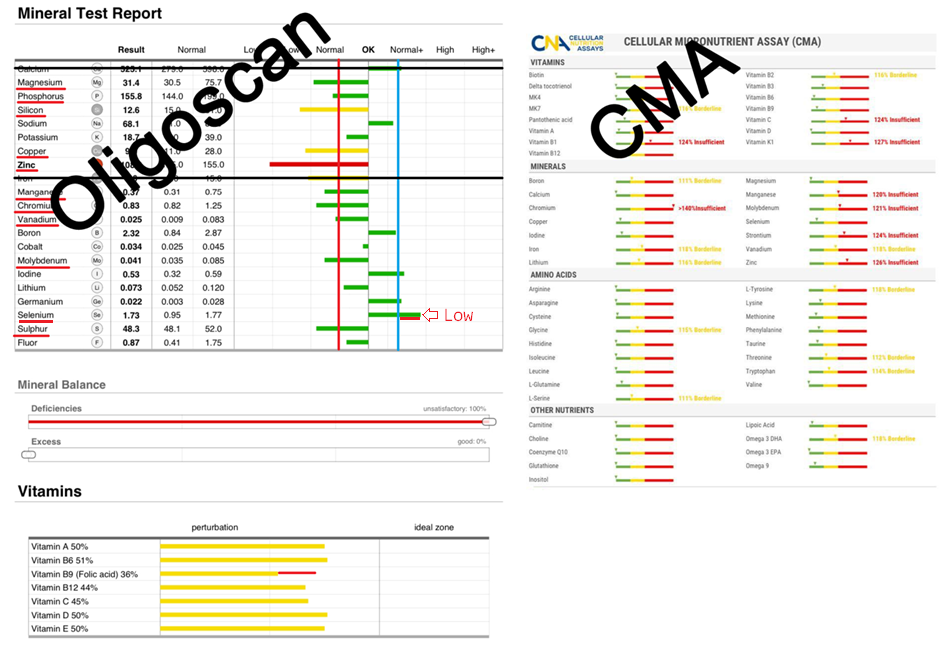
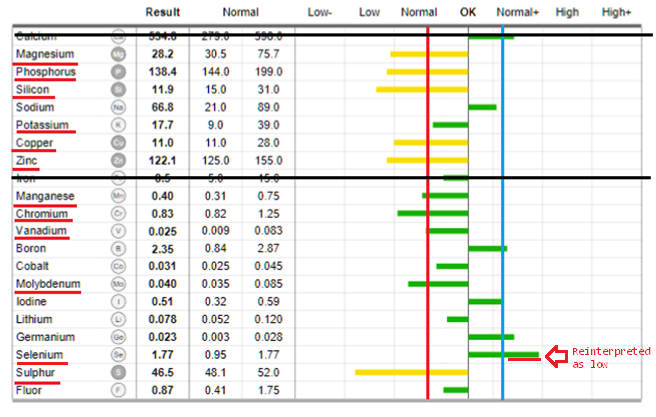
Based on our collected data, we interpret Oligoscan / SO/Check reports using different upper and lower thresholds than the provider’s report layout indicates.

For Oligoscan reports, VISUALLY, the "Low"  threshold is relocated to halfway between the original Low and OK vertical lines, (ie. where the “a” in “Normal” is located, to the left of “OK”) and the "High" for all markers except fluorine is relocated to halfway between OK and original High vertical lines (ie. where the “o” in “Normal+” is located, to the right of “OK”).

Numerically, if you wanted to do this computationally, Oligoscan "Low" and "High" threshold values for each marker would be recalculated as:
Low=(((Low+High)/2)+Low)/2
High=(((Low+High)/2)+High)/2

NB. According to the 2024 Oligoscan practitioner's guide*,
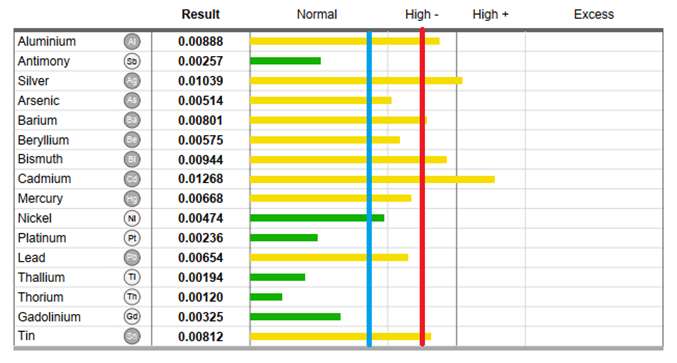
due to an unusual quirk in methodology / reporting, highly elevated minerals (to the right of our vertical blue line / upper threshold in the image below and usually indicated as yellow or red bar) need to be re-interpreted as highly deficient. This also applied to SO-Check reports. If you see this anomaly in your data, it would be advisable to confirm this by taking a CMA test, if possible. Otherwise, default to reinterpreting the marker as proportionally "low".
*The practitioner's guide discusses zinc transport blockade as the reason for the marker elevation. From our comparisons with CMA data, the issue also applies to other markers and appears to be something do to with the
"trade secret" Oligoscan algorithm. Ultimately, I think this could be improved.

calculate_doses

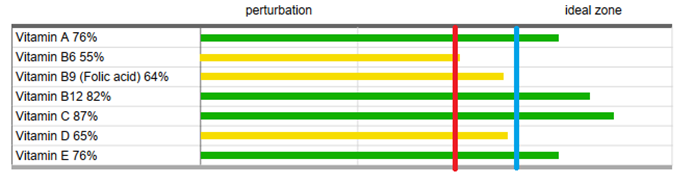
For So/Check branded reports, these have a different format / layout and markers are shown as a percentage deviation from “normal” instead of values. You can ignore this report’s two outer columns to use the dosing guide image above.

1. The same methodology "quirk" relating to elevated values in Oligoscan applies to So/Check, as do the higher sensitivity thresholds for interpretation.
2. So/Check Calcium and Iron are discarded / ignored for the same reason as Oligoscan.
3. So/Check Copper and Zinc markers may also be over-stated.
4. Numerically, the So/Check mineral and electrolyte markers have a reinterpreted lower in-range threshold of -14% and an upper in-range threshold of +14%, instead of +/-25%.
    Marker values which are INSIDE the +/- 14% threshold are interpreted normally as progressively lower or higher than the ideal target, which is 0%, ie. "in-range, low" and "in-range, high".
 
    Marker values which are OUTSIDE of these +/- 14% thresholds in either direction are both interpreted as "LOW" and are considered progressively worse on a scale, the further the value deviates from 0%, OUTSIDE of the new thresholds. For example, +/- 30% would be "VERY LOW", +/- 50% would be "CRITICALLY LOW".
5.
In-range low markers should still be supported by diet and/or supplementation.

socheck2


Although no longer used in this protocol, elevations of electrolyte excretion in hair tests can indicate low cellular uptake with dietary sufficiency, causing enhanced excretion. Where a hair mineral profile shows low potassium and similarly low rubidium, the rubidium deficiency will need correcting or else potassium levels may be difficult to restore. Similarly, calcium with strontium and magnesium with lithium. High zinc can indicate low histidine / insufficient protein.

An important note on hypoxia and acidosis:


Low phosphorus in Oligoscan or OAT data can indicate parathyroid issues, acetaldehyde and/or (metabolic/respiratory or renal) acidemia.

(Lactic) acidemia is commonly seen with (chronic infection -> immune activity -> coagulation ->) hypoxia.

Elevated oxalate and/or relative elevation of lactic acid vs pyruvic acid in the OAT results are further indication for hypoxia.

If chronic hypoxia is present, additional support may well be required. (see: "2.3.3 Blood-flow, hypoxia and fibrin-amyloid")

NB. Correcting hypoxia is expected to help remove innate immune bias towards IFN-alpha response and assist IFN-gamma activity. Initial elevated immune response, fatigue and die-off symptoms could be expected when starting these interventions. Pre-protocol support items may be useful in supporting this period.

Failure to address hypoxia / acidemia will stall remineralisation and microbiome remediation. (see: "2.3.2 Remineralisation")


Low sulfur in Oligoscan or So/Check data can indicate elevated transsulfuration, sulfur metabolising microorganisms or microbial oxalate issues.

Low iodine is often observed with fluorine excess. Fluorine is found in medicines, toothpaste and town water. Consuming 10g of tamarind paste per day can dramatically increase excretion of fluorine.

If you have taken a blood test for iron, transferrin, transferrin saturation% and ferritin and the transferrin saturation% is below 18%, you have a critical need for iron supplementation before Stage 3. However most oral supplements will not absorb and can feed pathogens.

For other supplement selection criteria:


Earlier / manual guidance:

“Do I need P5P?”

(This question may be better answered by the CMA test, if you've performed one.)

38, 39, 40, 75 – where no SSRI, melatonin or 5-HTP supplement is being used, if these markers are all in the lower range, this can infer low P5P levels, via (38) aromatic L-amino decarboxylase (AADC) [+ P5P]  ⇒ monoamine oxidase (MAO) [+ riboflavin as FAD], via (39) kynureninase (KYNU) [+ P5P, less oxidative stress] and via (40) kynurenine aminotransferase (KAT) [+ P5P / zinc / magnesium], via (75) as 4-aminobutyrate transaminase (4ABT) [+ P5P] ⇒ SSAL [+ NADPH] -> GHB}. Part of this pattern assumes dietary tryptophan is sufficient.

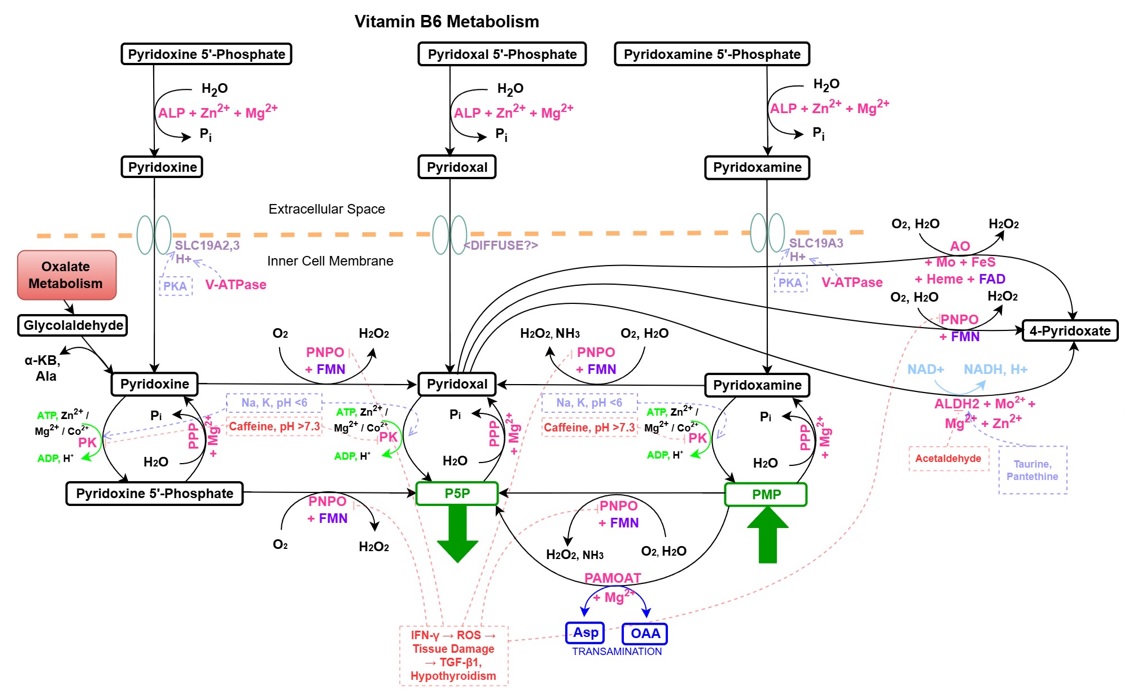
51 – Pyridoxic acid  / pyridoxate is a degradation metabolite of B6 / pyridoxal, which can be used to infer pyridoxal LESS any aldehyde dehydrogenase (ALDH) activity [NAD+ / magnesium / zinc deficiency, acetaldehyde], pyridoxine 5'-phosphate oxidase (PNPO) activity [riboflavin as FMN, tissue damage / TGF-b1 inhibition, hypoxia] and aldehyde oxidase (AO) activity [riboflavin as FAD, molybdenum, heme, iron+sulphur, hypoxia].

“Do I need biotin?”

(This question may be better answered by the CMA test, if you've performed one.)

57 – Methylcitric is used to indicate biotin availability. If this marker is out-of-range in either direction, sublingual biotin will need to be carefully used.

“Do I need trimethylglycine (TMG) / betaine?”

37 (36:33) – The lower the integer in 37, the more likely you are to benefit from some methylation support. 3,4-dihydroxyphenylacetic acid (DOPAC) ⇒ homovanillic acid (HVA) involves 1 enzymatic reaction – catechol O-methyltransferase (COMT), which requires S-adenosylmethionine (SAMe) as a cofactor. SAMe is produced by the methylation cycle. These markers can be confounded by overgrowth of certain bacteria and by renal synthesis of dopamine.

41:42 – This ratio can also help interpret methylation status. An unbalanced ratio of uracil:thymine can indicate low activity at thymidylate synthase OR low pentose phosphate pathway activity - > PRPP, R1P, R5P affecting uridine pyrophosphorylase, along with NAD+ synthesis, purine synthesis, glycogen synthesis, etc.. If uracil is also low, this could further indicate dietary protein insufficiency.

“Do I need Vitamin B5”

(This question may be better answered by the CMA test, if you've performed one.)

52 – This marker can help indicate a vitamin B5 deficiency, which will affect lipolysis and pathways reliant on coenzyme-A (many). Elevated 16 / HPHPA may also benefit from more B5 to produce CoA. If in doubt, include B5 - it's not known to have tolerance issues, although if you're deficient it can be stimulating at first until the pathways rebalance.

“Does my OAT and Oligoscan / CMA data correlate?”

vitamins
Related CMA markers should approximately correlate with:
50 - Vitamin B12
52 - Vitamin B5 / pantothenic acid
53 - Vitamin B2 / riboflavin
54 - Vitamin C / Ascorbic acid
55 - CoQ10

76 – Either elevated or low (excreted) urine phosphoric acid should correlate well with a LOW (intracellular) Oligoscan phosphorus marker. If they do not, please share your data and report this in our Discord discussion group for further analysis.

Last Updated 4 Feb 2026


After successfully remineralising and remediating dysbiosis sufficiently enough to enjoy a normal quality of life, you may be inclined to adopt lifestyle changes and dietary strategies to prevent sliding back down the slippery slope to poor health:

Eat a balanced, nutritious diet

Real food, lots of coloured vegetables and diversity. Eat the right ballpark targets for carbohydrates, fats and proteins. You can use an app such as https://cronometer.com to help structure your diet and learn what micro and macronutrients are in each food until it becomes second nature.

Now that your dietary absorption is working, your micronutrients should be coming from food, rather than supplements. The protocol’s diet is still a good foundation, however you won’t need to be mindful of avoiding excessive oxalates, vitamin B6, histamine or vitamin A.

Vitamin D3 is a good supplement to maintain.

Maintenance supplement

Here are 3 product examples for very similar daily shakes with "lite" versions of the protocol ingredients, albeit in forms which aren't suitable for someone in a moderate  / severe state . These could be highly appropriate as a maintenance / preventative strategy, alongside busy lifestyles and imperfect diets. 

The first two products contain 75+ ingredients. Huel Daily Greens has 91 ingredients and may be a superior product (does not ship to Canada).
Athletic Greens 1 (AG1) -
https://drinkag1.com/ [There have been some recent AG-1 concerns circulating on social media and this is being investigated.]
Nuzest "Good Green Vitality" -
https://www.nuzest.com.au/products/good-green-vitality
Huel "Daily Greens" - https://huel.com/products/huel-daily-greens
One of the main macronutrient differences between Good Green Vitality, Daily Greens and AG1 has additional pea protein "for digestive comfort" and costs a little more.

Exercise

Your hormone synthesis, methylation and immune activity are promoted by physical exertion. This benefits your energy metabolism, sleep, neurotransmitters and helps prevent disease. Posture rehabilitation and maintenance is also important.

Biofilm maintenance

Eat foods which degrade biofilms, such as;

Herbs and spices like turmeric and black cumin, which contain tannins, phenolics, flavonoids, aromatics, etc. Sugar replacements such as xylitol and stevia. Mushrooms, especially reishi.

You can perform a periodic biofilm disruption / challenge interval – e.g. a large oral dose of eg. tetrasodium EDTA or robusta coffee (ethyl acetate) once every 2–4 weeks and a similar interval for nasal / sinus and other microbiomes, using a relevant tool where necessary. Ocean swimming can be helpful. Yearly water fasting intervals would be advantageous. Occasional "robusta coffee enemas" are also rather useful for biofilm maintenance in the large intestine.

Testing / check-ups

Checking your mineral status every 3–6 months is a good way to see how your diet is performing and make corrections. It can also be used to infer your levels of inflammation and potentially dysbiosis, which could justify further testing, e.g. OAT / microbiome.