Long-term illness can affect energy, immunity, mineral balance and the signals between the nervous system and the gut. The Born Free model asks how problems in these systems could reinforce one another and make recovery difficult.
It proposes several possible routes into a persistent defensive state, rather than one cause for everyone. The explanation below brings those ideas together. It is a working model, not an established explanation for every illness or a guide to individual treatment.
The proposed model
Cells need to produce energy, move minerals, manage chemical stress and respond to danger. These tasks are connected. An infection, for example, can change immune activity and the resources available for energy production.
The model proposes that several disruptions could become self-reinforcing. Less available energy may make maintenance and recovery harder. Continued inflammation, altered mineral handling and stress signals could then place further demands on the same systems.
Four areas that may interact
A defensive response can be useful during short-term danger. The question here is whether some of the responses could continue after the initiating event, or be renewed by ongoing threats. This proposed persistence is the central idea of the model.
How the cycle could begin
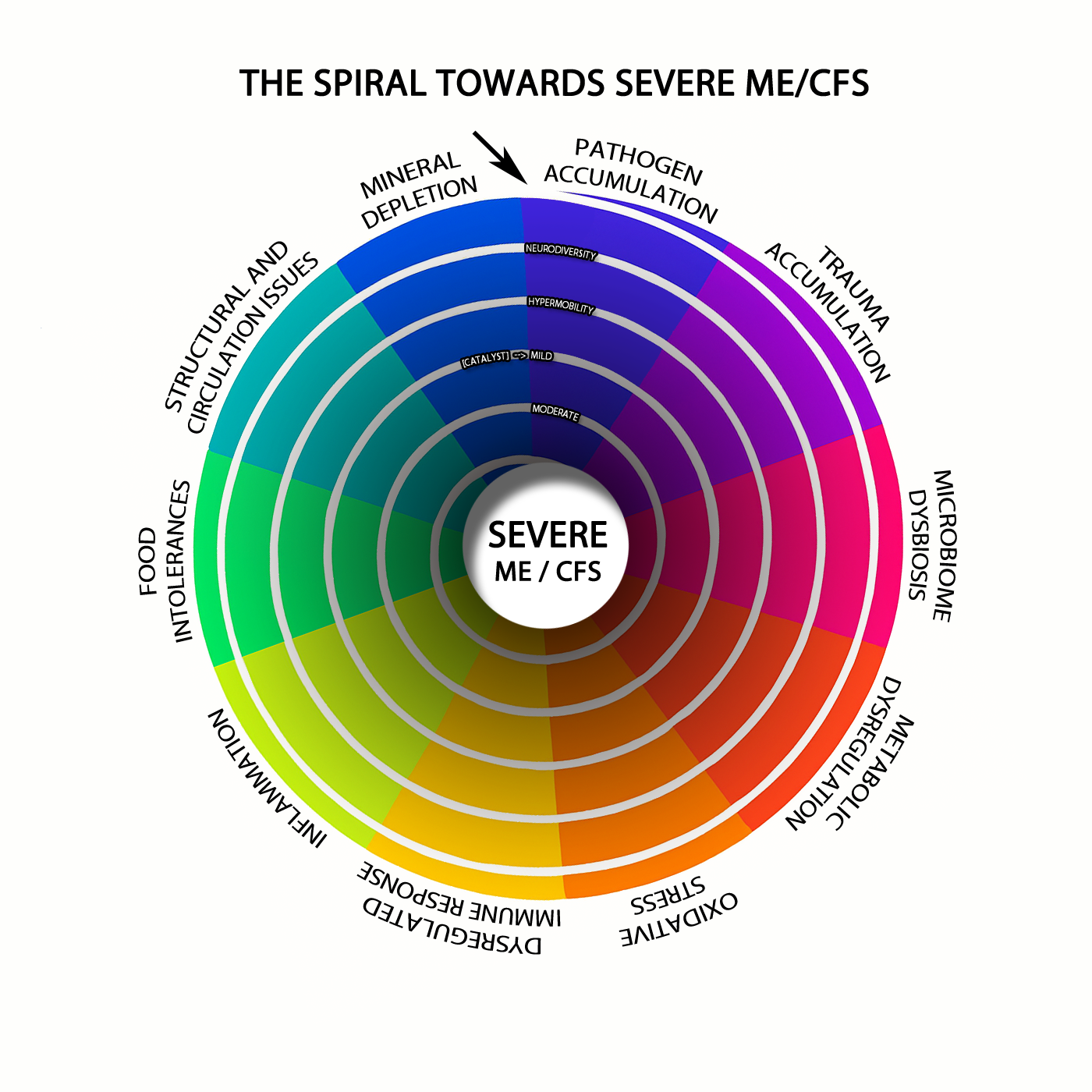
There may be more than one starting point. The model considers infection, immune activation, toxic metal exposure, poor nutrient availability, gut disturbances, connective tissue problems and sustained physiological stress.
Sleep loss, heat, surgery, pregnancy, overexertion or trauma could add to an existing burden. It also considers the effects of neurodevelopmental stress and the demands associated with neurodivergence. These are possible contributors, not an explanation of an individual person's illness.
Some people may lose capacity gradually before a major event pushes them beyond what they can tolerate. Others may become unwell more abruptly. A prenatal contribution is one possibility among these routes.
Optional detail: the prenatal example
The model proposes that conditions during pregnancy could influence a child's later vulnerability. Its examples include maternal metal exposure, mineral status, immune activation, inflammation, stress hormones and glucose handling.
It also asks whether gestational diabetes could sometimes involve difficulty storing and processing glucose, alongside high blood glucose itself. Magnesium, phosphate, zinc, selenium, folate and choline appear in this proposal because of their roles in metabolism and nutrient-dependent processes.
This example does not establish prenatal conditions as the usual origin of chronic illness. It cannot identify the cause of a person's illness or attribute responsibility to a parent.
Why it could persist
Energy production and chemical balance
Cells transfer electrons when they process fuel and maintain antioxidant defences. This is called redox. Antioxidants help manage reactive chemicals that can damage cells when their production exceeds the body's capacity to handle them.
Two important redox systems are NAD⁺/NADH and NADP⁺/NADPH. These chemical carriers accept and donate electrons. NAD⁺ supports fuel processing; NADPH helps recycle antioxidants, including glutathione. Glutathione contributes to antioxidant defence and the handling of some metals and reactive chemicals.
The model proposes that impaired redox function could make energy production, chemical clearance and repair less reliable. Continued stress on these processes could then make redox function harder to restore.
ATP inside and outside cells
ATP, or adenosine triphosphate, transfers energy for work inside cells. Outside cells, it can also act as a signal. ATP released during tissue stress or damage can activate receptors on immune cells and other cells.
ATP can do work or carry a signal
Cellular work
Cell boundaryProposed persistence: the model asks whether repeated release or altered signal breakdown could sustain immune activity.
Extracellular ATP is broken down through ADP and AMP to adenosine; adenosine can then be converted to inosine. These molecules have their own signalling effects. The model proposes that changes in this sequence could affect how an inflammatory response resolves.
Mineral amount and mineral location
A mineral's total amount and its availability in a particular tissue are different questions. Minerals move between the gut, blood, cells and storage sites. Inflammation can affect some of this movement.
Iron provides a specific example. Hepcidin is a hormone that regulates iron movement through ferroportin, a protein that exports iron from cells. This does not prove that all minerals or toxic metals share the same regulation.
Amount is not the same as location
AmountHow much is present?
Location and availabilityWhere is it, and can it be used?
The model extends this question to essential minerals and toxic metals: could altered transport, storage, loss or chemical binding leave some processes short of usable resources? That broader proposal needs evidence for each mineral, tissue and condition.
Immune activity, histamine and stress responses
Mast cells are immune cells found in tissues. They can release histamine and other signalling molecules. Histamine affects blood vessels, the gut, nerves and immune responses, as well as participating in allergic reactions.
Histamine release and histamine breakdown are separate processes. The model considers both increased release, following immune or tissue stress, and reduced clearance. It proposes that these changes could interact with glucose storage, inflammation and nervous system activity.
The sympathetic nervous system helps mobilise energy and maintain alertness during stress. The model asks whether sustained activity in this system, together with disturbed glycogen storage, could contribute to fatigue alongside agitation, tremor or a racing heart. Glycogen is the body's stored form of glucose.
Post-exertional malaise (PEM) is a worsening of symptoms after physical or mental activity. The model seeks to explain why exertion could place demands on several already strained systems. This is not evidence that every post-exertional symptom has the same mechanism.
Gut microbes, tissue injury or unresolved immune triggers could also keep stimulating these responses. Once several loops are active, the initial trigger may no longer explain the whole picture.
Optional mechanism detail
The optional sections explore the proposed biochemical connections in more detail.
Microbial products, acetaldehyde and nutrient function
The model proposes that altered gut movement, bile flow, tissue oxygen availability, immune activity and glucose handling could favour different microbial activity. Its examples include fermentation products such as ethanol, acetaldehyde, D-lactate, hydrogen sulphide and ammonia. Their effects depend on amount, location and context.
Acetaldehyde is a reactive chemical produced during alcohol metabolism and by some microbes. Aldehyde dehydrogenase enzymes, abbreviated to ALDH, help clear it. These reactions use NAD⁺. The model proposes a feedback loop in which impaired NAD⁺ recycling limits clearance, while acetaldehyde adds further chemical stress.
Biotin (vitamin B7) enters intestinal cells through the sodium-dependent multivitamin transporter, or SMVT. Microbial products may reduce this uptake in different ways. In human colon cells and biopsy-derived cultures, prolonged acetaldehyde exposure reduced biotin uptake and the amount of SMVT produced (Ramamoorthy et al., 2021). In separate intestinal-cell experiments, bacterial lipopolysaccharide (LPS) reduced uptake by decreasing the amount of SMVT at the cell surface, without reducing the total amount of SMVT in the cells; reduced uptake was also observed in mice (Lakhan & Said, 2017). Within this model, these findings provide a possible link between microbial activity and reduced biotin availability. The size of this effect in people with chronic illness has not yet been established.
The model also proposes effects on zinc availability, magnesium-dependent enzymes, thiamine binding and active vitamin B6 handling. It includes altered riboflavin conversion into FMN and FAD, folate and vitamin B12 metabolism, SAMe, retinoic acid signalling, CoQ10 production and BH4 oxidation.
FMN and FAD are forms of riboflavin used by enzymes. SAMe participates in methyl-group transfer. BH4 is a helper molecule for enzymes involved in nitric oxide and neurotransmitter production.
The term functional deficiency is used here for a proposed situation in which a nutrient is present but its use is impaired. This cannot be inferred from symptoms or from a normal or abnormal blood value alone.
For histamine, the model distinguishes mast-cell release from breakdown through pathways involving diamine oxidase (DAO) and other enzymes. It proposes that acetaldehyde, nutrient availability and redox changes could affect clearance. ALDH's role in aldehyde handling should not be treated as the same process as DAO's action on histamine.
In the proposed cycle, histamine-related changes in liver glycogen use and responsiveness to adrenaline could contribute to unstable glucose availability, orthostatic symptoms and PEM. The model also considers stronger histamine or inflammatory responses to exercise. These links remain hypotheses within the model.
Nitric oxide, BH4 and mitochondrial redox
Nitric oxide helps regulate blood-vessel relaxation. BH4 supports the enzymes that make it. Under some conditions, impaired BH4 function can contribute to nitric oxide synthase becoming uncoupled, producing superoxide instead of normal nitric oxide output.
Nitric oxide and superoxide can react to form peroxynitrite. The model proposes that this chemical stress could inhibit mitochondrial complex I, affect NAD⁺/NADH balance and make acetaldehyde clearance harder. Complex I is part of the mitochondria's electron transport chain.
Endogenous morphine, cAMP-PKA and CREB
The model proposes that morphine produced within the body, described as endogenous morphine, and sympathetic activity could pull a cell-signalling pathway in opposite directions. That pathway involves cyclic adenosine monophosphate (cAMP) and protein kinase A (PKA).
In the proposed mechanism, activation of µ-opioid receptors engages inhibitory G proteins (Gi), reduces adenylyl cyclase activity and lowers cAMP. β-adrenergic signalling engages stimulatory G proteins (Gs) and can increase cAMP. Adenylyl cyclase is an enzyme that produces cAMP.
The model proposes that prolonged inhibition could produce compensatory changes in neurons and liver cells, including increased cyclase, PKA and CREB activity. CREB, the cAMP response-element binding protein, helps control gene transcription. Its proposed role is a persistent change in the cell's response to later signals.
The model links these changes to tyrosine hydroxylase and catecholamine synthesis in neurons, and to glycogen phosphorylase, glycogen synthase and glucose release in liver cells. It proposes that reduced opioid restraint, alongside high sympathetic drive, could lead to larger swings in cAMP, adrenaline and glucose availability.
It further links glutamate, calcium stress and extra-synaptic NMDA receptors to increased nervous system excitability. NMDA receptors respond to the neurotransmitter glutamate. These proposals are used to explain why relatively small changes might produce a disproportionate response.
The protocol aims to reduce excessive cAMP-PKA fluctuations while supporting glycogen storage and redox function. The proposed role of endogenous morphine, and the safety and benefit of modifying these pathways, remain to be tested.
Mineral handling, acidaemia and the longer proposed loop
The model links mitochondrial dysfunction, greater reliance on glycolysis, lactate accumulation, acid-base changes, inflammation and kidney losses. Glycolysis is the initial breakdown of glucose; mitochondria process fuel through the TCA cycle and electron transport chain.
Acidaemia means an abnormally low blood pH. It should not be assumed from fatigue, muscle discomfort, exertion or a subjective feeling of internal “sourness”. Greater glycolytic activity or lactate production does not by itself establish persistent acidaemia.
The model proposes that inflammatory signals, including TNF-α, IL-1β, IL-6, IL-10 and IL-22, could participate in altered mineral handling. It discusses hepcidin, ferroportin and divalent metal transporter 1 (DMT1). Their involvement in iron transport does not validate a single mechanism for all essential minerals or toxic metals.
It also considers reduced intestinal absorption, tissue sequestration, chemical binding and urinary loss. It names phosphate, calcium, magnesium, sodium, potassium and zinc in relation to kidney handling and energy chemistry. It also proposes acetaldehyde-related changes involving zinc and silicon, and effects involving lithium and rubidium. These are elements of the model, not established individual deficiencies or indications for supplementation.
The model proposes altered homeostasis across at least 12 minerals or metals, without a demonstrated common regulatory pathway. Blood and red-cell measurements address particular compartments and cannot confirm the model's proposed tissue pattern on their own.
The longer loop can be summarised as follows:
- Acid-base changes and mineral losses could impair energy chemistry.
- Impaired energy and redox function could reduce glutathione capacity and chemical or metal handling.
- Acetaldehyde burden and altered histamine clearance could affect glycogen stability and stress signalling.
- Stress signalling and extracellular ATP could contribute to continued inflammation.
- Inflammation could further affect resource availability, including iron handling.
This is a set of proposed feedback links, not a demonstrated chain that must occur in that order. An ongoing infection, tissue injury or immune trigger could also contribute. Low circulating iron or phosphate, altered ferritin, temperature instability, poor concentration and orthostatic intolerance do not uniquely identify this model.
Connective tissue and persistent immune triggers
The model includes connective tissue maintenance as part of the proposed cycle. It considers collagen production in relation to oxygen, iron, vitamin C, copper, silica, glycine, proline, lysine, ATP, redox function and enzymes such as prolyl hydroxylases.
It proposes that poor resource availability, hypoxia signalling, acid-base disturbance, oxidative stress or inflammation could affect tissue maintenance. Tissue fragility or mechanical stress could, in turn, release extracellular ATP and stimulate mast cells.
Similar symptoms or tissue features do not establish hypermobile Ehlers-Danlos syndrome (hEDS) or inherited vascular Ehlers-Danlos syndrome (vEDS).
The model proposes that inflammation could coexist with impaired pathogen clearance. It considers poor sleep, low usable energy, mineral misallocation, cortisol dysregulation, weak interferon responses and impaired nutrient activation as possible contributors.
Viral, bacterial, fungal or other reservoirs could then renew inflammatory signals. The proposed wider effects include neurotransmitters, stress hormones, vitamin metabolism, cholesterol, histamine, kidney function and temperature regulation. These possibilities require evidence in the relevant condition and cannot be inferred from a shared symptom pattern.
The protocol's proposed rationale for changing the trajectory
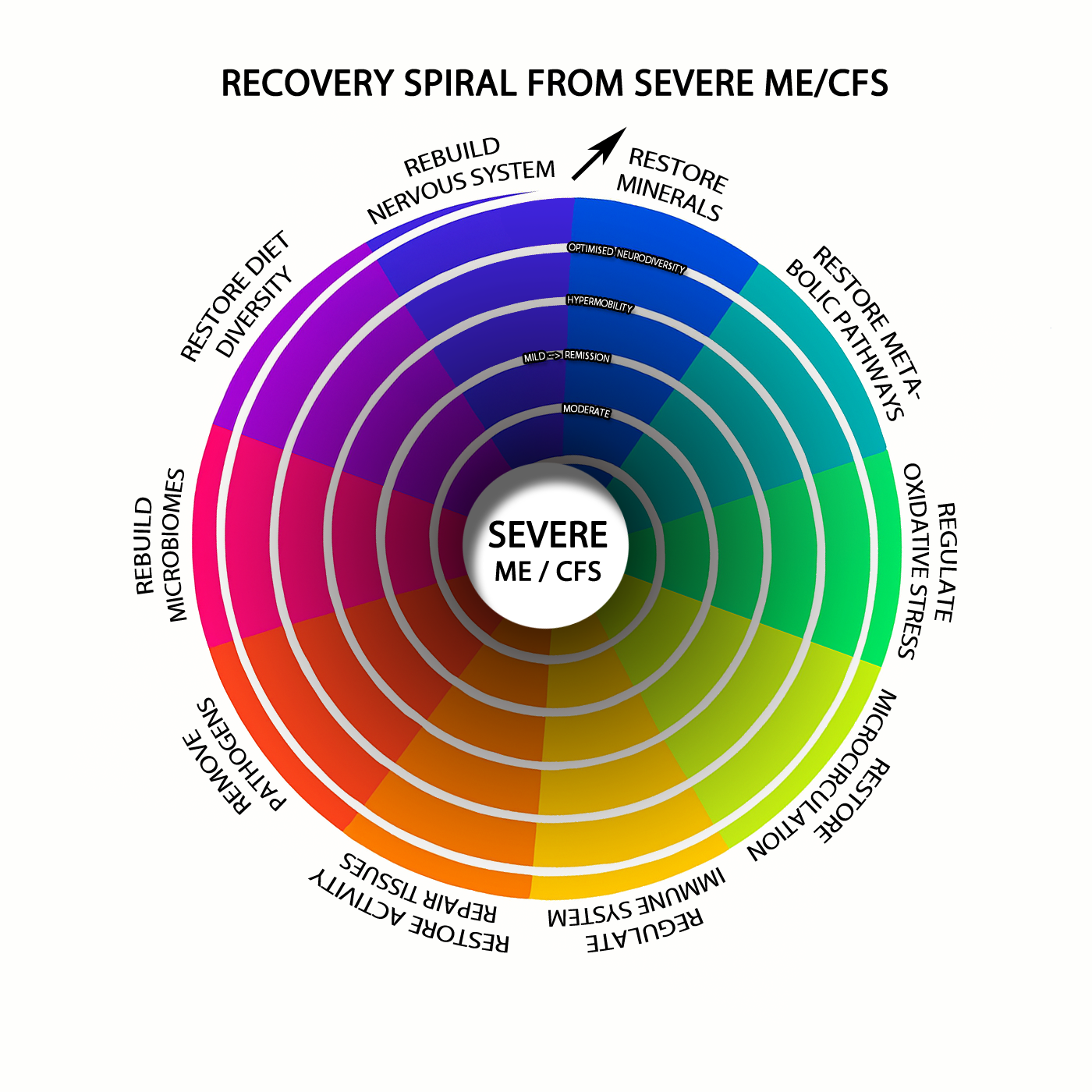
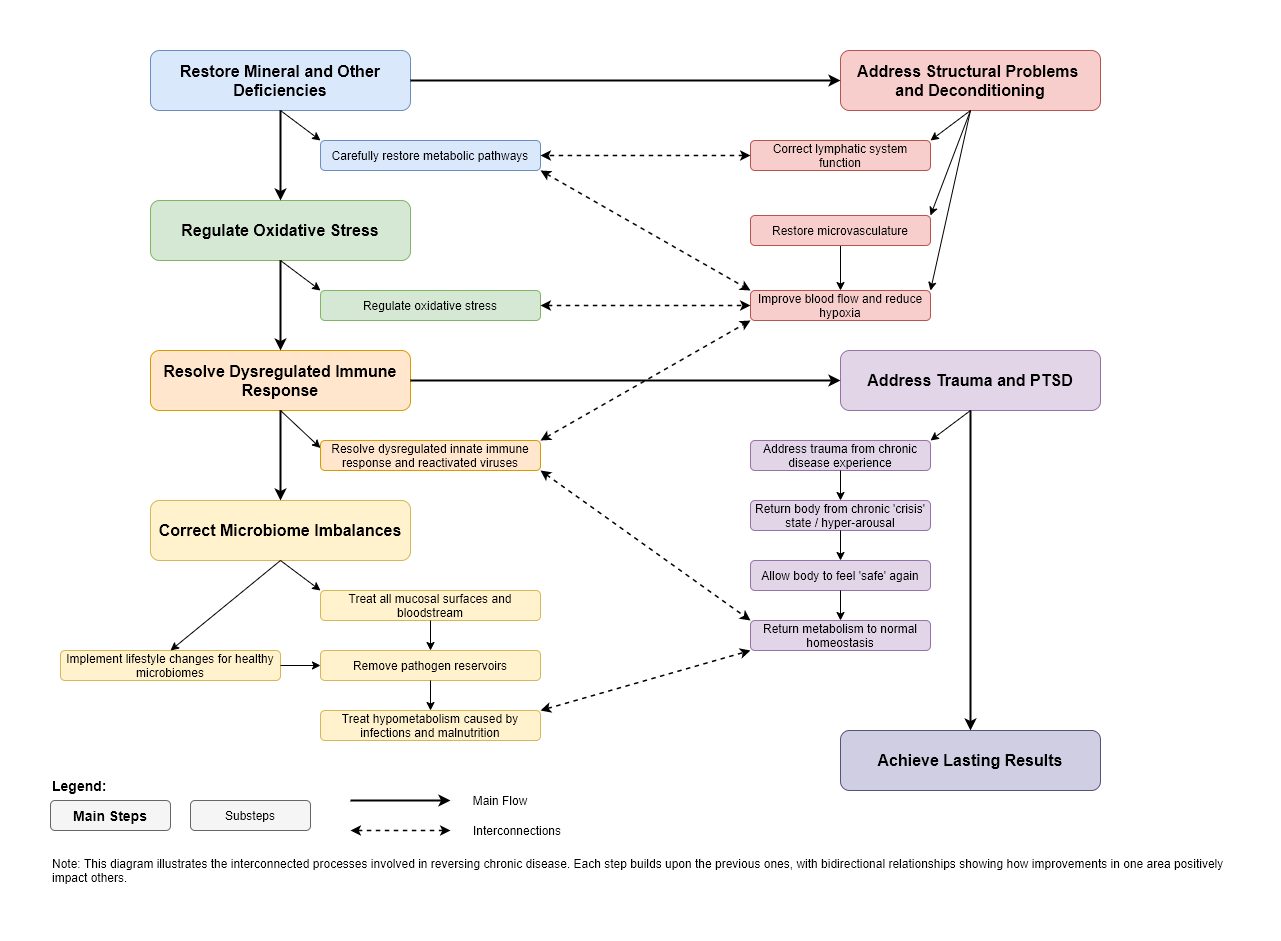
Changing one input may be insufficient if several feedback loops remain active. The protocol aims to restore coordination across mineral availability, glutathione and redox function, chemical clearance, glycogen storage, immune activity, nervous system regulation, connective tissue maintenance and the microbiome.
Its “Reversing the Trajectory” section groups the proposed work into four areas: nutrient and metal handling; microbiome disturbances and persistent infections; structural and lymphatic issues; and the physical and psychological consequences of chronic illness. These aims are not evidence that the proposed interventions work.
The model proposes that improving nutrient availability and addressing toxic metal burdens could support energy metabolism, redox function and immune responses. The proposed link from mitochondrial dysfunction to immunodeficiency and chronic herpesvirus reactivation is a modelling inference.
The model also considers chronic Lyme disease and T. gondii among possible persistent infectious burdens. Naming these examples does not establish their presence in a particular person, or show that restoring metabolism clears an infection.
The microbiome proposal discusses mucosal surfaces, biofilms, pathogen reservoirs and microbial products such as mycotoxins and endotoxins. The structural proposal concerns posture, lymphatic function, blood flow and tissue oxygen availability. Their inclusion in the model does not demonstrate that treating them resolves the wider cycle.
Living with chronic illness can be traumatic, especially after medical missteps or dismissive care. The protocol considers metabolic and infectious burdens alongside the need to recover a sense of safety. Stellate ganglion blocks are included as an example of altering autonomic activity; whether such changes can provide durable benefit remains to be tested.
Illness is not evidence of psychological weakness or lack of effort. This model does not establish that trauma support must wait until physical problems are resolved, or guarantee that either type of intervention will restore normal metabolism.
Evidence and uncertainty
The model combines recognised biological processes, findings from particular conditions and proposed links between systems. Evidence for one process, such as hepcidin's role in iron regulation, is not evidence for every connection in the larger model.
Patterns of deficiencies and biomarkers may help characterise research subgroups and generate hypotheses about disease features and severity. They do not provide reliable individual prediction on their own. See references [121], [122], [123] and [124] for research on these patterns.
Early reports from people using the experimental Born Free protocol include significant improvement and long-term remission in some individuals. Formal clinical trials are planned to evaluate the protocol systematically. These reports are not trial results.
Reported experiences
Severe fatigue, post-exertional crashes, disturbed sleep, cognitive difficulty and a mixture of agitation and exhaustion can be distressing and disabling.
Some people report brief periods of clearer thinking or easier movement, changes in appetite or sleep, and later periods of steadier energy. Others describe plateaus, relapses, anxiety, palpitations, gut symptoms or renewed fatigue. Responses vary.
Why recovery may feel uneven
The model proposes a period of adjustment as sympathetic drive eases and parasympathetic activity becomes more prominent. The sympathetic system helps mobilise energy and maintain alertness; the parasympathetic system supports rest and digestion. The systems supporting steadier energy and recovery may lag during this proposed transition, and the balance of changes may differ between people.
People report periods of lower energy, reduced motivation or less enjoyment during recovery. The model anticipates that these experiences may sometimes accompany the adjustment. Anhedonic tone means a reduced capacity to feel pleasure or enjoyment.
Immunological debt is the model's term for unresolved immune burdens. It proposes that, as energy systems recover, renewed immune activity may begin to address some of these burdens. The model interprets some reported changes in immune-related symptoms as possible signs of this renewed activity.
The model proposes that some of these changes could reflect greater flexibility in using glucose and fats. Changes in symptoms do not, by themselves, show whether an intervention is helping or explain the mechanism.
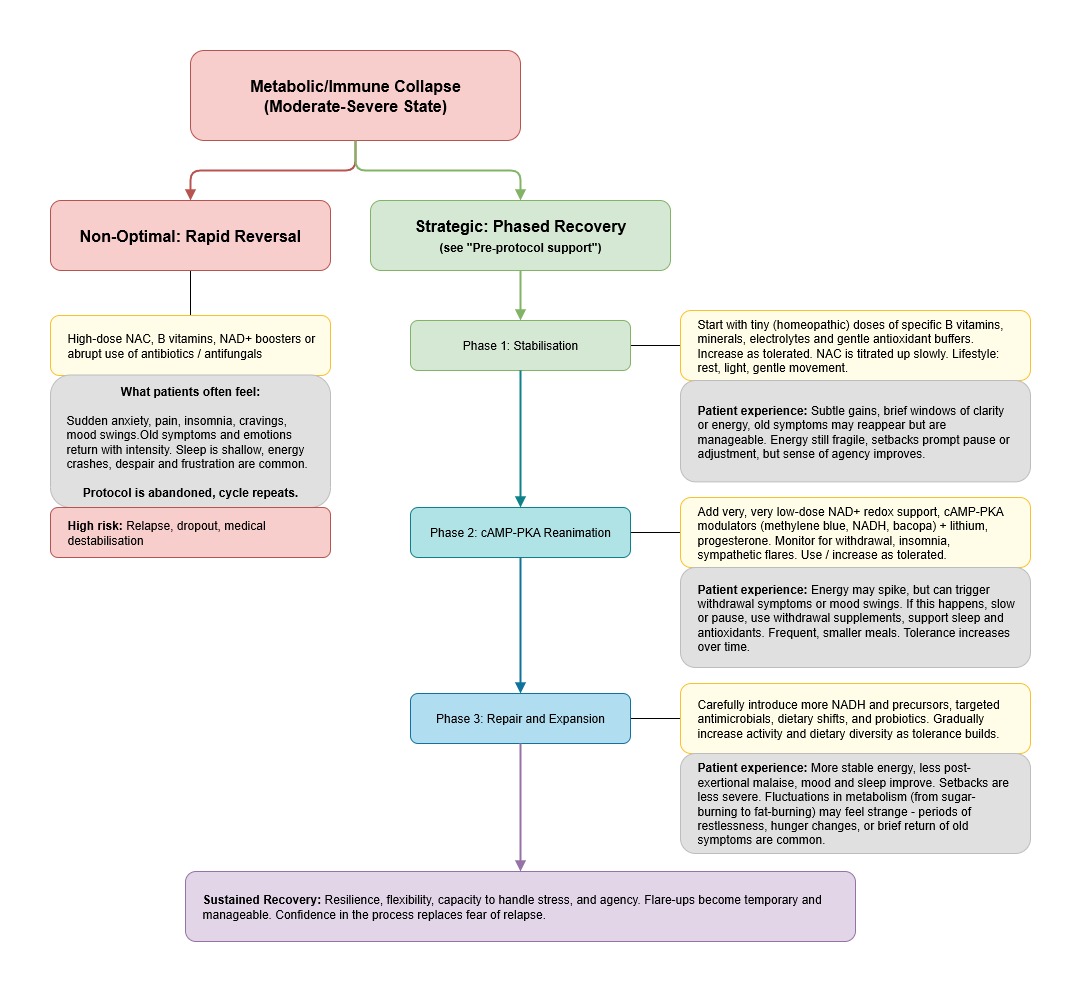
The protocol favours a gradual approach, with room to pause or adjust when symptoms change. Its purpose is to avoid repeated bursts of activity or intervention followed by a crash.
Recovery patterns and proposed mechanisms
The model considers how starting several antioxidants, NAD⁺-related products, acetaldehyde-directed products, dietary changes or antimicrobials together could be followed by brief improvement and then anxiety, irritability, insomnia, pain, sweats, fatigue, tremor, palpitations, bowel symptoms or cravings.
It proposes microbial alcohol and acetaldehyde changes, and endogenous morphine signalling, as possible explanations. Those descriptions do not establish withdrawal or exclude an adverse effect or another cause of worsening.
The proposed staged approach includes exogenous NAD⁺, active B vitamins, minerals, antioxidant support, carbohydrate intake and later NAD⁺ precursors or cAMP-PKA modulation. Proposed acetaldehyde-directed approaches include NAC, DHM, Acetium, Z-Biotics and L-carnosine, followed by targeted antimicrobials and prebiotics or probiotics.
Light exposure, sleep, gentle movement and the ability to pause are also part of the proposed approach. Reported changes include sugar cravings, appetite, emotional responsiveness, sleep depth and dreams, along with easier activity or shorter post-exertional symptoms.
The model proposes a gradual return of flexibility in using glucose and fats. It considers whether glycolysis could improve before fatty acid oxidation, alongside possible “keto flu”-like sensations, changing carbohydrate needs and fluctuations after stress, infection or poor sleep.
Some people also describe stronger emotional responsiveness or old memories returning. Support and a sense of agency matter without requiring a particular mechanistic explanation.
Further illustrations
These illustrations explore proposed pathways and stages of recovery. The stages remain to be tested.